


Products are selected by our editors, we may earn commission from links on this page.
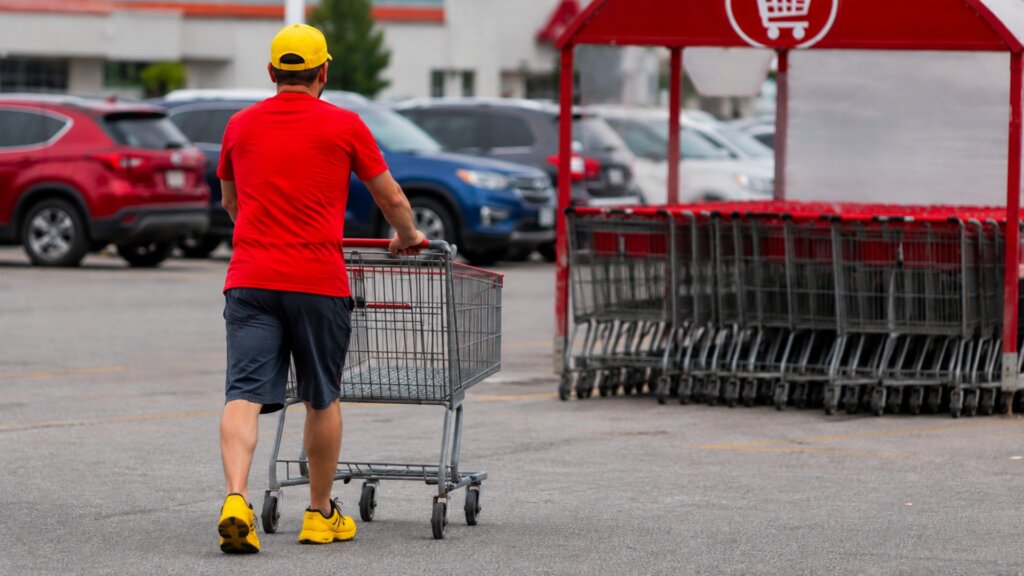
A grocery cart sits empty in a parking lot, keys already in hand, the corral forty feet away. No law says a shopper has to return it. No fine waits if they don’t. Some people push it back anyway, through rain, through heat, on bad knees. Others leave it two spaces over without a second thought. Psychologists and behavioral researchers have spent years studying that small, unwatched decision, and what they’ve found runs far deeper than simple manners.
This article was created with the assistance of AI and reviewed by our editorial team for accuracy and clarity.
A 2020 Anonymous Post Turned Cart Returns Into a Character Test

The Shopping Cart Theory began as an anonymous post that spread quickly online in 2020, arguing that returning a cart is entirely voluntary. No law requires it, no penalty follows skipping it, and no reward comes from doing it. That makes it one of the purest tests of what a person does when nobody is watching and nothing is at stake. Most social rules carry enforcement, like the IRS behind taxes or police behind red lights. The cart has only a person’s own judgment standing guard.
“That’s Just How I Was Raised” Explains More Than It Sounds

Ask a consistent cart returner why they bother, and the answer often sounds the same: that’s just how I was raised. Psychologists call this prosocial modeling. A parent who says “we don’t leave messes for others” and then walks the cart back teaches a child something that outlasts almost every other lesson. Psychologist Nicholas Turiano notes that people who score high in conscientiousness show strong impulse control, pushing them toward goal-directed, responsible behavior learned long before adulthood.
Cart Returners Picture the Employee Who’d Otherwise Retrieve It
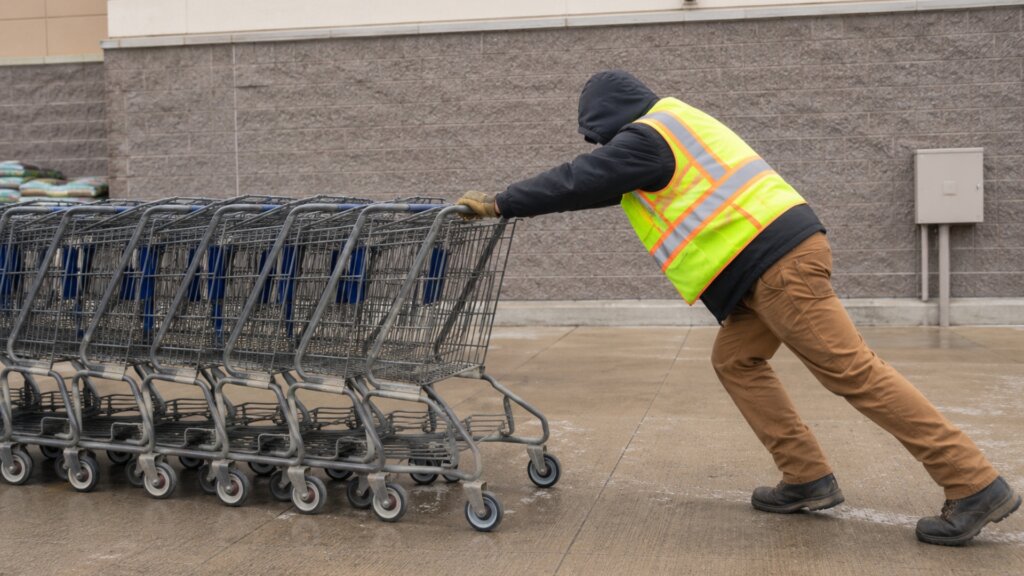
People who consistently return their carts tend to score high in a specific kind of empathy, one that pictures a stranger’s day without needing to be told to. A cart abandoned in a handicapped space on a hot afternoon isn’t abstract to them. It’s a real employee crossing a baking parking lot to retrieve it, then doing it dozens more times before their shift ends. Cultural anthropologist Krystal D’Costa describes the habit as a sign of someone who follows through and cleans up after themselves.
Same Rainy Parking Lot, Two Shoppers, Two Different Choices

Picture two shoppers leaving the same store on a rainy afternoon, both parked far from the corral. One returns the cart anyway, moving quickly through the drizzle. The other leaves it by the curb and walks to the car. Researchers point to internal locus of control, the belief that a person’s own choices shape outcomes rather than circumstances or other people. Cart returners tend to score high here. They see themselves as the one responsible for handling what they started.
Turn Signals and Extra Change Follow the Same Pattern as Carts
The cart habit rarely shows up alone. People who return carts also tend to use their turn signal on empty roads, hand back extra change a cashier mistakenly gave them, and pick up litter they didn’t drop. None of these acts have an audience or a reward. Behavioral researchers call this a cluster effect, where certain traits surface across dozens of small, unrelated decisions rather than one obvious moment. The cart is simply the version almost every adult in America has faced.
The 1950s Generation Grew Up Inside a Different Assumption

Americans who came of age in the 1950s and early 1960s absorbed an assumption that’s hard to measure directly: that behavior in public spaces affected everyone nearby, and that this mattered. Community obligation wasn’t a campaign or a slogan. It was simply the environment people grew up inside. That generation tends to feel real discomfort at leaving a mess for a stranger to handle, a feeling closer to pushing in a chair at someone else’s house than to any sense of superiority.
Leslie Dobson’s Viral TikTok Exposed the Theory’s Blind Spot

Many assume cart returners quietly judge everyone who skips the corral. Most report something closer to puzzlement, a brief “huh” they can’t fully explain rather than contempt. Context changes that reaction fast. Forensic psychologist Leslie Dobson drew national attention after explaining on TikTok that parents managing small children in a parking lot face a real safety tradeoff, since hundreds of children are abducted from parking lots in the United States each year. Cart returners tend to read that difference quickly.
Small Unwatched Acts Predict Bigger Behavior, Researchers Find

Researchers who study prosocial behavior have found that small, unmonitored acts like this one rank among the strongest predictors of how people behave in bigger, higher-stakes situations. The cart itself was never the point. It’s evidence of something else: a belief that individual behavior still affects the people sharing the same space, even when no system is built to reward it. That belief has carried through generations who never needed anyone to tell them to hold onto it.
The Cart Test Strips Away Every Excuse Except One

The shopping cart test endures because it strips away every excuse. No camera watches the corral. No fine punishes the shortcut. What’s left is a person deciding, alone, whether their actions matter when nobody will ever know the difference. Decades of psychology research point to the same conclusion: the people who return the cart aren’t performing for anyone. They’ve simply decided that shared spaces are worth the extra forty feet, every single time, regardless of who’s counting.