

Products are selected by our editors, we may earn commission from links on this page.
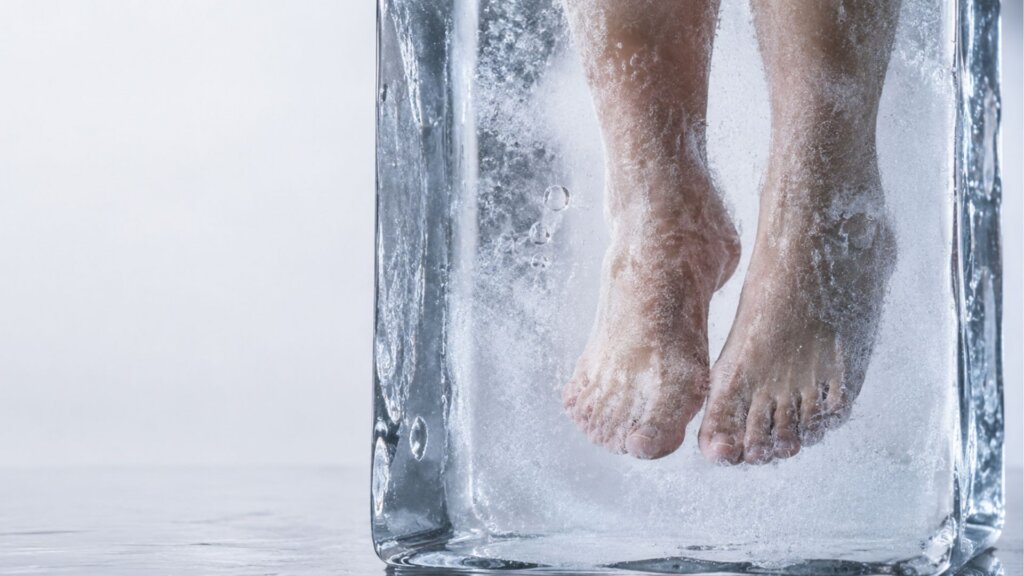
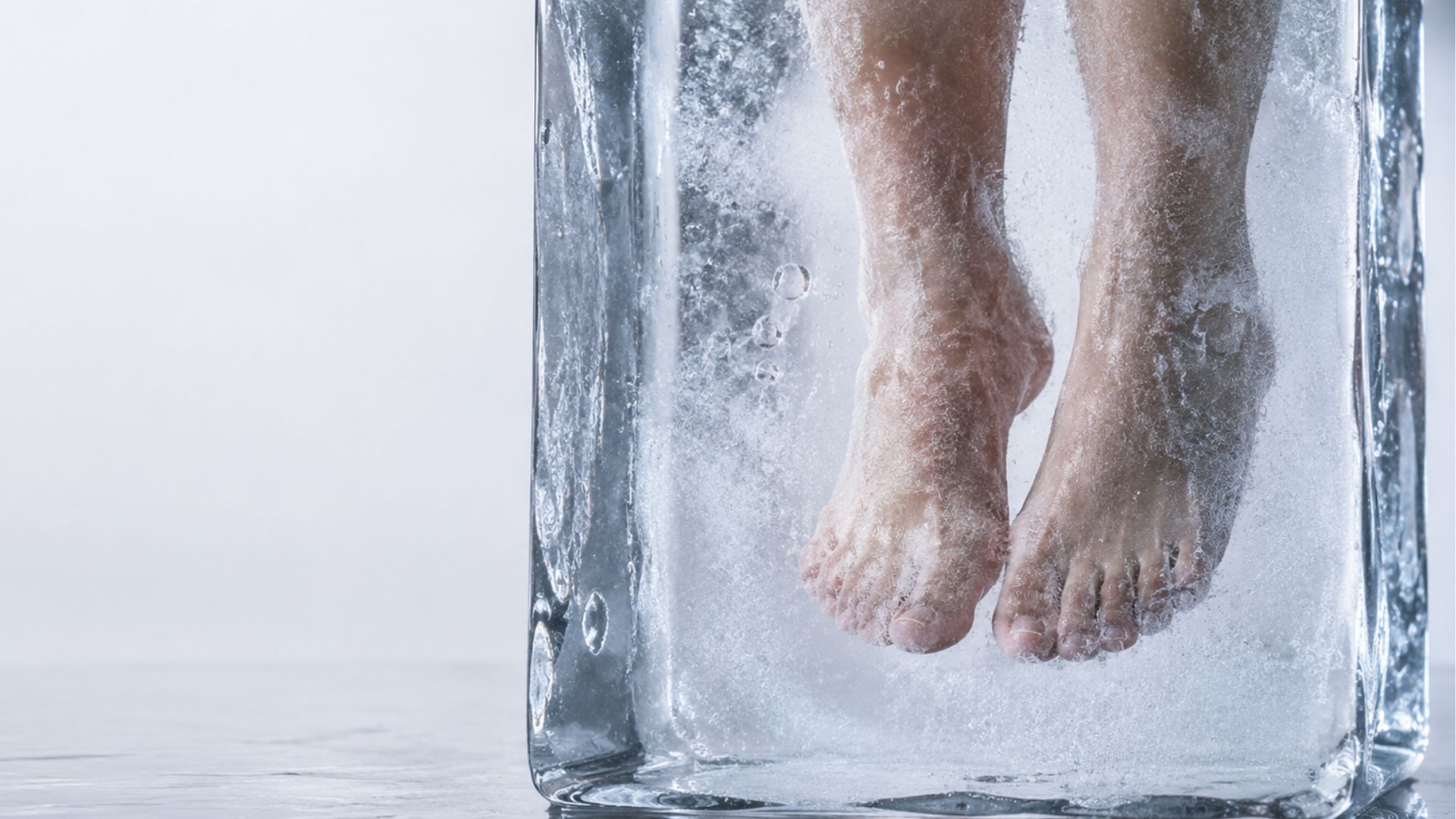
Somewhere in Michigan, a 14-year-old girl who died of cancer in 2016 lies preserved in a steel vat filled with liquid nitrogen, stored upside down at nearly minus 200 degrees Celsius. Known only as “JS,” she won a landmark court battle to be frozen before her death, hoping future science could cure her. She is one of more than 500 people worldwide who have been cryopreserved. Not one of them has ever been thawed.
This article was created with the assistance of AI and reviewed by our editorial team for accuracy and clarity.
Freezing a Human Body Is the Easy Part. Bringing It Back Is Another Problem Entirely

Cryopreservation companies drain the blood from a body immediately after legal death and replace it with a cryoprotectant agent, or CPA, a chemical solution designed to prevent ice crystals from forming inside cells. The main ingredient is typically ethylene glycol, the same compound found in car antifreeze. The body is then cooled to liquid nitrogen temperatures. Science has mastered this step. The far harder question has barely been touched: how do you reverse it?
The ‘Frozen Pizza Problem’

Cryopreservation works at the cellular level. IVF clinics freeze and thaw eggs routinely, and tissue banks store bones and cancer samples with no trouble. But scaling that up to an entire human body runs into what scientists call the uniformity problem. Think of microwaving a frozen pizza: the edges scorch while the center stays cold. In a body, uneven thawing causes cells to crack. According to Joo Hyun-woo, a professor at Hallym University’s Ilsong Institute of Life Science, temperature differences between cells during the thaw can destroy tissue entirely.
CPA Chemicals That Preserve Frozen Bodies Can Also Destroy Them in the Process

The cryoprotectant used to prevent ice crystal damage carries its own risks. According to Han Hyeong-tae, CEO of KrioAsia, improper freezing can destroy cells in ways that make revival impossible regardless of future technology. Professor Joo adds that the CPA itself is toxic, and if it isn’t infused evenly throughout the body, cells can rupture from osmotic pressure. Anyone preserved incorrectly, before better techniques existed, may already be beyond saving. The freeze is permanent. The damage is not undone by waiting.
University of Minnesota Scientists Thawed a Frozen Rat Kidney After 100 Days, and It Worked

In 2023, researchers at the University of Minnesota published a study in Nature Communications that offered the first real hint of progress on the thawing problem. They stored rat kidneys for up to 100 days using a process called vitrification, which rapidly cools tissue into a glass-like state without ice crystals forming. Then they warmed the organs using iron oxide nanoparticles injected into the blood vessels, activated by electromagnetic waves. The kidneys were transplanted into live rats, and full function returned within 30 days.
Nanowarming Heats Organs from the Inside Out, but the Brain Is a Completely Different Challenge

Nanowarming solves the uniformity problem by heating tissue from within rather than from the outside in. Iron oxide particles act as microscopic heaters distributed throughout an organ’s blood vessels, warming every region at the same rate when exposed to a magnetic field. For a kidney, this works. For a brain, it may not. According to Hong Il-gang, a researcher at the Institute for Basic Science in Daejeon, a key obstacle is whether nanoparticles can even be delivered into the brain’s deepest inner blood vessels.
Scientists Can’t Agree on When a Brain Has Been Successfully Thawed Because They Can’t Even Measure It Yet

The brain stores identity in the precise shape and number of synapses, the tiny junctions between nerve cells. Every memory changes that structure in subtle ways. According to researcher Hong, current technology cannot verify those changes across multiple brain regions at once. Multi-photon microscopy can observe some cells in living mice, but no tool exists to survey the whole brain simultaneously. A German research team reported a partial brain cell revival in early 2025, but Hong noted it confirmed only that some cells survived, not that any memories were preserved.
Experts Are Split on Revival Timelines

Ask two scientists when cryopreserved humans could realistically be thawed, and you get answers decades apart. Han Hyeong-tae of KrioAsia estimates the technology could arrive within 50 to 100 years, assuming the brain can be safely thawed and damaged organs treated afterward. Hong Il-gang of the Institute for Basic Science puts the figure at three centuries from now. His reasoning: revival requires not just restoring brain tissue, but confirming that memory and personality survived intact — something science currently has no way to verify.
If Cryopreservation Works, It Could Force a Legal Redefinition of Death Itself

Modern medicine defines death as either cardiac arrest or brain death. If a cryopreserved person can be revived decades later, that definition may no longer hold. Kim Jun-hyeok, a bioethicist at Yonsei University College of Dentistry, argues that if a brain’s neural structure and synaptic data remain intact after cardiac arrest, that person could be considered “information-theoretically” alive under a new framework — death reconceived as a pause rather than an endpoint. But even perfect memory recovery cannot solve what comes next.
The Science of Freezing Has Outpaced the Science of Revival by Decades, and That Gap Is the Whole Problem

More than 500 people have placed their lives on hold at the edge of what medicine can do, banking on a future science that does not yet exist. Freezing a human body is now a commercial service. Thawing one remains beyond the reach of the world’s best cryobiologists and neuroscientists. The uniformity problem is unsolved at human scale. Memory preservation is unverifiable. And even if both problems are cracked, according to experts, the ethical and social questions have no technological answer. Cryonics is a bet on centuries, not decades.