

Products are selected by our editors, we may earn commission from links on this page.
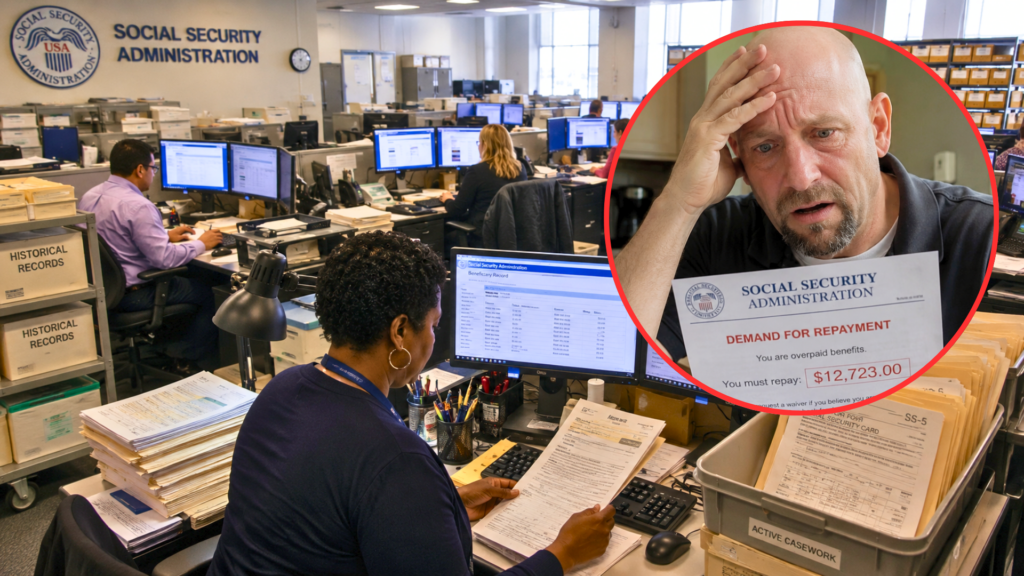
The sudden realization that your financial security has been quietly compromised by a historical corporate or government mistake can leave a family completely paralyzed. For an ordinary homeowner in Iowa named Christopher Storm, this terrifying reality surfaced when he received a notice stating that his expected federal tax return was permanently confiscated. Federal authorities suddenly asserted that the fatherless teenager who worked at Pizza Hut in 1996 had received too much support, turning his adult life upside down three decades later.
The underlying conflict surfaced after the Internal Revenue Service intercepted the family’s annual tax filing to satisfy an ancient administrative debt. According to investigative broadcast reports by KMTV 3 News Now Omaha, the Social Security Administration recently completed an internal audit and declared that Storm was overpaid during his youth. This sudden clawback created immediate domestic panic as Storm and his wife, Amy, frantically attempted to decipher automated government ledgers that dated back to their high school years.
The immediate scale of this collection effort involves a debt that has rapidly ballooned to exactly ten thousand dollars. For a standard midwestern household, this total represents an amount greater than the combined average cost of four months of residential mortgage payments and local utility bills. Because federal lawmakers permanently removed the statute of limitations on benefit overpayment collections, investigators now possess the unrestricted legal authority to pursue aging citizens indefinitely over minor errors made during the mid-nineties.
When Automated Collection Systems Repossess Household Assets Without Warning
Corporate and government automated audit systems regularly prioritize raw collection metrics over the actual financial survival of working class citizens. Under current regulatory frameworks, when the federal government identifies a historical overpayment, the targeted individual receives a strict notice demanding full restitution within thirty days. Legal analysis compiled by Illinois Legal Aid Online demonstrates that these sudden financial liabilities typically occur due to retroactive adjustments in teenage employment wages, changing marital statuses, or minor administrative calculation errors.
Local legal advocates have publicly challenged the fairness of these sweeping automated collections, arguing that they inflict severe psychological and financial trauma on unsuspecting families. Keith Buzzard, a prominent defense attorney from Council Bluffs, Iowa, confirmed that these terrifying notices are sent to roughly one million Americans every single year. That annual volume represents a population larger than the entire civilian workforce of several individual midwestern states combined, highlighting a massive, systemic enforcement operation.
The physical fallout of these aggressive financial extractions forces ordinary families to immediately abandon critical domestic maintenance and long-term economic planning. For the Storm family, the sudden loss of their anticipated tax return forced them to cancel essential, pre-planned structural home repairs. When a centralized federal agency retroactively alters the financial rules thirty years after the fact, it effectively creates a permanent environment of economic instability for law-abiding households.
How Unchecked Bureaucratic Mandates Destabilize Working Class Neighborhoods

The absolute lack of a legal expiration date on federal debt collection has exposed deep vulnerabilities within public consumer protection standards. When an ordinary citizen attempts to contest an ancient overpayment claim, they must navigate an intricate bureaucratic landscape designed to maximize federal recovery rates. Legal experts warn that unless a vulnerable recipient can formally prove they are entirely without fault, the state can legally seize their income regardless of their current financial hardships.
A significant majority of these historical cases remain completely unresolved because everyday citizens cannot afford the specialized legal representation required to battle federal agencies. If a family fails to secure a formal hardship waiver or a reconsideration agreement, they are forced into rigid monthly installment programs spanning up to sixty months.
This structural burden ensures that household resources are continually diverted away from local grocery stores, medical facilities, and community businesses to satisfy ancient bookkeeping adjustments. “To have them say, you know, 30 years later, ‘Hey, that was an overpayment,’ definitely feels very unjust.”
Why Infinite Retroactive Enforcement Leaves Family Futures Permanently Fractured
The expanding scope of infinite retroactive debt collection threatens to permanently alter how middle class Americans view their long-term financial security. National advocacy groups are increasingly tracking how these unexpected federal seizures undermine public trust in foundational social safety nets and retirement systems. If the government continues to penalize citizens for minor clerical errors committed decades prior, the long term economic damage will suppress regional housing markets and generational wealth accumulation.
This current enforcement crisis mirrors previous historical cycles where centralized institutions externalized their systemic inefficiencies onto the backs of vulnerable populations. From the predatory commercial lending crises of the early thousands to modern automated municipal tax foreclosures, working class neighborhoods consistently absorb the damage. Federal regulatory bodies have failed to establish reasonable time limits on these historical audits, leaving local communities completely defenseless against the sudden financial extractions.
The silent friction between inflexible federal databases and defenseless civilian households continues to reshape the American domestic landscape without any public consent. Families across the nation will continue to open their mailboxes only to find their lives disrupted by ancient, unverified clerical discrepancies. No federal lawmaker has successfully passed comprehensive reform to halt this predatory cycle, forcing millions of ordinary citizens to live under the permanent shadow of an endless bureaucratic ledger.