

Products are selected by our editors, we may earn commission from links on this page.

A joint survey from AlixPartners and Cosmetic Executive Women found that leaders of beauty, health and wellness companies have lost track of their own customers. The research polled 1,000 U.S. consumers and nearly 130 industry executives, then compared the two sets of answers side by side. The pattern that emerged runs through discovery, budgets and trust. Sixty-three percent of consumers named health and wellness their top discretionary spending category, placing it above travel, fashion and entertainment. Lindy Firstenberg, co-leader of the Beauty, Health and Wellness practice at AlixPartners, said consumers have reorganized their spending and their sources of information, while the average executive has not caught up.
This article was created with the assistance of AI and reviewed by our editorial team for accuracy and clarity.
Friends beat influencers as the discovery channel

Executives in the survey treated influencers as the gatekeepers of product discovery, and influencer budgets remain one of the largest line items in industry marketing. Consumers answered differently. Forty-five percent said friends and family were their leading source for finding beauty, health and wellness products. Healthcare practitioners came second at 38 percent, followed by social media advertising at 37 percent. Influencers landed at 32 percent, in fourth place. The widest single gap between what executives believed and what consumers reported reached 22 percentage points. Only 16 percent of executives rated healthcare practitioners as an important discovery channel, even though consumers ranked practitioners above both social ads and influencers.
Medspas now rival McDonald’s in U.S. locations

The physical footprint behind this spending has grown faster than most people notice. The survey counted close to 13,000 medspas operating across the United States, a figure the researchers compared directly to the number of McDonald’s restaurants in the country. Medspas occupy ground between a salon and a clinic, offering treatments such as injectables and laser work under some level of medical supervision. That hybrid position matters to the discovery finding on the previous slide, because a medspa visit puts a consumer in front of a practitioner rather than a product shelf or a feed.
Young men spend at a rate the industry underestimates
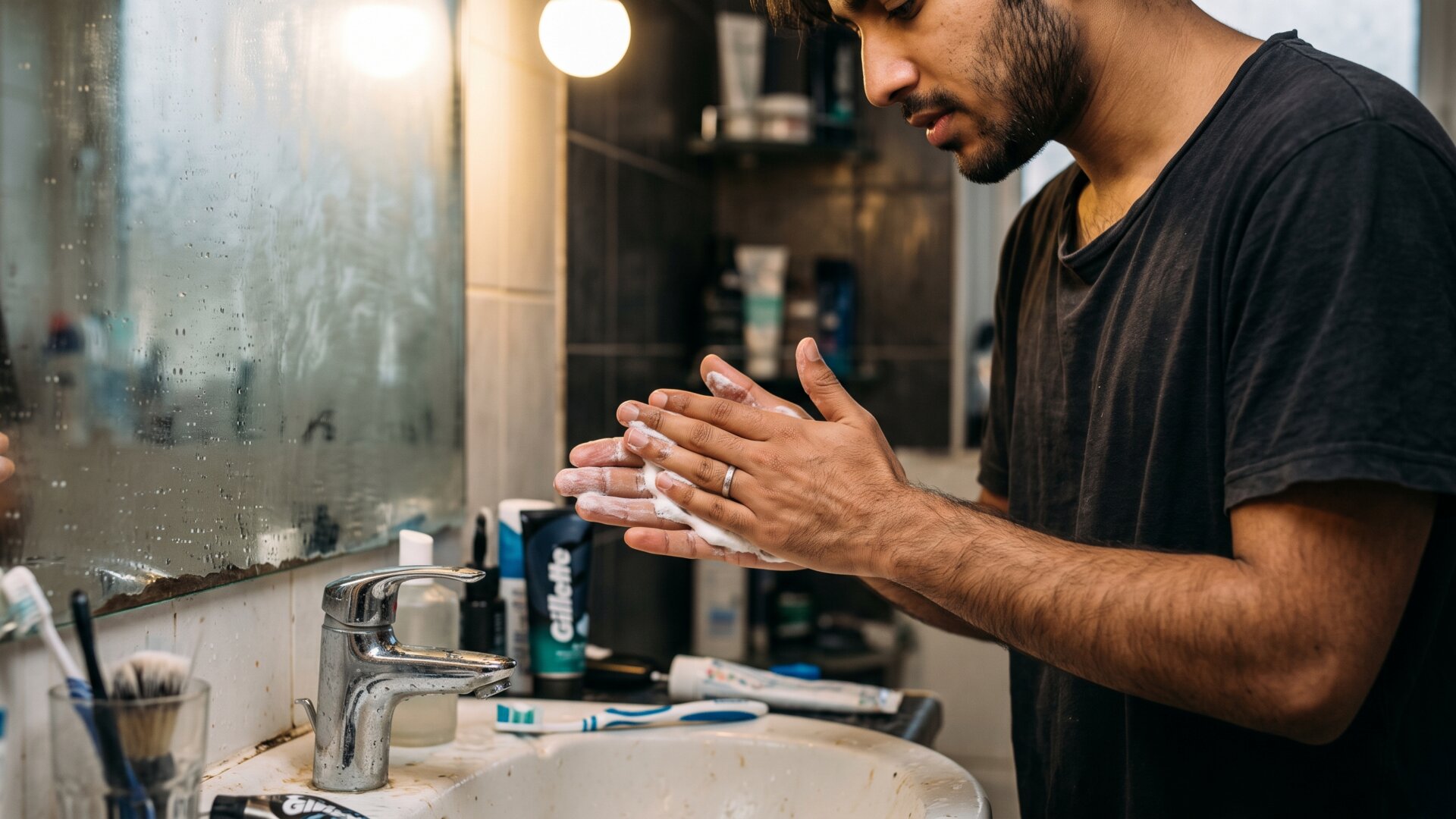
Gen Z and Millennial men turned out to be one of the strongest growth segments in the data. They were 2.7 times more likely than the general population to spend at least $500 per month on beauty, health and wellness. Time commitment followed the same pattern. Forty-nine percent of these men reported spending more than 1.5 hours per day on beauty, health and wellness activity, compared with 28 percent of everyone else surveyed. Procedure volume supports the trend. In 2024, 1.6 million American men underwent cosmetic procedures. Men also made up 60 percent of the consumers the survey classified as first-to-know early adopters.
Women report two gaps the industry has not filled

The survey asked women where investment falls short of demand, and two answers clustered together. Thirty-four percent said low libido and sexual health are underrepresented relative to what the industry spends on them. Thirty-seven percent said vaginal and intimate health could be better served. A regulatory comparison in the findings puts numbers to the imbalance. The FDA has approved 26 medications for erectile dysfunction. Women seeking treatment for low libido have two approved options. That ratio is 13 to one, and it describes the pharmaceutical pipeline rather than consumer interest. The survey measured interest separately, and it was present.
What consumers said they want is human support

Elana Drell Szyfer, president of Cosmetic Executive Women, described the central problem as a trust gap. Consumers want results faster than products can deliver them and are simultaneously skeptical of the claims on the label. Her account of the industry response is specific. Companies have answered with more personalization, heavy marketing spend on influencers, and AI-enhanced service. Drell Szyfer said women in the research were asking for something else: human support. That answer lines up with the discovery numbers. Friends, family and healthcare practitioners together accounted for the two highest-ranked channels, and both involve a person rather than an interface.
Skepticism pushes some shoppers off-label

Drell Szyfer identified a behavior that follows from impatience and distrust combined. Some consumers, unconvinced by product claims and unwilling to wait for slower results, pursue their goals off-label or through the grey market. Off-label use means taking an approved drug for a purpose outside what regulators cleared it for. Grey market purchasing means buying through channels the manufacturer did not authorize. Both routes sit outside the systems that track dosing, sourcing and adverse effects. The survey logged this as a consequence of the trust gap rather than as a separate trend, which places the behavior downstream of how products are marketed and claimed.
The GLP-1 expectation shift executives got nearly right

Weight-loss drugs in the GLP-1 class reset what consumers consider a normal timeline for results. More than half of consumers in the survey said these drugs raised or reset their expectations for beauty, health and wellness products and treatments generally. On one measure, though, executives read the room accurately. Twenty-five percent of executives believed consumers want immediate results from everyday items. Twenty-seven percent of consumers actually said so. That two-point spread stands out against the 22-point gap on discovery channels. The misalignment documented in this research is uneven, and it is not a case of executives being wrong about everything.
Wellness outranked travel in the spending question

The survey asked consumers to rank discretionary spending categories against one another rather than to report dollar amounts in isolation. Sixty-three percent placed health and wellness first. That put it ahead of travel, fashion and entertainment, three categories that have historically absorbed the money people set aside after fixed costs. Firstenberg’s framing in the findings describes the shift as beauty, health and wellness becoming an all-encompassing project rather than an occasional indulgence. The practical effect is budget stability. A category treated as a routine priority purchase behaves differently in a downturn than one treated as a luxury.
Influencer budgets stayed large as influence slipped
The sharpest finding in the research is a mismatch between where money goes and where attention comes from. Influencers rank fourth among consumer discovery channels at 32 percent, behind friends and family, healthcare practitioners and social media ads. They remain one of the largest line items in industry marketing budgets. Healthcare practitioners sit at the opposite corner of the same chart. Consumers ranked them second at 38 percent. Only 16 percent of executives considered them an important discovery channel. Anyone reading beauty marketing can check the pattern themselves: count how many claims arrive through a paid creator versus a clinician.