

Products are selected by our editors, we may earn commission from links on this page.
Most shoppers assume the price tag on a shelf is the price everyone pays. That assumption is not always true anymore, and lawmakers in a third state have decided that gap has gone too far. Retailers have spent years quietly building detailed profiles of individual customers, tracking what they buy, where they shop, and how they respond to sales. Now, at least in one more state, using that profile to set a personal price is against the law.
On July 23, 2026, New Jersey Governor Mikie Sherrill signed the Fair Price Protection Act into law. The rules are specific. The measure bars grocery stores and third-party delivery platforms from using a shopper’s personal data, things like online activity, real-time location, and purchase history, to set an individualized price for groceries and other covered household products. Two shoppers buying the exact same carton of eggs are now legally entitled to pay the exact same price.
New Jersey is not the first state to draw this line. It likely won’t be the last, either. Maryland passed similar legislation in April 2026, followed by Connecticut soon after, making New Jersey the third state in the country to restrict this specific practice. New York’s legislature has passed comparable legislation of its own, currently awaiting the governor’s signature before it takes effect.
This article was created with the assistance of AI and reviewed by our editorial team for accuracy and clarity.
Surveillance Pricing Means the Person Behind You in Line Might Pay Less
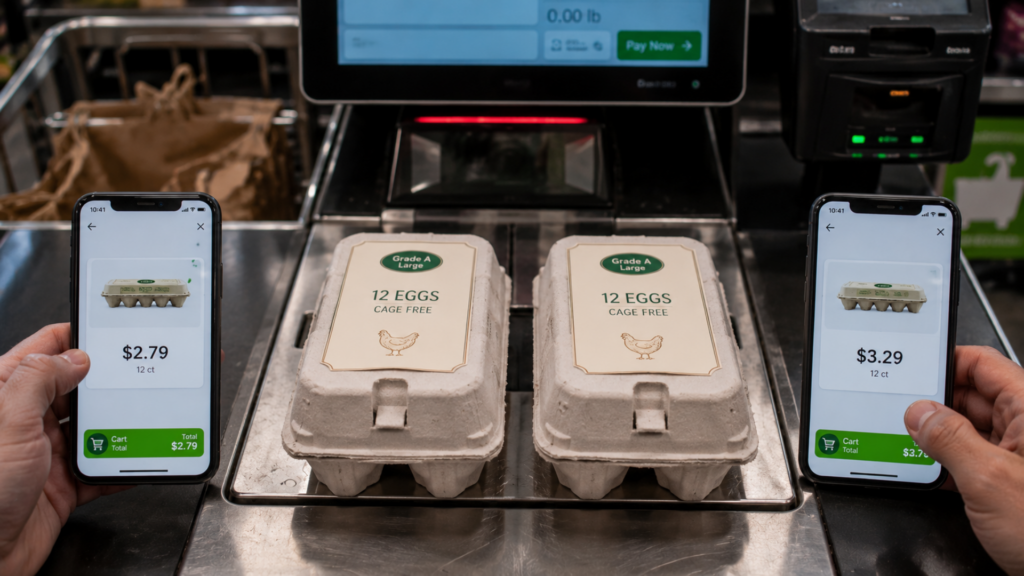
Surveillance pricing is a specific, narrower practice than ordinary sales or discounts. It refers to companies using an individual shopper’s personal data, their browsing history, precise location, past purchases, and even inferred details like income or family size, combined with algorithms, to calculate a customized price just for that person. In practice, that means two customers standing in the same checkout line could be charged different amounts for the identical product.
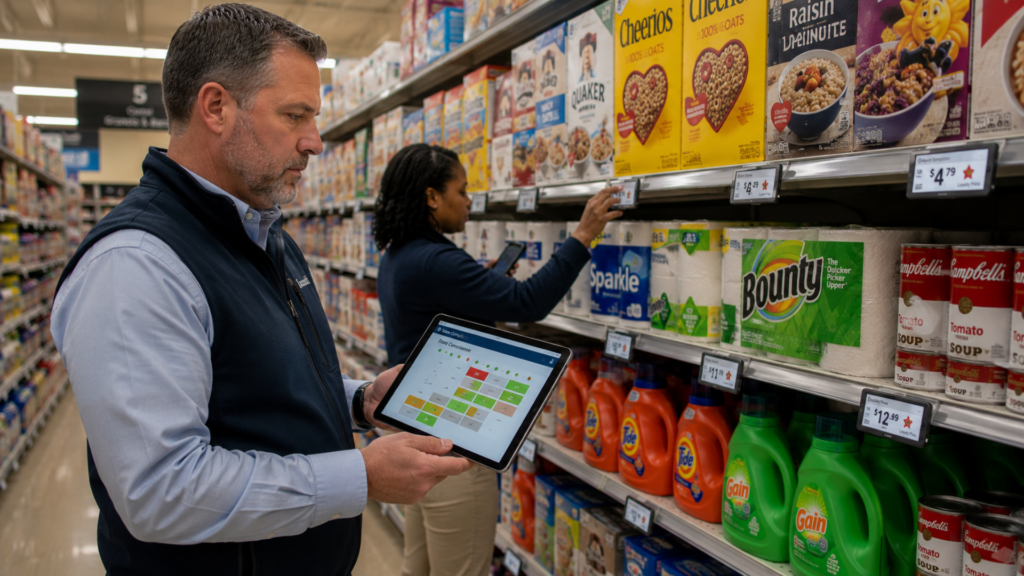
Electronic shelf labels make this technically easier to pull off. These wireless digital tags update prices instantly, replacing paper stickers that once had to be swapped by hand. New Jersey’s law includes a one-year moratorium on new electronic shelf labels starting in February 2027, giving regulators time to study their impact. John Andrews, founder of the shopper-marketing firm Collective Bias, distinguishes this from familiar dynamic pricing: “It breaks the basic fairness assumption that the price tag is the price tag.”
New Jersey’s version of this law goes further than its predecessors in one specific way. It is the first state to give individual consumers the right to sue retailers directly, including through a class action, rather than requiring a complaint to a state attorney general first. Violations carry a minimum penalty of $50,000 or actual damages, whichever is greater. That enforcement mechanism sets New Jersey apart, but it also adds another layer to an already fragmented legal landscape.
Not Every Business Is Cheering. Retailers Say It Could Backfire.
The three existing state laws do not all cover the same ground. Maryland’s law focuses specifically on food retailers and delivery services. Connecticut’s measure takes a broader approach, covering retail sellers generally rather than just groceries. New Jersey lands somewhere in between, targeting groceries and household essentials while adding the strongest enforcement teeth of the three. That patchwork is exactly what worries companies trying to operate across state lines.
New Jersey’s business community pushed back before the bill became law. NJBIA President Michele Siekerka said the legislation presents “a false choice between consumer protections and operational efficiencies,” warning it could effectively undermine loyalty programs and everyday discounts even though lawmakers insist those remain legal. Consumer advocates, meanwhile, argue the law does not go far enough. Consumer Reports has urged lawmakers to revisit it, calling for clearer disclosure requirements around loyalty program pricing.
Two very different camps are unhappy with the exact same law, which is often a sign that a piece of legislation landed somewhere close to the middle. Retailers worry about compliance costs and lost flexibility. Consumer groups worry the exceptions leave too much room for quiet workarounds. Both sides agree on one thing, though: this is not the last version of this fight that lawmakers, or retailers, are going to see.
Airlines Raise Prices for Everyone. This Is Different.
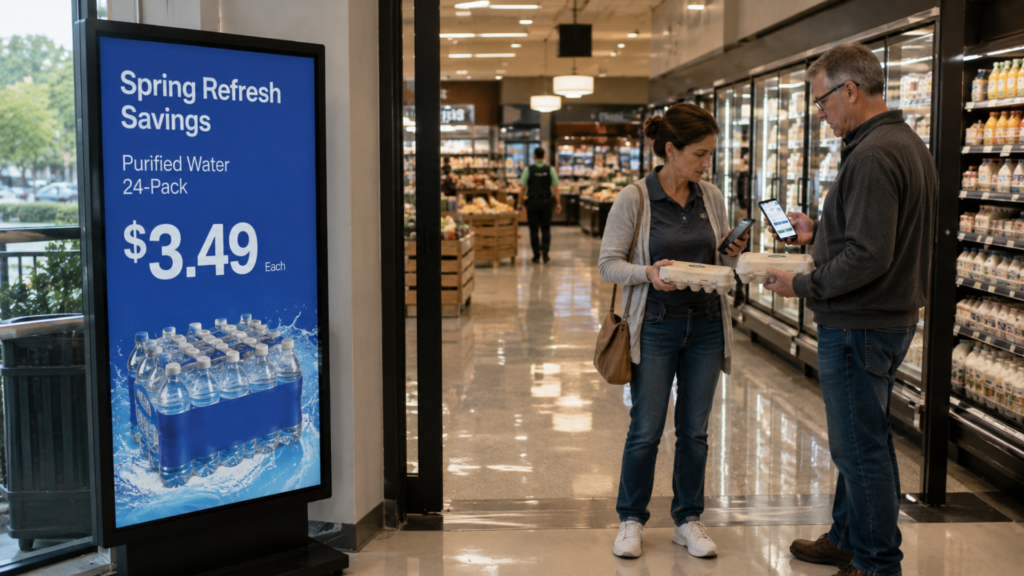
This growing patchwork creates a real headache. Any company operating in dozens of states has to keep up. A national grocery chain may soon need pricing systems that comply with New Jersey’s rules in one region, Maryland’s in another, and Connecticut’s somewhere else, each with different definitions and penalties. If more states pass similar laws, and dozens of related bills already sit in state legislatures, retailers may have to rethink how they use customer data across their entire business.
None of this is about banning prices that change. Airlines have raised fares during holiday weekends for decades, and ride-share apps like Uber use surge pricing when demand spikes and drivers are scarce. Nobody is trying to outlaw that. The distinction lawmakers are drawing is specific: with ordinary dynamic pricing, every customer sees the same higher price at the same moment. With surveillance pricing, only some customers pay more, based on what a company’s algorithm quietly decided about them personally.
That one distinction is doing all the real work in this debate. It is the difference between a price that moves because supply and demand shifted, and a price that moves because a company decided how much you personally could be talked into paying. Three states have now decided that second scenario deserves its own set of rules. Whether the rest of the country follows may depend on whether shoppers start noticing the difference in their own carts.