

Products are selected by our editors, we may earn commission from links on this page.
A panty liner seems like one of the simplest products in the drugstore. Hundreds of women now allege that one popular brand contained a harmful chemical. They are suing the makers of Carefree liners, saying the products held PFOA, a chemical linked to cancer. None of this has been proven in court. Essity, which now owns Carefree, says the brand stands behind its products.
The lawsuit was filed on Oct. 9 in Los Angeles County Superior Court, according to Manufacturing Dive. Hundreds of women are plaintiffs. They are suing Essity, Edgewell Personal Care, and Johnson & Johnson, the companies that have owned or made the brand. They are also suing Gelson’s, a Los Angeles-based grocery chain, for selling the liners. The women want punitive damages, an amount “sufficient to punish the manufacturer defendants,” the complaint says.
Essity has pushed back. Spokesperson Amy Bellcourt said, “Carefree stands behind its products,” and the company plans to “vigorously respond” to the claims. Inc. reports Carefree denies intentionally adding PFAS. Essity bought Carefree from Edgewell in February 2026 for $340 million, and Edgewell had owned it since buying it from Johnson & Johnson in 2013. Edgewell and Johnson & Johnson did not respond to early requests for comment. So what is PFOA, and why does it worry scientists?
PFOA Is a “Forever Chemical” That Does Not Break Down, and Research Links It to Cancer and Reproductive Harm
PFOA belongs to a family of chemicals that do not go away. Its full name is perfluorooctanoic acid, and the family is called PFAS, with about 15,000 members. PFAS help products resist water, stains, and heat. They are nicknamed forever chemicals because they do not break down. They can stay in the environment and in the human body for years. As of 2024, the Guardian reported there were virtually no federal limits on PFAS in consumer products.
Research links PFOA to a higher risk of certain cancers, especially kidney and testicular cancer. It is also linked to hormone problems, low birth weight, infertility, and harm to the immune systems of fetuses, according to the Guardian. In 2024, the U.S. Environmental Protection Agency set a drinking water limit of 4 parts per trillion, a tiny amount, after finding virtually no level of PFOA in drinking water is safe.
Drinking water is one route into the body. The lawsuit says a panty liner is another. It argues the tissue is “vascular, and permeable,” so what it absorbs “enters the bloodstream directly.” A 2024 study reported by the Guardian found skin likely absorbs PFAS at much higher rates than once thought. That raises concern about a product worn against skin for hours. It does not prove these liners harmed anyone. The women in the suit say they did.
Women Say Years of Daily Use Left Them With Cancer, Infertility, and Fear, and That No Label Warned Them

The women say they wore Carefree liners regularly. Some wore them for 10 hours or more at a time. The lawsuit says that adds up to hundreds or even thousands of exposures over years of regular use. They say the liners stayed in steady contact with the sensitive skin of the genital area. Manufacturing Dive reports the suit says that skin is thin and full of blood vessels.
The women list many health problems. They include breast, ovarian, and kidney cancer, thyroid disease, chronic inflammation, infections, high cholesterol, and immune disorders. Others say they have reduced fertility or infertility, and many say they now live in fear of cancer. “Each plaintiff suffered physical, mental, and emotional pain and suffering,” the complaint states. Whether any illness came from the liners is a question for a court.
The lawsuit says buyers were never told. It says PFOA “appeared on no label, ingredient list or package.” It also says the companies could have used inexpensive tests to catch it, and could have made PFAS-free liners. The suit claims the makers got notice on Feb. 6, 2024, yet kept selling the liners, even after a California ban took effect on Jan. 1, 2025. Whether that ban covers these liners is part of the fight.
A Consumer Group Sued Over the Same Chemical in 2024, and Now the Case Turns on Whether It Was Added on Purpose
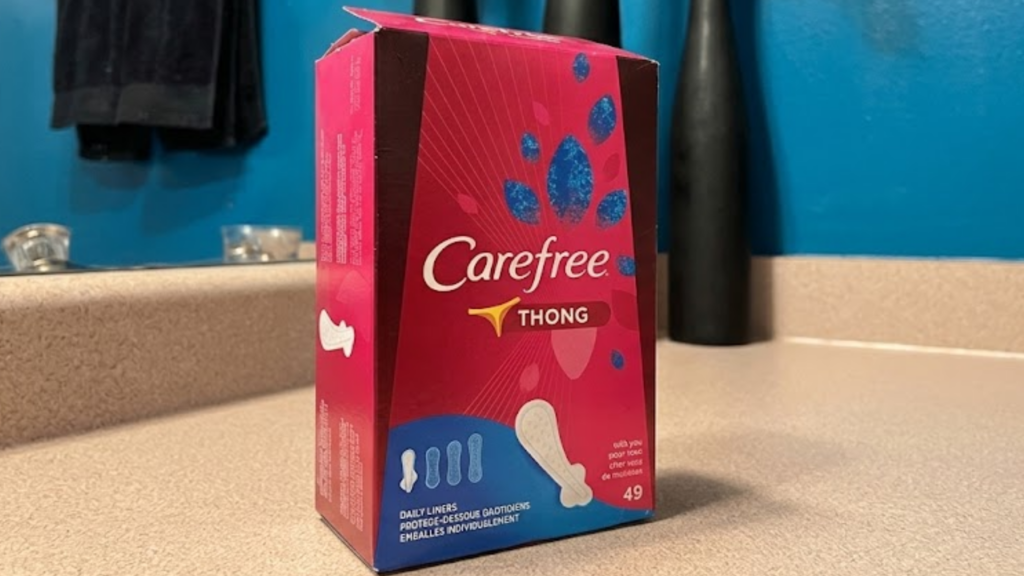
The new lawsuit is not the first legal fight over Carefree and PFOA. In 2024, a consumer group called Ecological Alliance sued Edgewell, then Carefree’s owner, under Proposition 65. That is a California law that requires companies to warn people when listed chemicals are in a product. The group asked a court to order a warning label or remove PFOA from liners sold in California. It said an independent lab test had found PFOA in the liners.
Ecological Alliance’s lawyer, Vineet Dubey, called the exposure a potential “big health problem.” He says the way the liner sits on the body gives it a direct path into the bloodstream. Testing for the group found PFOA leached from the liners at about 756 parts per trillion per hour, the Guardian reported. That measures what leached from the liner, not what a person absorbed, so it is not directly comparable to the drinking water limit.
A label can only list what a company says is inside. Essity says Carefree’s ingredients are printed on the package, and it denies adding PFAS on purpose. The women say PFOA never appeared there. The Guardian reported in 2024 it was unclear whether the chemical was added or crept in through the supply chain. Either way, the shopper cannot tell by looking. In the end, she is buying trust, and a label cannot prove that.
This article is general information, not medical or legal advice. If you have health concerns, talk with your doctor.