


Products are selected by our editors, we may earn commission from links on this page.

The U.S. Environmental Protection Agency has quietly added birth control pills, the NuvaRing, and two drugs used in medication abortions to a list of 374 pharmaceuticals it wants states to begin monitoring in drinking water. The move, announced in early April, is not a ban. But critics say it is something potentially more dangerous: the first step in a strategy to reframe reproductive health medications as environmental threats, using science as a shield.
Senator Ron Wyden, Democrat of Oregon, sent a letter to EPA Administrator Lee Zeldin demanding answers. According to Wyden, the decision to target contraceptives and abortion medications is a politically motivated attempt to undermine reproductive rights using the cover of water safety. He called the guidance a “backdoor attempt” to strip access to reproductive health care and described it bluntly as “uterus surveillance.” His letter gave the EPA a deadline of May 5 to provide a scientific justification.
The EPA says its “human health benchmarks” are not regulations and are not legally enforceable on their own. But the agency also acknowledged, in an April 2 statement, that the list could inform future restrictions. This is the first time the EPA has published a pharmaceutical benchmark list. In the past, such guidance covered pesticides only. Critics say that distinction matters, and that the scope of what follows will depend on who is paying attention.
This article was created with the assistance of AI and reviewed by our editorial team for accuracy and clarity.
A Science-Free Claim That Found Its Way Into Federal Policy

Trace amounts of many medications, including common over-the-counter drugs like ibuprofen, can be detected in wastewater, according to reproductive health research group the Guttmacher Institute. But there is no scientific evidence that abortion medications or birth control pills are contaminating drinking water at levels that pose a risk to human health. The inclusion of these drugs on the EPA list has no peer-reviewed foundation, and Senator Wyden’s office has specifically requested that the agency produce one.
The drugs on the EPA list include misoprostol and methotrexate, which are used both in medication abortions and for treating other conditions such as stomach ulcers and cancer. Several daily oral contraceptive formulations and the NuvaRing are also listed. Mifepristone, the most widely discussed abortion pill, is not on the published list. However, critics note that the EPA’s 60-day public comment period is open, and anti-abortion groups are already filing submissions demanding that mifepristone be added.
According to the Guttmacher Institute, these regulatory efforts do not target known drinking water contaminants or the agricultural and industrial byproducts that are the leading sources of water pollution. Instead, researchers argue, the strategy is designed to stigmatize medication abortion by imposing an exceptional level of scrutiny on reproductive drugs that is not applied to other pharmaceuticals. Whether the EPA will provide the scientific justification Wyden requested remains an open question, and one that could determine how far this policy travels.
The Anti-Abortion Lobby’s Long Game Inside Environmental Law

The EPA’s pharmaceutical benchmark list did not emerge in a vacuum. Anti-abortion organizations have spent years pursuing a strategy of using environmental law to restrict access to medication abortion, and this marks their most significant federal result yet. Groups like Students for Life have pointed to the National Environmental Policy Act and the Clean Water Act in citizen petitions to the FDA, while also pushing “clean water bills” across multiple state legislatures, a campaign that so far has not produced an actual law but has steadily built institutional pressure.
Students for Life’s head of policy, Kristi Hamrick, told Politico that “people need to understand that they are likely drinking other people’s abortions,” claiming that medication abortion waste, including placental tissue and fetal remains, can be found in drinking water. Researchers and public health experts describe these claims as unsubstantiated and factually incorrect. Still, the campaign has been effective enough to reshape the conversation inside a federal agency. Students for Life aligned its push with Health Secretary Robert F. Kennedy Jr.’s “Make America Healthy Again” agenda, giving it added institutional momentum.
The strategy has also moved into Congress. Representative Mary Miller of Illinois introduced the Clean Water for All Life Act last month, which would require people using abortion pills at home to use toilet “catch kits” to collect medical waste. According to Miller, abortion pill ingredients remain active in water treatment systems and may expose families to health risks including infertility and cancer. Those claims are not supported by current scientific evidence. Students for Life has collected more than 1,700 public comments to send to the EPA demanding action on what they describe as abortion pill pollution in water supplies.
A Comment Period, a Deadline, and a Decision
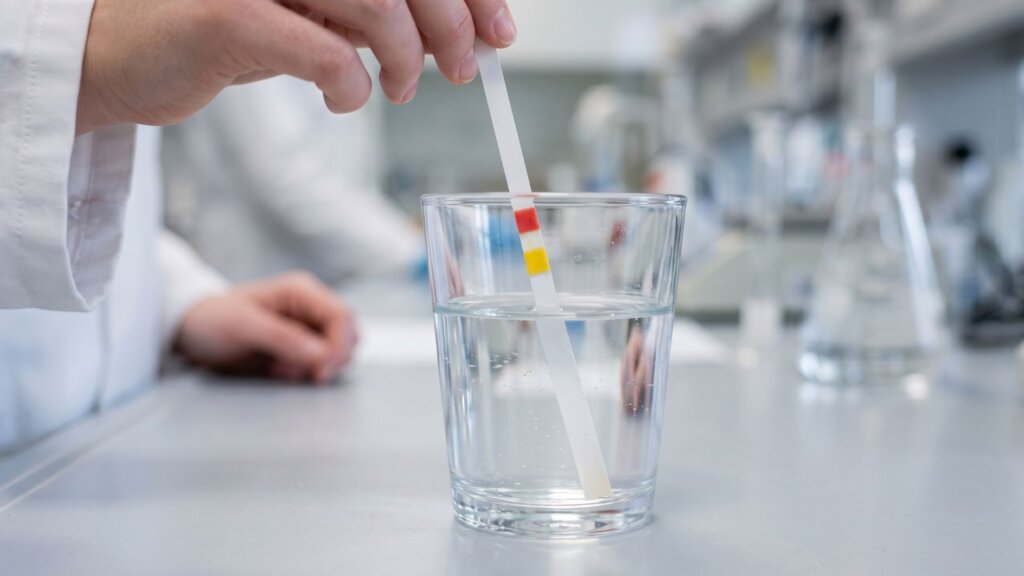
Senator Wyden warned in his letter that the EPA’s 60-day public comment window is less a neutral policy tool and more an open door for anti-abortion groups to formally demand mifepristone be added to the regulatory process. He wrote that by inviting public input in this way, the EPA is attempting to accomplish through environmental rulemaking what opponents of abortion access have repeatedly failed to achieve in courts, at the FDA, and in Congress. The comment period itself becomes a mechanism, not just a formality.
The EPA, for its part, defended the benchmark list as a transparency measure responding to public demand for more information about what is in drinking water. A spokesperson told local Oregon broadcaster KOIN that elevating pharmaceuticals to priority group status directly responds to the concerns of millions of Americans who have long demanded greater transparency and accountability about what is in their water. The agency has not yet publicly responded to Wyden’s specific request for peer-reviewed scientific justification. The May 5 deadline has passed without a publicly announced reply.
What happens next may come down to whether the EPA treats Wyden’s challenge as a political inconvenience or a substantive scientific obligation. If the benchmarks stand without evidence, they create a regulatory template. Other drugs, other conditions, other communities could follow the same path into monitoring, stigma, and eventual restriction. Water safety is a legitimate public concern. The question is whether this policy is actually about water, or whether clean drinking water has simply become the newest front in a longer fight.