


Products are selected by our editors, we may earn commission from links on this page.

Gas dropped to $3.47 a gallon at 25 new stations across the greater Philadelphia region this week, and the White House wants everyone to know who to thank. A video posted on X on July 7 shows drivers pulling up to pumps under a banner reading Freedom Fuel, filling their tanks, and crediting President Donald Trump for the lower price. One man’s reaction, caught on camera, became the centerpiece of the entire campaign.
“I thought gas was more expensive, but it’s not,” the unidentified driver said in the video, adding, “Thanks, Trump, for saving me some money.” The White House confirmed the stations to USA TODAY in an email on July 7, tying the launch directly to the president’s economic record. No cost breakdown, subsidy source, or funding details for the discounted fuel appeared in the announcement.
The rollout lands months before the November midterm elections, when gas prices at the pump often become a flashpoint for voters. Twenty-five stations selling $3.47 gas sounds like a win worth celebrating. A single number buried in AAA’s daily fuel tracker, released the same day as the video, tells a very different story about how much of a deal this actually is.
This article was created with the assistance of AI and reviewed by our editorial team for accuracy and clarity.
Freedom Fuel’s $3.47 Price Sits Just 32 Cents Below the National Average
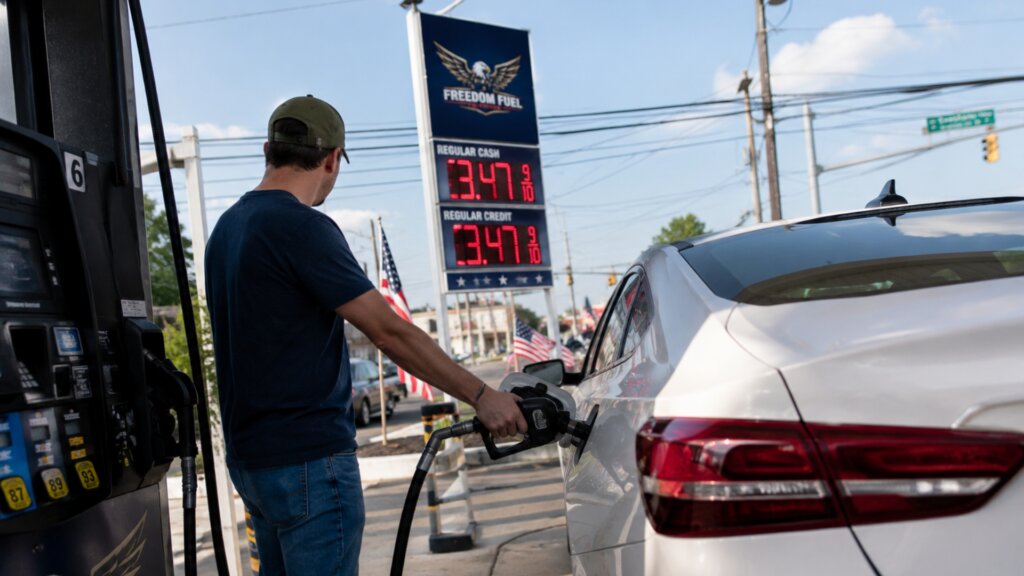
According to AAA data, the national average price for a gallon of gas stood at $3.79 on July 7, the same day the White House unveiled its Freedom Fuel stations. That puts the celebrated $3.47 price only 32 cents below what drivers were already paying nationwide. The gap is real, but it is far smaller than the video’s celebratory tone suggests.
Twenty-five stations in one metro area do not set a national price. Gas costs still swing widely depending on where a driver fills up, and the greater Philadelphia region chosen for Freedom Fuel was not among the areas hit hardest by this year’s price spikes. That distinction matters, because the states that struggled most sit nowhere near Pennsylvania.
Michigan, Indiana, Ohio, and Illinois all recorded significant price jumps earlier in 2026, according to GasBuddy, an industry analyst that tracks pump prices nationwide. The national average climbed to nearly $5 a gallon in May, a spike with nothing to do with any single gas station chain or government program. The real driver of that surge traces back to a war on the other side of the world.
Brent Crude Spiked Toward $120 a Barrel During the U.S.-Iran War
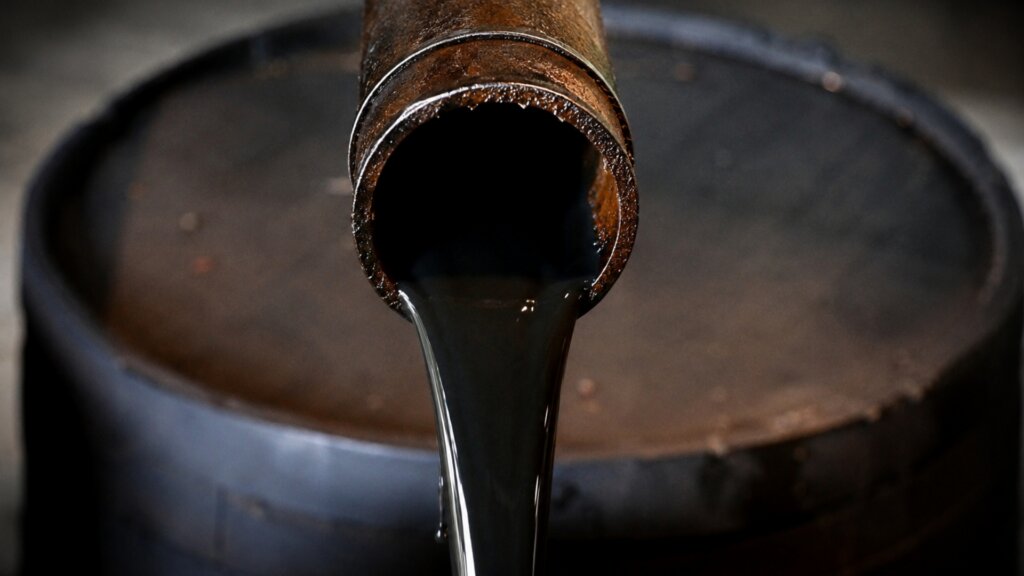
Crude oil, the raw material refined into gasoline, trades on global markets, and its price pushes pump prices up or down more than anything else. Earlier this year, the cost of crude spiked sharply, and Brent crude, the international benchmark, jumped more than 55% at its peak. That single number explains why every state, not a select few, watched prices climb at once.
Brent crude nearly reached $120 a barrel during the surge, a level that rippled through refineries, distributors, and ultimately every gas station in the country. The spike traced directly back to the U.S.-Iran war and the disruptions it caused to shipping lanes carrying crude oil to the rest of the world. One narrow stretch of water sat at the center of the entire crisis.
The Strait of Hormuz, a shipping route between Iran and the Arabian Peninsula, carried almost 34% of the world’s crude oil in 2025, according to the International Energy Agency. When the war disrupted traffic through the strait, the effect on gas prices was immediate and global. A resolution to that war would decide whether prices kept climbing or finally began to fall.
Gas Prices Fell After the U.S. and Iran Reached a Tentative Deal in June
In June, the United States and Iran reached a tentative agreement to end the war, reopening the Strait of Hormuz to normal shipping traffic. Gasoline prices began falling almost immediately afterward, a shift driven entirely by global oil markets rather than domestic policy or any gas station chain. That drop is the real reason prices sit closer to $3.79 today than the nearly $5 average seen in May.
The U.S. Energy Information Administration attributes pump prices to four factors: crude oil costs, refining costs, distribution and marketing, and federal and state taxes. On July 7, Hawaii, California, and Washington all posted average prices above $5 a gallon, while Indiana, Oklahoma, and Texas ranked among the cheapest in the country, according to AAA. Location, not a 25-station chain, still decides what most Americans pay.
Freedom Fuel’s 25 stations, listed on the company’s website, sell gas 32 cents below a national average that was already falling before the first pump opened. The price drop Americans are living through traces back to a ceasefire between the United States and Iran, not a chain of gas stations named after a political slogan. Twenty-five stations did not lower the price of oil. A war ending did.