


Products are selected by our editors, we may earn commission from links on this page.

For more than two decades, U.S. blood banks turned away donors for one strange reason: they’d spent too much time in Britain. It wasn’t nationality, and it definitely wasn’t about whose blood was “stronger.” A microscopic misfolded protein, tied to the UK’s mad cow disease crisis, made regulators worry that apparently healthy donors could unknowingly transmit a rare and fatal brain disorder. A massive British study later uncovered evidence that made that concern considerably harder to dismiss.
This article was created with the assistance of AI and reviewed by our editorial team for accuracy and clarity.
This Wasn’t a Virus, It Was a Misfolded Protein Chain Reaction
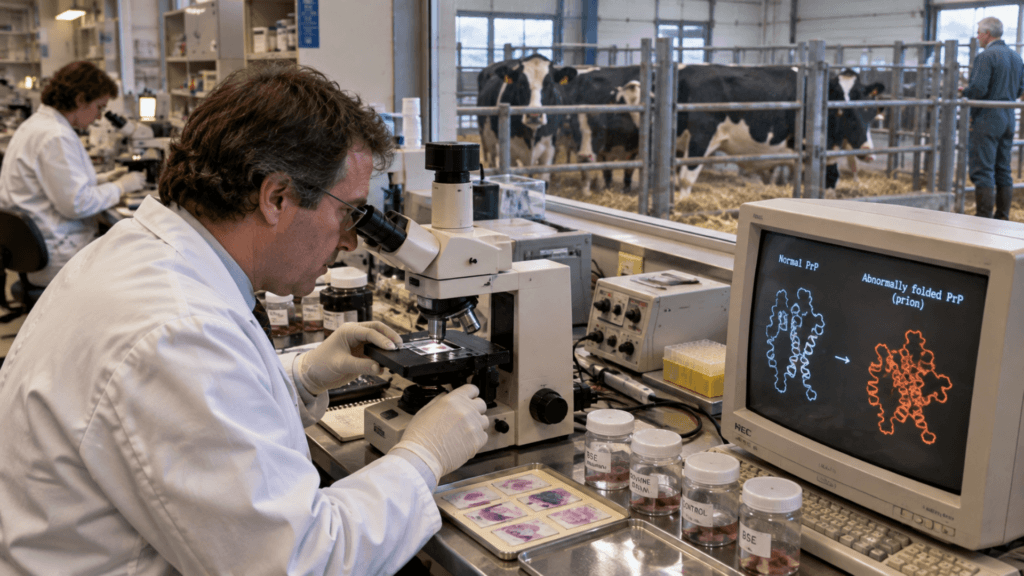
The alarm traces back to the 1980s, when cattle across Britain began developing bovine spongiform encephalopathy, widely known as mad cow disease. Scientists eventually linked contaminated beef to variant Creutzfeldt-Jakob disease, or vCJD, in humans. Unlike illnesses caused by bacteria or viruses, this condition involves prions, misfolded proteins capable of forcing healthy versions to change shape, triggering a destructive chain reaction inside the brain.
1 in 2,000 Britons May Have Carried the Abnormal Protein
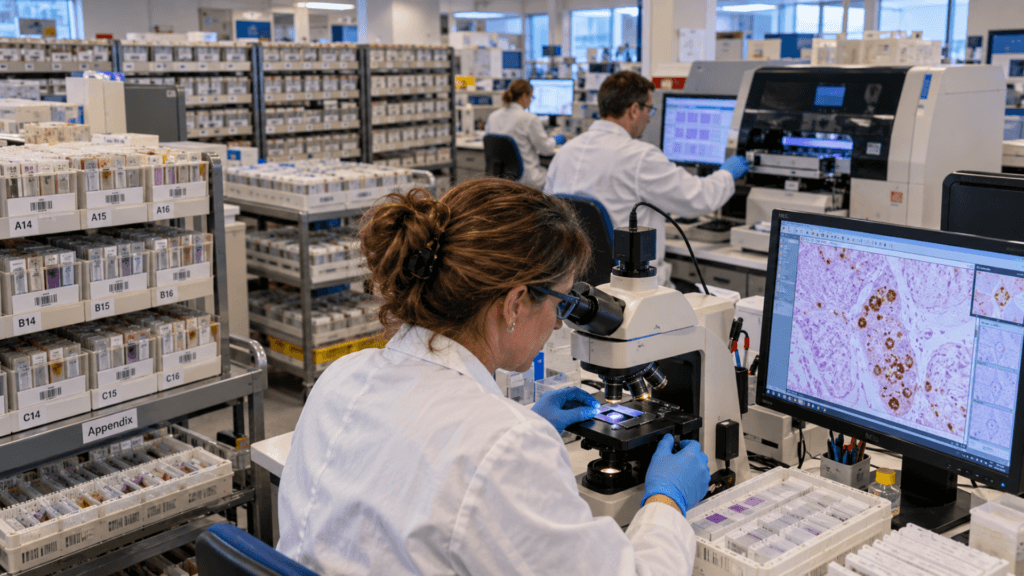
In 2013, researchers published findings in the BMJ after examining 32,441 archived appendix samples collected across England. Sixteen samples tested positive for abnormal prion protein, producing an estimated prevalence of roughly 493 per million people, or about one in 2,000. That figure roughly doubled an earlier 2004 study, which had tested 12,674 samples and estimated a prevalence of 237 per million.
A Positive Sample Didn’t Actually Guarantee Future Illness

One crucial detail complicated how alarming those 16 positive samples actually were. Researchers found that the specific genetic profile seen in every confirmed clinical vCJD case, a genotype involving being homozygous for methionine at a particular gene location, appeared in only about half of the 16 positive samples. A positive tissue sample, in other words, didn’t necessarily mean that person would ever develop symptoms.
Blood Transfusion Transmission Wasn’t Just Theoretical
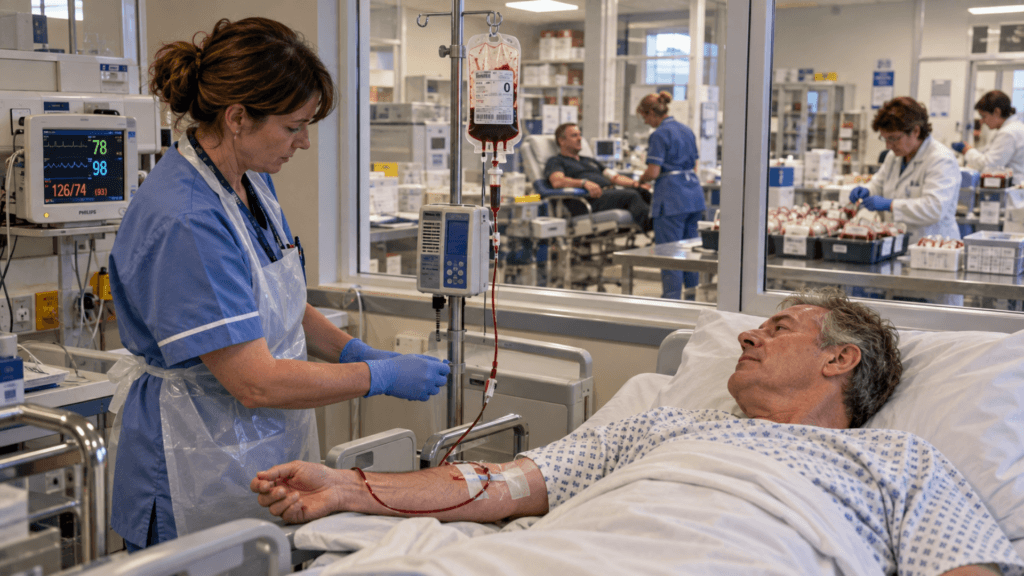
Blood transfusion specifically became a genuine concern because documented transmission cases already existed by that point. Health researchers had confirmed at least three clinical vCJD cases in patients who received blood transfusions from donors who were asymptomatic at the time of donation but later died of the disease themselves, establishing that transmission through blood was a real, documented risk rather than purely theoretical.
There Was No Test That Could Catch It in Donated Blood
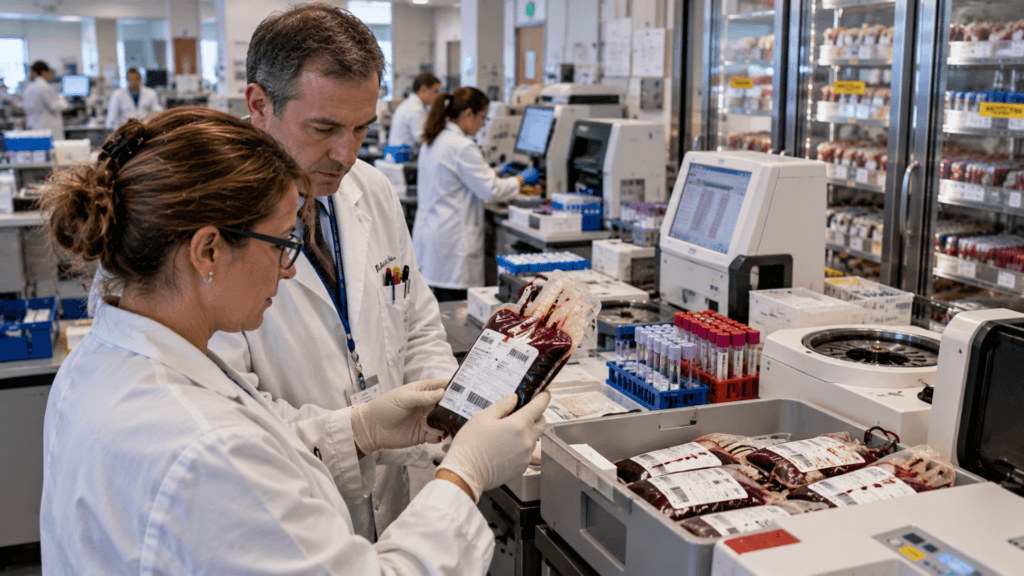
Compounding the problem, no routine screening test existed that could reliably detect the abnormal protein in donated blood before transfusion. When the potential consequence is an incurable, fatal neurological disease with no available treatment, regulators had little appetite for a wait-and-see approach. The United States responded by restricting donations from people who had spent significant time in the UK during the highest-risk years.
The Exact Rule: Three Months in the UK Between 1980 and 1996

Specifically, the FDA’s policy deferred donors who had spent a cumulative three months or more in the United Kingdom between 1980 and 1996, the period considered highest-risk for BSE exposure through contaminated beef. That restriction applied regardless of a donor’s current health status, since the disease’s long incubation period meant symptoms could take years or even decades to surface.
A Separate Study of 63,000 Tonsils Found Zero Positive Cases
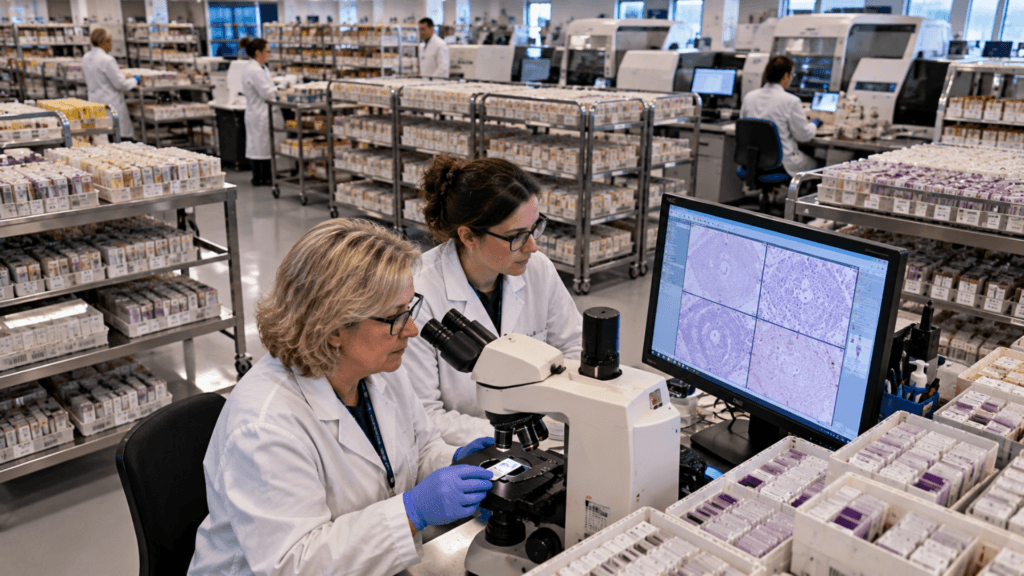
Not every piece of research pointed toward the same level of concern, though. A separate, larger study examining 63,007 tonsil specimens collected in the UK between 2004 and 2008 found zero positive samples for abnormal prion protein, including among more than 32,000 samples specifically taken from people born before 1996. That stark contrast with the appendix findings left real scientific uncertainty about the true population-wide risk.
Actual Cases Have Nearly Vanished Since Peaking in 2000

The actual clinical disease, meanwhile, has become exceedingly rare in recent years. UK vCJD deaths peaked in 2000 at 28 cases annually before declining sharply, with only two confirmed deaths recorded since 2011, one in 2013 and another in 2016. Across the entire outbreak, the UK has recorded roughly 178 total confirmed vCJD cases, with no new cases reported since 2016.
The FDA Finally Lifted the Ban in 2022

Given that declining trajectory and evolving risk assessments, the FDA eventually revisited its original policy. In 2022, the agency removed its recommendation to indefinitely defer donors based solely on time spent in the UK between 1980 and 1996. Eligible British travelers and former residents can now donate blood in the U.S. if they meet all other standard requirements, closing a chapter that reshaped global blood safety policy for more than 20 years.