

Products are selected by our editors, we may earn commission from links on this page.

Galderma released survey results on 12 October 2025 reporting that 56 percent of women first attributed menopause-related skin changes to general ageing. Only 29 percent made the connection to menopause on their own. The company calls the pattern “The Menopausal Skin Misread.” The gap matters because the two explanations lead somewhere different. Ageing is treated as a slow background process nobody controls. Hormonal change during perimenopause has a timeline, a mechanism, and a set of effects that can be named. A woman who assumes the first explanation stops asking questions the second one would prompt. Galderma, a Swiss dermatology company listed on the SIX exchange as GALD, timed the release ahead of World Menopause Day on 18 October.
This article was created with the assistance of AI and reviewed by our editorial team for accuracy and clarity.
Half of women did not know hormones affect skin at all

The more striking number sits underneath the headline figure. Galderma reported that one in two women surveyed were unaware that hormonal fluctuations during perimenopause and menopause can meaningfully affect the skin. That reframes the 56 percent. Those women were not weighing two explanations and choosing badly. For roughly half of them, only one explanation existed. Ageing was not the preferred answer, it was the only answer available. It also explains why the misread survives contact with a mirror. A woman who notices her skin behaving differently at 49 has no reason to connect it to anything beyond the calendar if nobody has told her the connection exists. The assumption holds because nothing in her information environment contradicts it.
Oestrogen receptors sit in the skin itself
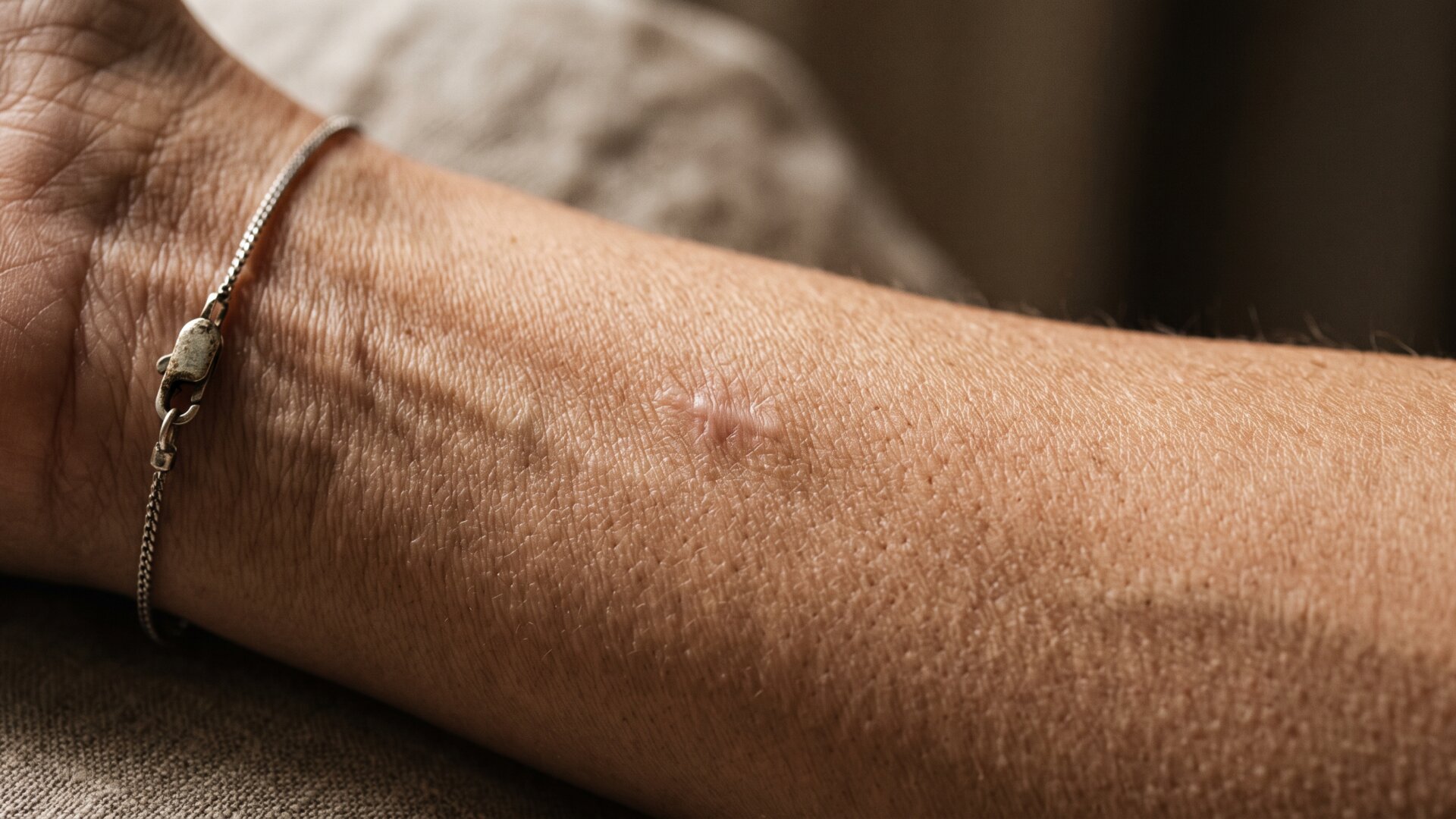
Skin carries oestrogen receptors in the epidermis and dermis, which is the physical reason hormonal change registers there. Dermatology research has documented that collagen density and skin hydration both shift in the years around menopause, with the steepest documented decline in the first few years after a woman’s final period. Collagen is the structural protein that gives skin its firmness. Hyaluronic acid, a molecule that binds water in the dermis, governs how much moisture the tissue holds. This is the biology that the survey’s 56 percent were not told about. The changes are not an acceleration of ordinary ageing on a faster clock. They are a separate process with its own driver, running at the same time as ordinary ageing and often mistaken for it.
Seventy percent bought products aimed at the wrong target
Galderma reported that 70 percent of women surveyed had purchased products designed to address signs of ageing, believing those products would help with skin changes they were experiencing during perimenopause or menopause. That is seven in ten. For scale, it is a larger share than the 56 percent who misattributed the cause in the first place, which suggests the purchasing behaviour extends past the group that explicitly named ageing as the explanation. The money follows the explanation. An anti-ageing shelf is organised around a premise about what is happening and what will help. A woman who accepts that premise buys inside it. The survey does not report what those products cost or whether they worked, so the finding is about the belief driving the purchase rather than the outcome.
Galderma named the gap its own category

Anne-Cecile Chevrier, Galderma’s global head of injectable aesthetics, framed the findings around a single argument: that women are managing skin changes without recognising that menopause may be involved, and that the field needs to move past what she called a one-size-fits-all ageing narrative. Her stated position is that Galderma is committed to advancing understanding of menopausal skin and providing science-backed information so women can make informed choices. Read that alongside the commercial context. Galderma sells injectable aesthetic products. A survey showing that women misunderstand why their skin is changing also establishes a category the company’s products address. Both things are true at once, and the figures are the company’s own. They are worth knowing and worth reading with that attribution attached.
Advice felt too general, according to 62 percent

Galderma reported that 62 percent of women had felt overwhelmed by skincare advice during perimenopause or menopause. Among those who struggled to find clear information, nearly half said the advice they encountered was too general and framed around ageing rather than menopause. That is a specific complaint rather than a vague one. The problem these women described was not an absence of advice. It was advice sorted into the wrong bin. The appetite for a different frame was high: Galderma reported more than 80 percent of women agreeing that understanding the difference between general ageing and menopause-related changes would help them feel more informed and in control of their skincare decisions. People generally agree with statements like that, so read it as direction rather than magnitude.
Eight months, two products, two different orders
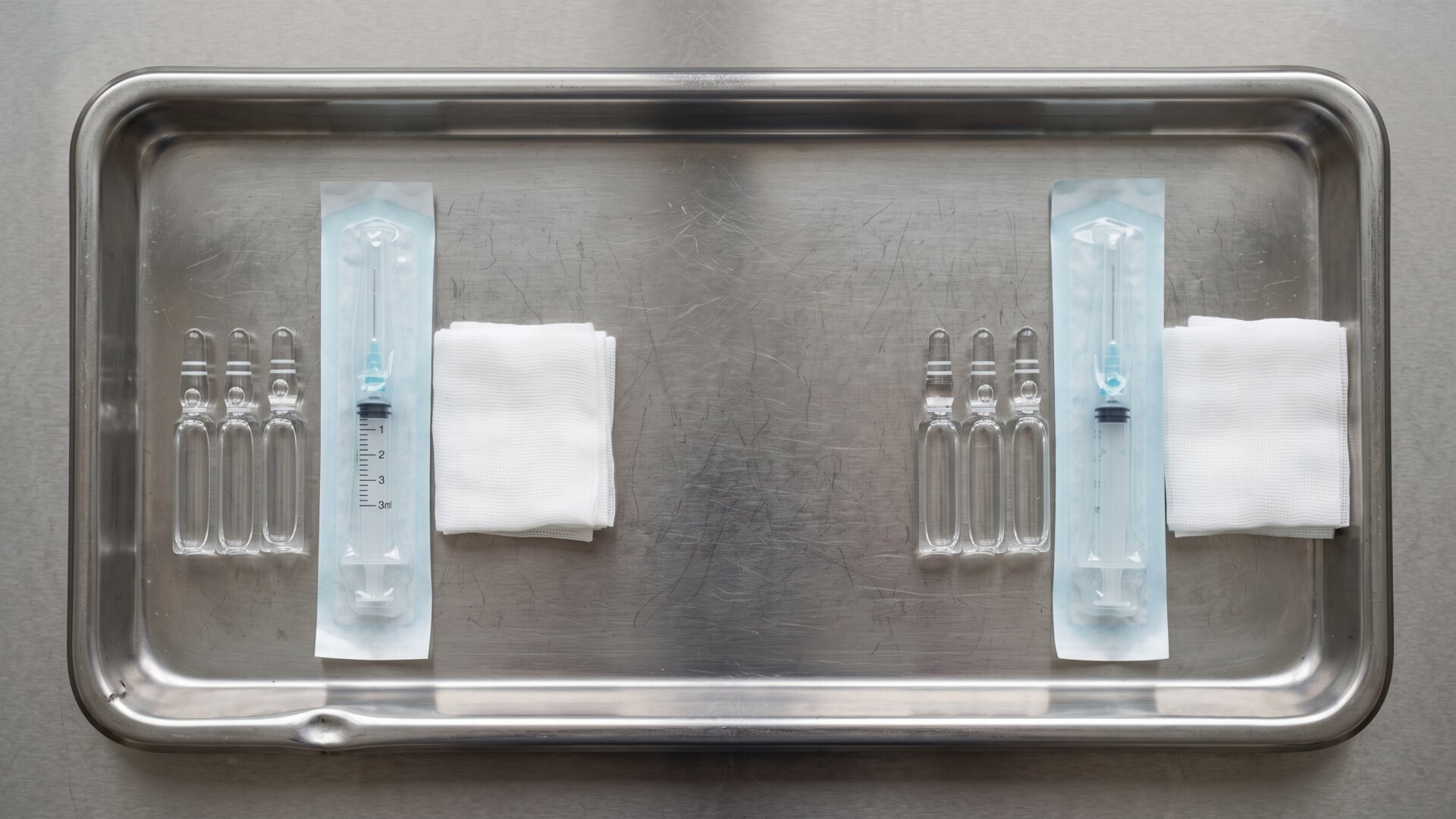
Alongside the survey, Galderma published results from an eight-month investigator-initiated trial run by Dr. Andreas Nikolis, a board-certified plastic surgeon in Montreal. The trial treated the face and the decolletage, which is the chest area below the neck. Participants were split into two groups. One received Restylane Skinboosters first and Sculptra second. The other received Sculptra first and Skinboosters second. Same two products, opposite order. Skinboosters are injectable hyaluronic acid aimed at hydration. Sculptra is poly-L-lactic acid, a material that prompts the body to produce its own collagen over months rather than adding volume directly. The question the trial asked was narrow and unusual: whether sequence alone changes the result.
The order changed the measurement by eleven points
It did. Galderma reported that women who received Restylane Skinboosters first, followed by Sculptra, showed facial dermal thickness increasing by 27.3 percent. In the group treated in the reverse order, the increase was 15.7 percent. Dermal thickness is a measure of the skin’s structural layer, the part that thins as collagen declines. Nikolis described the mechanism as preconditioning: hydrating the tissue first to improve the environment, then stimulating collagen production into skin that is better prepared to respond. Two cautions belong with the figure. The trial was investigator-initiated and supported by Galderma, which makes both products tested. And an eight-month window shows what happened over eight months, not what persists beyond it.
Satisfaction was high in both groups, not one

The satisfaction results cut across the sequencing finding rather than confirming it. Galderma reported that across both groups, 98 percent of patients described their results as natural-looking, 96 percent said they would recommend the treatments, and 92 percent said they would undergo treatment again. Both groups achieved meaningful hydration improvements. The measurable advantage of going hydration-first showed up in dermal thickness, an instrument reading, not in how satisfied patients said they were. That distinction is easy to lose when a single percentage gets quoted on its own. Nikolis presented the study as giving clinicians an evidence-based framework for sequencing in menopausal skin. It is a finding about protocol design, addressed to practitioners, not a claim that one order left patients happier.
Perimenopause can start a decade before the last period

The timing is what makes the misread so durable. Perimenopause can begin in a woman’s early forties and run for several years before periods stop, and skin changes can register during that window rather than after it. A woman noticing differences at 43 is at a plausible age for ordinary ageing to be the obvious explanation. The hormonal explanation arrives years later, if it arrives at all, which is how the misattribution survives. Galderma launched a campaign called “Rewriting the Future of Your Skin, Own Your Menopause Story” alongside the findings. The useful item is smaller than the campaign: if skin changes land in your forties, hormonal timing is worth raising with a doctor as one possible factor rather than assuming the calendar explains it.