


Products are selected by our editors, we may earn commission from links on this page.

The United States government is now moving to revoke the citizenship of hundreds of people who are already Americans. The Department of Justice has confirmed it has referred 384 foreign-born citizens for denaturalization proceedings, dispatching cases to U.S. attorney offices across the country. This is not a theoretical threat. Cases are being assigned, prosecutors are being enlisted, and the people named are watching their status as Americans become uncertain overnight.
This push is extraordinary not just in scale but in method. Denaturalization cases have historically been handled by attorneys who specialize in immigration law, not by ordinary line prosecutors working out of regional offices. Now, civil litigators in 39 U.S. attorney’s offices across the country are being assigned these cases. That structural shift matters because it signals something bigger: the administration is treating citizenship revocation not as a rare, specialized action but as a routine law enforcement function.
The numbers tell the story of just how sharp this turn is. Between 1990 and 2017, the federal government filed only 305 denaturalization cases in total, an average of roughly 11 per year. The Trump administration has now referred more cases in a single year than the Biden administration handled across all four years in office. Matthew Tragesser, the DOJ’s deputy director for communications, said the department is “pursuing the highest volume of denaturalization referrals in history.” The pace alone signals a fundamental reordering of how citizenship is treated in America.
A Process Built for Rare Cases, Now Pushed Into Overdrive
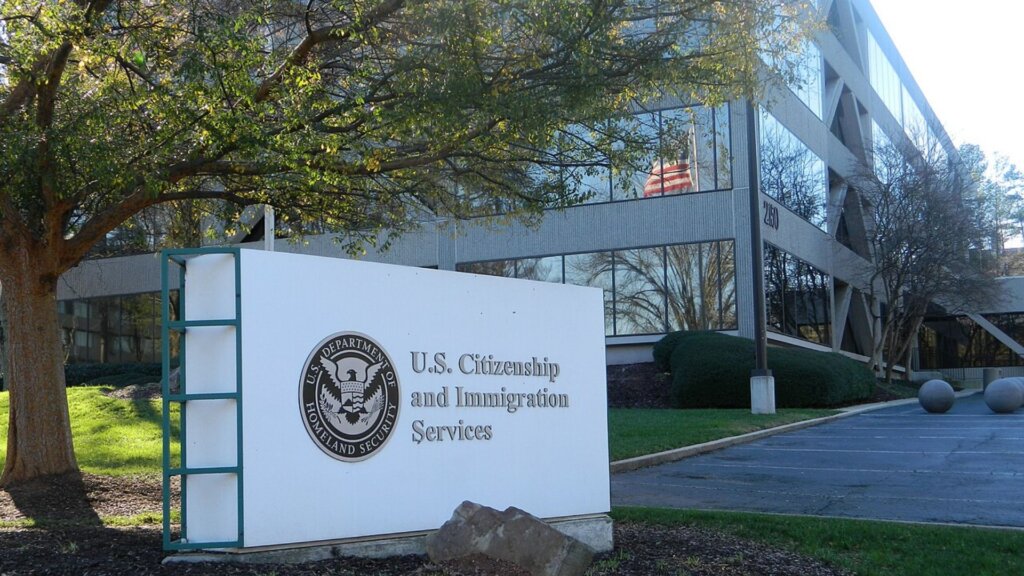
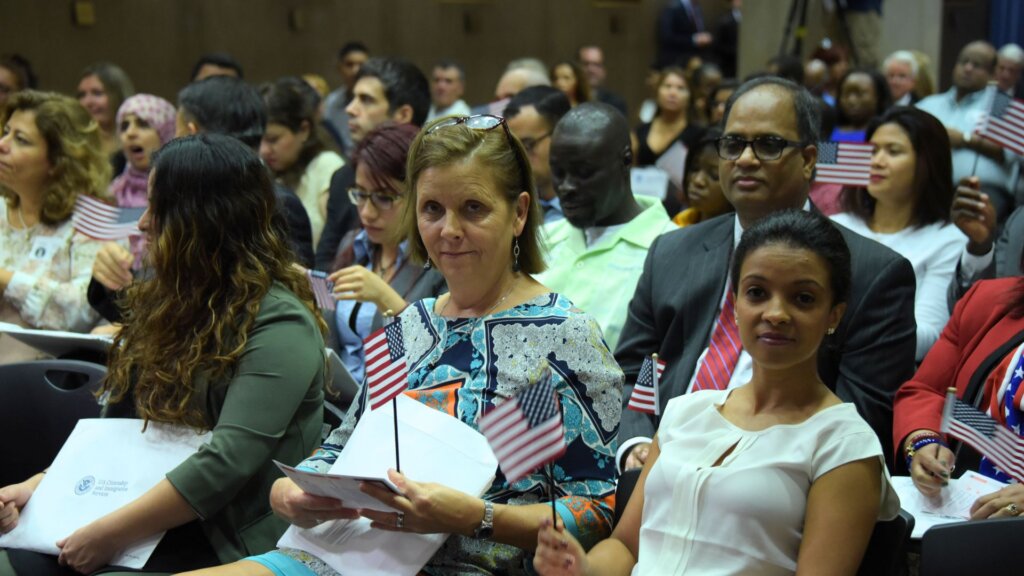
Becoming a U.S. citizen takes years. Applicants provide biometric data, disclose their full travel and criminal histories, answer detailed questions about political affiliations, and must pass both civics and English tests. Some qualify through marriage after three years; others wait at least five years as green card holders. The process exists precisely to vet people thoroughly. Under federal law, citizenship can be stripped only if someone obtained it through fraud or concealment of facts that would have made them ineligible, or if they committed certain serious crimes.
The legal bar for denaturalization is deliberately high. According to U.S. Citizenship and Immigration Services, the government must present “clear, convincing, and unequivocal evidence” to a federal judge, either through civil or criminal proceedings. Critics, however, warn that the administration’s broader enforcement memo instructs attorneys to pursue any case where evidence “might support” taking citizenship away, regardless of how strong that evidence actually is. That standard, legal scholars argue, is a significant departure from how the law has traditionally been applied.
Past denaturalization cases targeted a narrow category of offenders: war criminals who had concealed their histories to gain entry, people who stole identities to fraudulently obtain papers, and a small number of serious felons. Now the pool appears far wider. Recent cases include a Marine from Ghana court-martialed over a sex crime, a Nigerian man convicted of tax fraud, and an Argentine man accused of falsely claiming Cuban nationality. The breadth of these cases suggests the criteria being applied may extend well beyond what the law has historically supported.
What Legal Experts Say About the Stakes
Amanda Frost, a law professor at the University of Virginia who has written extensively about denaturalization history, warned that what is unfolding carries echoes of an earlier, darker period. According to Frost, the government has used denaturalization power in the past to target people it viewed as political opponents. She added that the current campaign sends a pointed message: that naturalized citizens do not hold their status with the same security as those who were born in the country. That distinction, she said, cuts at one of the foundational promises of American citizenship.
The constitutional stakes are serious. In its 1967 ruling in Afroyim v. Rusk, the Supreme Court held that the government cannot take away citizenship without the person’s consent, leaving an exception only for fraud during the naturalization process. Legal scholars note that civil denaturalization proceedings offer far fewer protections than criminal cases: there is no right to a free attorney for those who cannot afford one, no jury trial, and a lower burden of proof. Chief Justice Earl Warren once described citizenship as “the right to have rights.” Stripping it without full due process, critics argue, cuts against that principle directly.
Lucas Guttentag, a former DOJ official in the Biden administration and now a professor at Stanford Law School, said the current campaign represents “a distortion of the law.” He acknowledged that genuine fraud has historically been prosecuted aggressively, but argued that a mass campaign of this scale goes beyond that mandate. Meanwhile, CNN reported that current and former DOJ officials expressed concern that the directive is broad enough to allow the government to invoke vague or unsubstantiated claims, potentially targeting political activists or others whose speech, not conduct, draws official attention.
A Warning Shot Aimed at Millions
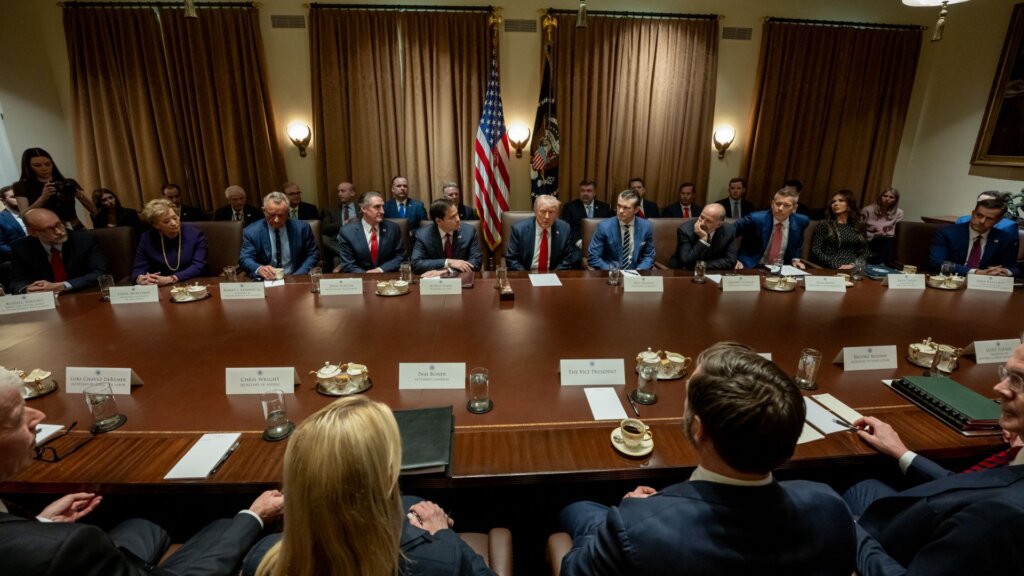
The 384 people named in this first wave are not the end of the story. Francey Hakes, director of the Executive Office for United States Attorneys, described the current targets as “the first wave of cases” the government intends to pursue. In December, the Trump administration directed the Department of Homeland Security to refer as many as 200 new denaturalization cases per month. With roughly 800,000 people becoming naturalized citizens each year, the infrastructure now being built could reach far beyond the cases already identified.
President Trump stated in a January interview that Americans of Somali descent could be among those targeted. That comment, combined with a Republican congressman’s request that the attorney general investigate a naturalized New York City mayoral candidate over a rap song, has alarmed civil liberties advocates. The administration’s “maximal” enforcement approach, as one DOJ memo described it, means that any potentially usable evidence is fair ground for a case, regardless of whether the evidence is strong or the case serves a genuine public interest.
The question that remains unanswered is not just who is next, but where the legal and political limits actually are. Courts may yet push back: legal scholars note that the Supreme Court’s protections for citizenship, and the constitutional guarantee of due process, create significant obstacles for cases built on thin or retroactively excavated evidence. But the machinery is already moving. For millions of Americans who earned their citizenship through years of vetting, waiting, and commitment, the government’s message is now unmistakable: that status may be less permanent than they were told. What that means for the idea of American citizenship itself is a question this country has not yet had to answer at this scale.