


Products are selected by our editors, we may earn commission from links on this page.

A group of Democratic lawmakers has introduced the Living Wage for All Act, a proposal that would raise the federal minimum wage to $25 an hour. The bill is backed by a coalition of more than 100 organizations, including labor unions, civil rights groups, and advocacy groups like the NAACP and the American Federation of Teachers. If passed, it would be the first federal wage increase since 2009, when the current rate of $7.25 was set.
Reps. Analilia Mejia of New Jersey, Delia Ramirez and Jesús “Chuy” García of Illinois, and Lateefah Simon of California introduced the bill on April 28, ahead of May Day mobilizations. “No one working full time should be struggling to survive,” Mejia said, adding that the economy needs to reflect current realities rather than remain frozen more than a decade in the past. The bill is Mejia’s first major legislative push since winning her seat in a special election last month.
The $25 figure comes from MIT’s living wage calculator, which estimates that a single adult anywhere in the U.S. needs to earn at least that much to cover basic necessities like food, housing, healthcare, and transportation. The Economic Policy Institute estimates that around 66 million U.S. workers, roughly 45% of the workforce, currently earn less than that threshold.
What the Bill Would Actually Change

Under the proposal, large employers, defined as those with 500 or more employees or at least $1 billion in annual revenue, would be required to reach the $25 minimum by 2031. Smaller businesses would have until 2038. After that, the federal minimum would adjust periodically to equal two-thirds of the national median wage, which currently sits at around $31 an hour, according to Bureau of Labor Statistics data.
The bill would also phase out several subminimum wages that currently exist in federal law. Tipped workers, who can be paid a base cash wage as low as $2.13 an hour, would see that floor rise to $6 under the proposal. Youth workers and employees with disabilities would face new starting minimums of $6 and $5 an hour, respectively.
Not all states have their own wage floors to fall back on. According to the National Conference of State Legislatures, five states — Alabama, Louisiana, Mississippi, South Carolina, and Tennessee — have no state minimum, while Georgia, Oklahoma, and Wyoming set theirs below the federal level. Workers in those eight states stand to be among the most directly affected if the bill becomes law.
Not Everyone Agrees a $25 Minimum Wage Would Help
Supporters of the bill say it addresses a gap that has widened over more than a decade. Saru Jayaraman, president of One Fair Wage, said the push is drawing interest across party lines. “We’re seeing so many MAGA voters excited about a $25 minimum wage,” Jayaraman said, noting that many people, regardless of political affiliation, are focused less on party and more on whether they can afford to feed their families.
Rebekah Paxton, research director of the conservative Employment Policies Institute, pushed back, calling a federal $25 mandate “reckless” and arguing that sharp wage increases have consistently shown they cost jobs, according to Fox News Digital. She warned the proposal would magnify those effects and create ripple impacts for American businesses, pointing to estimates that even more modest federal proposals could eliminate up to 1.2 million jobs.
The broader economic evidence on minimum wage increases doesn’t point cleanly in one direction. A 2024 joint study from Harvard Kennedy School and UC San Francisco found no significant unintended consequences when California raised wages for fast food workers. A separate 2024 study from the University of Michigan and Carnegie Mellon found stronger worker retention and increased restaurant revenue after pay raises. A 2023 Federal Reserve Bank of Minneapolis study, however, found that while large increases can have positive short-term effects, they may eliminate lower-skilled roles over time.
What Happens Next for the Bill
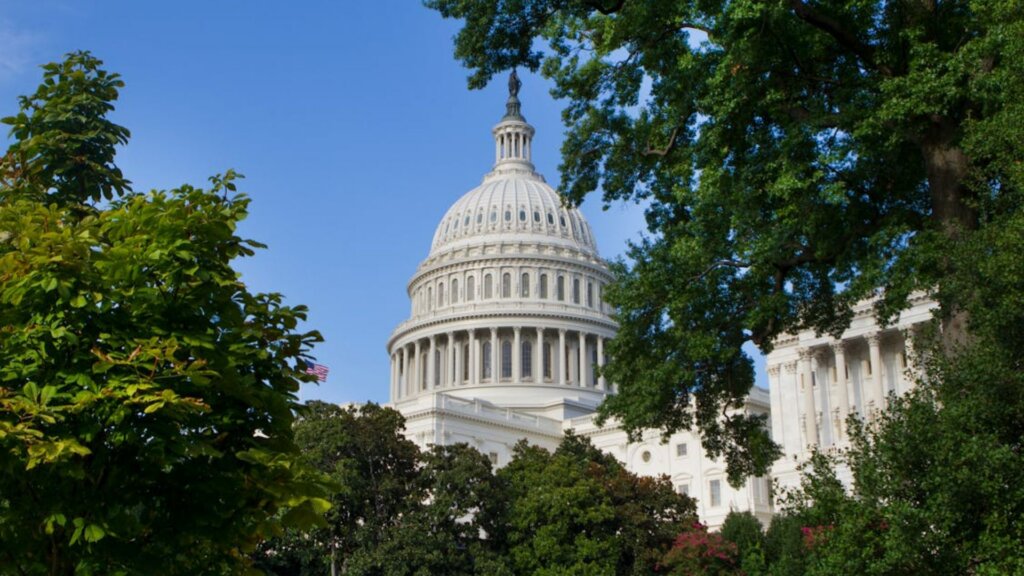
The Living Wage for All Act still has a long road ahead. Before it can be signed into law, it must pass through committee votes in both the House and the Senate, a process that has stalled similar efforts in the past. Lawmakers have introduced several versions of the Raise the Wage Act since 2017, none of which have ultimately passed. A 2021 attempt to attach a wage increase to the American Rescue Plan was removed before the package cleared the Senate.
The political pressure around cost-of-living concerns may shape how lawmakers approach this one. Jayaraman pointed to recent election cycles in which cost-of-living concerns drove voter behavior, from Donald Trump’s 2024 campaign promises on affordability to progressive candidates like New York City Mayor Zohran Mamdani winning on similar platforms in 2025. As of this year, 17 states and Washington, D.C. already have a minimum wage of $15 or higher.
The federal minimum wage has been a point of contention for decades, and the debate over this latest proposal reflects that. Around 82,000 workers currently earn the federal minimum of $7.25, with another 760,000 earning below it, according to 2024 Bureau of Labor Statistics data. Whether the Living Wage for All Act gains traction in a divided Congress remains to be seen, but its sponsors say the conversation itself reflects a growing demand for economic relief that isn’t going away.