

Products are selected by our editors, we may earn commission from links on this page.
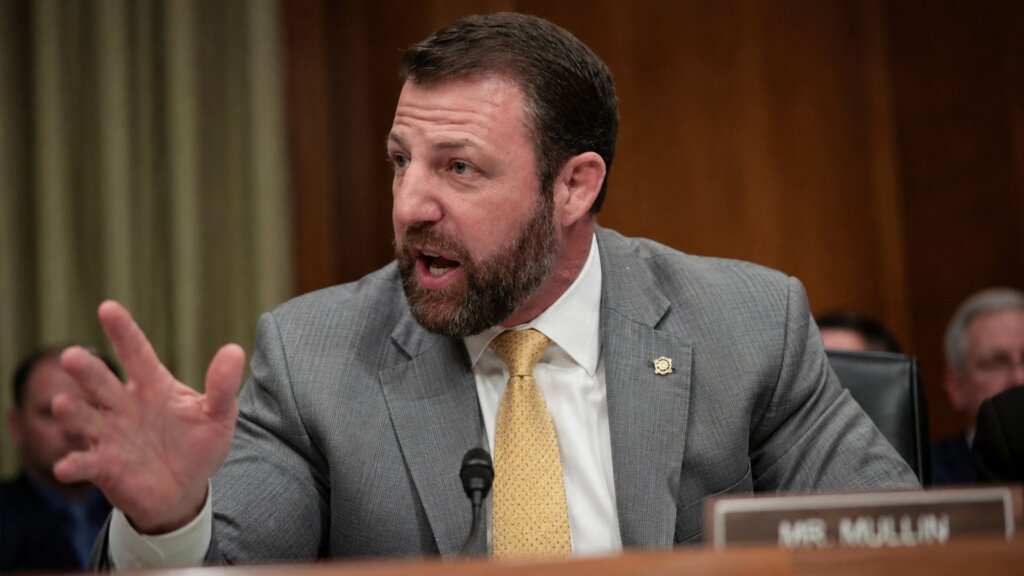
The nation’s top immigration enforcement official told U.S. senators, under oath, that he may not follow federal court orders he personally disagrees with. Homeland Security Secretary Markwayne Mullin made the admission at a June 2 Senate Appropriations hearing, where he dodged the question at least four times. The exchange has reignited a debate that goes far beyond one cabinet member’s testimony — directly into the question of whether the executive branch considers itself bound by the courts at all.
Mullin, a former Republican senator from Oklahoma confirmed to lead DHS just two months ago, gave a carefully evasive answer when Connecticut Sen. Chris Murphy asked whether he would comply with court orders finding DHS conduct illegal. “If we didn’t think courts were politicized, then I would probably be able to answer that,” Mullin told the panel. “But we see courts over and over again that use their bench for their political opinion, not just the rule of law.” Murphy pressed him directly four separate times. Each time, Mullin declined to give a yes-or-no answer.
Murphy, the top Democrat on the subcommittee that funds DHS, wasn’t citing partisan talking points. He referenced a ruling by a Republican-appointed judge, Chief U.S. District Judge Patrick J. Schiltz of Minnesota, who found that ICE had violated roughly 96 court orders across 74 cases in a single month. Schiltz, a George W. Bush appointee, attached the violations as an appendix to his January 2026 order and declared, “ICE is not a law unto itself.”
This article was created with the assistance of AI and reviewed by our editorial team for accuracy and clarity.
A GOP-Appointed Judge Said ICE Violated More Orders “Than Some Agencies Have in Their Entire Existence”
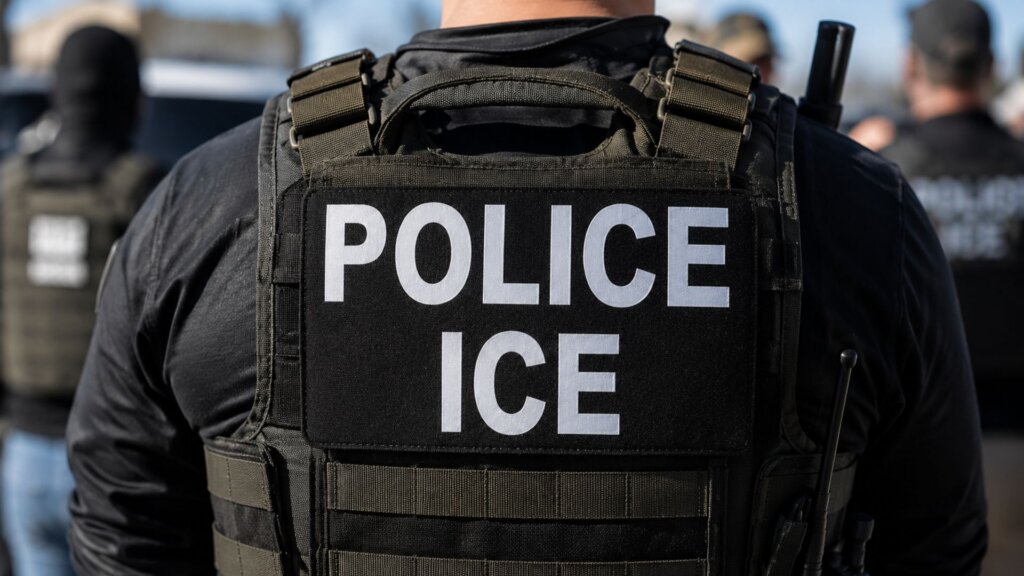
Judge Schiltz’s language was stark and deliberate. He wrote that the list of violations “should give pause to anyone, no matter his or her political beliefs, who cares about the rule of law,” adding that the actual count was almost certainly an underestimate because the appendix was assembled quickly by overloaded judges. The violations stemmed from ICE detentions during Operation Metro Surge in the Twin Cities, where detained immigrants were denied court-ordered bond hearings or releases.
The noncompliance wasn’t confined to Minnesota. An Associated Press review of court records found that Trump officials had accumulated an extraordinary record of defiance across a much broader set of lawsuits, dating back to the opening days of Trump’s second term. Federal judges in Florida, Maine, and other states had similarly flagged the government for ignoring rulings in individual immigration cases, with some judges ordering Justice Department lawyers to explain why they shouldn’t face sanctions.
Schiltz had initially ordered acting ICE Director Todd Lyons to appear personally before him in contempt proceedings. He later canceled the hearing after the specific detainee at the center of the case, Juan Hugo Tobay Robles, was released from a Texas detention facility. But Schiltz made clear the cancellation was not a vindication. He warned that Lyons or other government officials could still be compelled to appear in court, and that the broader pattern of defiance remained unresolved and under active judicial scrutiny.
Mullin Claimed DHS “Will Never Break the Law” While Refusing to Say It Would Follow Court Orders
The internal contradiction in Mullin’s testimony did not go unnoticed. He repeatedly asserted that DHS “will never break the Constitution, and we’re not going to break the law,” while simultaneously declining to commit to complying with orders from the very branch of government constitutionally empowered to interpret that law. Murphy told him directly: “That doesn’t sound like the same thing as committing that you will obey a court order.” Mullin did not directly answer. The exchange laid bare a posture the administration has maintained since day one.
Murphy connected the court defiance to a larger funding crisis. The DHS funding lapse, which began February 14, 2026, became the longest in the department’s history, producing TSA staffing shortages, airport backlogs, and missed paychecks for over a million federal workers. Murphy told Mullin at the hearing that the administration’s refusal to comply with judicial rulings was “at the root of our disagreement,” making it politically impossible for Democrats to authorize funding for an agency they said was openly defying the rule of law.
The administration’s posture in the courts has produced results that cross partisan lines. As of April 2026, Just Security’s litigation tracker counted more than 753 cases challenging Trump administration actions. Former Trump national security official Miles Taylor said on MS NOW that in the major constitutional separation-of-powers suits, the administration had been losing roughly two-to-one in the lower courts. Higher courts, including the Supreme Court, have intervened in some cases to side with the White House, which critics say has emboldened further noncompliance.
The Hearing That Exposed a Constitutional Question the Administration Has No Intention of Answering
The June 2 hearing was nominally about the administration’s $118.4 billion fiscal year 2027 budget request for DHS. It became something else entirely. When the secretary of the department responsible for enforcing the nation’s immigration laws refuses, four times, to confirm he will follow court orders, the subject is no longer appropriations. Murphy captured it plainly: “It is very hard for us to figure out how to fund an agency that is violating the law.”
Legal observers noted that the administration’s framing, positioning DHS as the final arbiter of what is constitutional rather than accepting judicial review, represents a significant departure from how the executive branch has historically operated. An opinion published after the hearing warned that when the federal government becomes a serial lawbreaker and refuses judicial correction, the damage extends beyond individual cases. It corrodes public trust in institutions and signals that legal compliance is optional for those in power.
Real people have been caught in the gap between court orders and agency compliance. Babson College student Any Lopez Belloza was deported by ICE in violation of a court order and, more than six months later, still could not return home or resume her studies because ICE threatened to re-detain her upon landing. The administration eventually returned wrongly deported Salvadoran national Kilmar Abrego Garcia, but then targeted him for what a federal judge described as a vindictive prosecution. The courts have ruled. The orders have been issued. The secretary charged with enforcing the law told senators he might not follow them.