


Products are selected by our editors, we may earn commission from links on this page.

Most Americans know the rule. They just refuse to follow it. A new study from investment firm Schroders found that nine in ten working Americans plan to claim Social Security before age 70, even though waiting until that age would boost their monthly payment by roughly 24 percent compared to claiming at the standard retirement age of 67. The financial stakes are enormous, and the consequences last a lifetime. The real question is: why are so many people choosing to leave money on the table?
This article was created with the assistance of AI and reviewed by our editorial team for accuracy and clarity.
How the Benefit Timing System Actually Works

Social Security lets workers begin collecting benefits at 62, five years ahead of the current full retirement age of 67. The tradeoff is steep: claiming at 62 cuts monthly payments by about 30%, and those reduced amounts are locked in permanently. On the other end, waiting until 70 rewards patience with a roughly 24% boost above the full retirement amount. That spread creates a significant financial gap that compounds across decades of retirement.
The Math Behind Waiting Longer

A recent study found that filing early for Social Security can mean forfeiting as much as $182,000 in total lifetime benefits. Using today’s average monthly benefit of $2,000, an early filer at 62 receives around $1,400 per month. Someone who holds out until 70 collects $2,480 each month. The difference sounds straightforward on paper, but the real calculus involves one critical unknown: how long someone expects to live.
The Break-Even Age Most People Don’t Discuss

There is a key calculation that changes the conversation entirely. If you start collecting at 62, you bank eight years of benefits before someone claiming at 70 receives their first check. At today’s rates, that adds up to roughly $134,400 by the time you turn 70. The person who waited now collects more each month, but it takes about 10.4 years to catch up. That means the break-even point falls around age 80, a number that matters far more than most people realize.
Why Health and Lifespan Factor In

For Americans dealing with serious health conditions, the break-even math can actually support claiming early. If someone believes they are unlikely to live past 80, starting benefits sooner may result in collecting more money overall. According to Social Security Administration data, the average 62-year-old man today can expect to live to about 83.6, while women of the same age typically live to around 86.5. Those averages favor waiting, but individual circumstances vary considerably, and not everyone will reach those numbers.
Financial Pressure Is Driving Early Claims

For millions of workers, waiting until 70 is not a realistic option. According to Deb Boyden, head of U.S. defined contribution at Schroders, many Americans need Social Security income from the moment they retire simply to cover basic expenses. A growing share of the U.S. workforce lives paycheck to paycheck, with little or no retirement savings cushion to bridge the gap between leaving work and collecting maximum benefits. The advice to wait is sound, but it assumes a financial flexibility that many people simply do not have.
Fear About Social Security’s Future Is Accelerating Early Claims
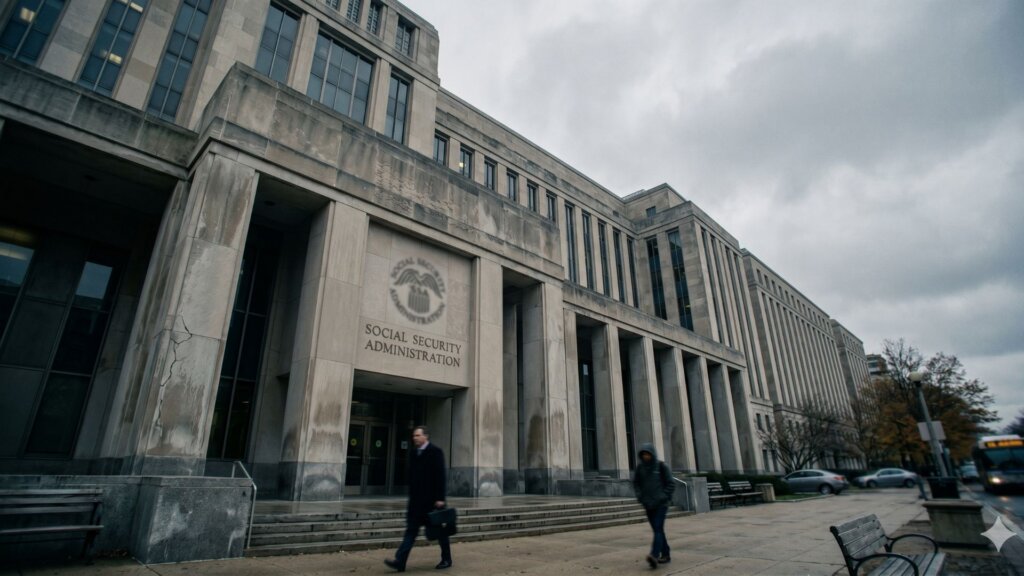
A separate anxiety is pushing many Americans to claim sooner: worry that Social Security will run out of money. That fear has a factual basis. Without changes to the program, its trust funds are projected to become insolvent by 2034, according to the Social Security Board of Trustees. However, this would not mean payments stop entirely. Benefits would continue but drop by roughly 20 percent. Even so, uncertainty about the program’s future is causing many workers to treat early claiming as a form of self-protection.
A Widening Gap Between Expectations and Reality

A new report from the Allianz Center for the Future of Retirement found that most Americans admit they know little about how Social Security works or how it fits into their broader retirement plan. About one in five believe Social Security alone will cover all their retirement needs. That assumption is dangerously off. The program typically replaces only about 40 percent of a worker’s pre-retirement wages. Meanwhile, the Schroders survey found that non-retired Americans believe they need around $5,032 per month to retire comfortably, while today’s retirees average just $3,250.
Why Younger Workers Face a Steeper Climb

Saving for retirement has become harder for younger Americans, not easier. A recent Goldman Sachs analysis found that three-quarters of younger working Americans report struggling to set aside money for retirement because rising costs for housing and other basics are consuming a larger share of their income than in previous generations. With less savings to fall back on, many will face the same choice as today’s retirees: claim Social Security early out of necessity rather than strategy, locking in lower monthly payments for the rest of their lives.
Knowing the Rules Is Not the Same as Being Able to Follow Them

The Schroders data revealed something important: 70 percent of Americans already know that waiting leads to higher Social Security payments. The problem is not ignorance. It is the financial reality facing the majority of workers who cannot afford to wait. Closing the retirement gap will require more than financial education. It will require systemic solutions that give workers a real choice, not just the appearance of one. The question of when to claim may technically have a right answer, but whether that answer is accessible is a different conversation entirely.