

Products are selected by our editors, we may earn commission from links on this page.
Fertilizer costs that jumped by one-third in weeks. Diesel prices that nearly doubled overnight. A combine that costs up to a million dollars. These are the numbers Iowa farmers are running in their heads right now, and many of them are barely adding up. NBC News spoke to 13 farmers across Iowa, and eleven voted for Trump in the past and still largely back him, even as the ground beneath their operations grows more unstable by the season.
It shows up in the words farmers use when asked to describe the current farm economy. “Scary,” said Steve Rehder, 62, a family farmer in northwest Iowa. “Volatile,” said Jason Orr, a northeastern Iowa farmer who serves on the state’s Corn Promotion Board. “Miserable,” said Lance Lillibridge, 56, who farms corn and raises cattle in eastern Iowa. Three different men, three different corners of the state, and the same grinding weight pressing down on all of them.
U.S. farmers are now forecasting a fourth consecutive year of operating losses in 2026, a streak that would be punishing under any administration. But this time, the pressure is coming from multiple directions at once: trade war fallout, spiking input costs triggered by the Iran conflict, and the psychological toll of watching neighbors go under.
This article was created with the assistance of AI and reviewed by our editorial team for accuracy and clarity.
The Math Doesn’t Lie, But Their Loyalty Hasn’t Moved
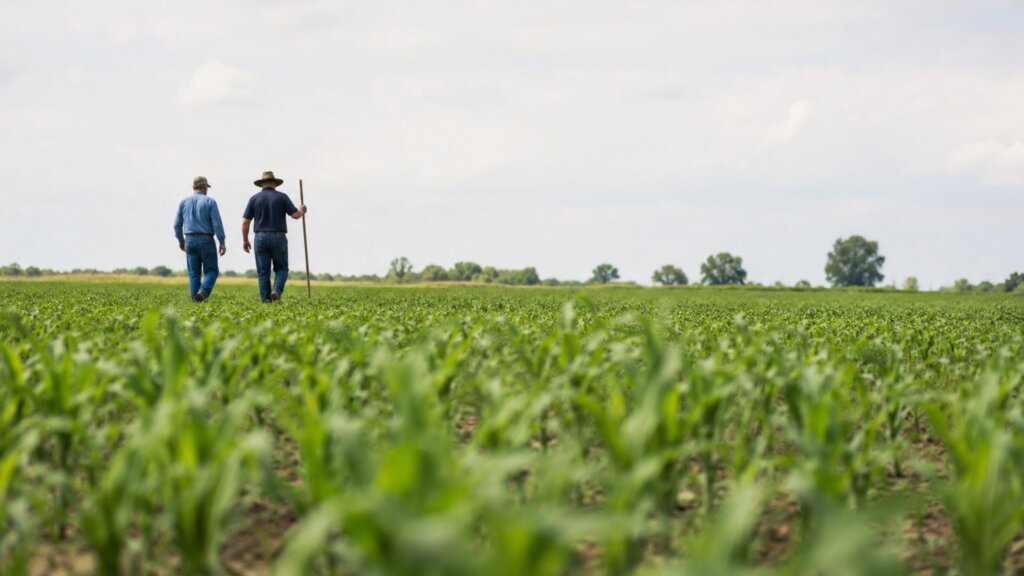
Iowa farmers like Suzanne Shirbroun, who raises soybeans and corn with her husband, find themselves caught in the crosshairs of Trump’s near-daily trade edicts, unable to plan or price with any confidence. Mark Mueller, president of the Iowa Corn Growers Association, watched fertilizer prices on his northeast Iowa farm rocket from $795 per ton to $1,050 in a matter of weeks after Trump ordered an attack on Iran. That single cost swing alone reshapes an entire season’s math.
The Iran conflict also drove diesel prices sharply higher. Corey Winterfeld’s family operation in northwest Iowa burns through 3,000 gallons of diesel per day during harvest season. Since the war started, the price climbed from $3.75 per gallon to more than $5.50. Stu Swanson, a corn and soybean farmer in Galt, captured the maddening rhythm of input costs with one line: “Like other inputs we buy, it goes up fast and comes down slow.”
Iowa State University agricultural economist Chad Hart said the tariff situation could create significant economic damage for Iowa farmers, particularly given the state’s deep ties to Canada and Mexico. A new combine or tractor can cost up to $1 million, repair costs have climbed, and the on-again, off-again nature of Trump’s trade wars makes long-term planning nearly impossible. What keeps the numbers from collapsing entirely, for some, is government assistance, and that comes with its own complications.
A $12 Billion Check and the Bitter Taste It Leaves
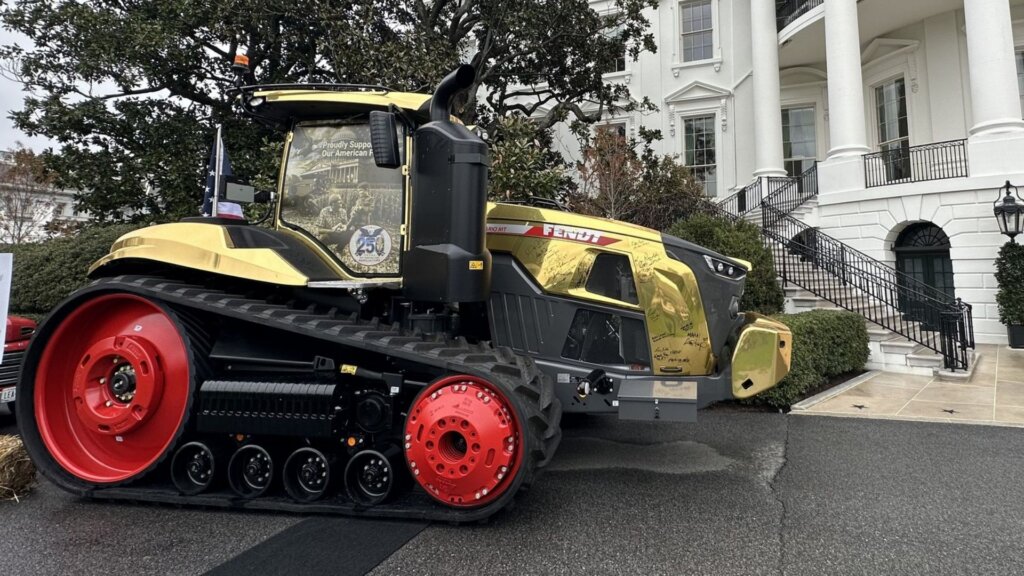
Trump announced a $12 billion aid package for farmers and invited hundreds of them to the White House in March, speaking from a balcony above a gold tractor. Iowa farmers are slated to receive about $900 million through that package. The president reminded them of his generosity directly: “I just gave you $12 billion. You think Biden would have done that?” For many farmers in the room, it felt like the support they have longed to have. However, the relief when they got home was more complicated.
Elliott Henderson, who farms in northeast Iowa, put the problem plainly: “I look at these programs where the government keeps wanting to write farmers checks, and to me, this is more medicine that’s making us sick. I’ve got 10 people standing in line who think that dollar is theirs.” Suppliers, equipment dealers, and landlords all factor the subsidy in before the farmer ever sees it. Swanson echoed that frustration: farmers want their income from the marketplace, through domestic sales, export markets, and new technologies, not recurring government relief.
A farm crisis hotline reported that agricultural calls in September 2025 were five times higher than the same month the previous year, a staggering surge that tracks with the mounting financial pressure. Farmers are 3.5 times more likely to die by suicide than the general population, according to the Rural Health Association. Jason Orr told NBC News he knows of five Iowa farmers who took their own lives since last fall. The financial and psychological weight of farming has become inseparable, and neither a government check nor a trade announcement is moving the needle fast enough.
“We Know Trump Well Enough”
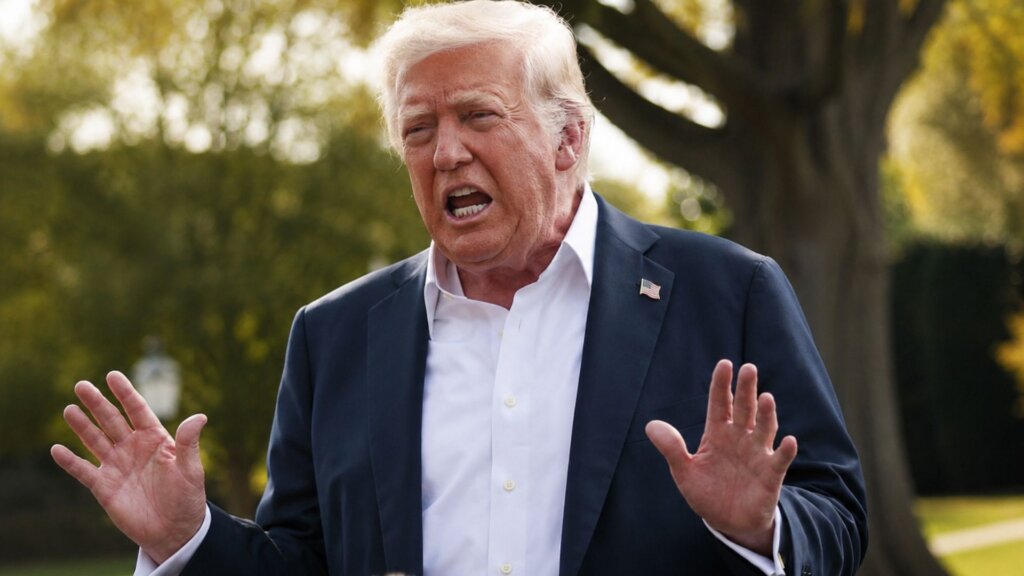
When Trump told a reporter that Americans’ finances were driving him “not even a little bit” toward a deal with Iran, Democrats jumped on the comment. Most Iowa farmers let it pass. Arda Van Regenmorter, who farms roughly 6,000 acres in northwest Iowa with her husband Loren, gave the most precise summary of how many of them process Trump’s more cutting remarks: “We know Trump well enough to know that he sometimes says things off the top of his head and doesn’t think them through. He cares about us financially.”
Trump returned from a summit in China with a pledge that Beijing would purchase more than $17 billion in U.S. agricultural products through 2028. Farmers want to believe it. But a Peterson Institute review of Trump’s “phase one” trade deal from his first term found China fulfilled only about 83% of its promised agricultural purchases. A North Dakota State University report found that tit-for-tat tariffs cut U.S. farm exports to China by nearly $15 billion between March 2025 and February 2026.
Loren Van Regenmorter is 69; his wife Arda is 67. Their son Travis spent 12 years on the farm before leaving for a job at John Deere, citing stress. “What’s going to happen in the future?” Arda said. “Do we want our grandsons to farm?” Orr’s verdict, after a pause, was the most honest accounting of where things stand: “The jury is still out on that one. He started something in his first presidency that didn’t get finished. I hope to God that he follows through by the time this one is over with.” That hope, stretched thin across four years and four straight years of losses, is what’s keeping most of them in place, and it is a fragile thing.
If you or someone you know is struggling, call or text 988 to reach the Suicide and Crisis Lifeline.