

Products are selected by our editors, we may earn commission from links on this page.

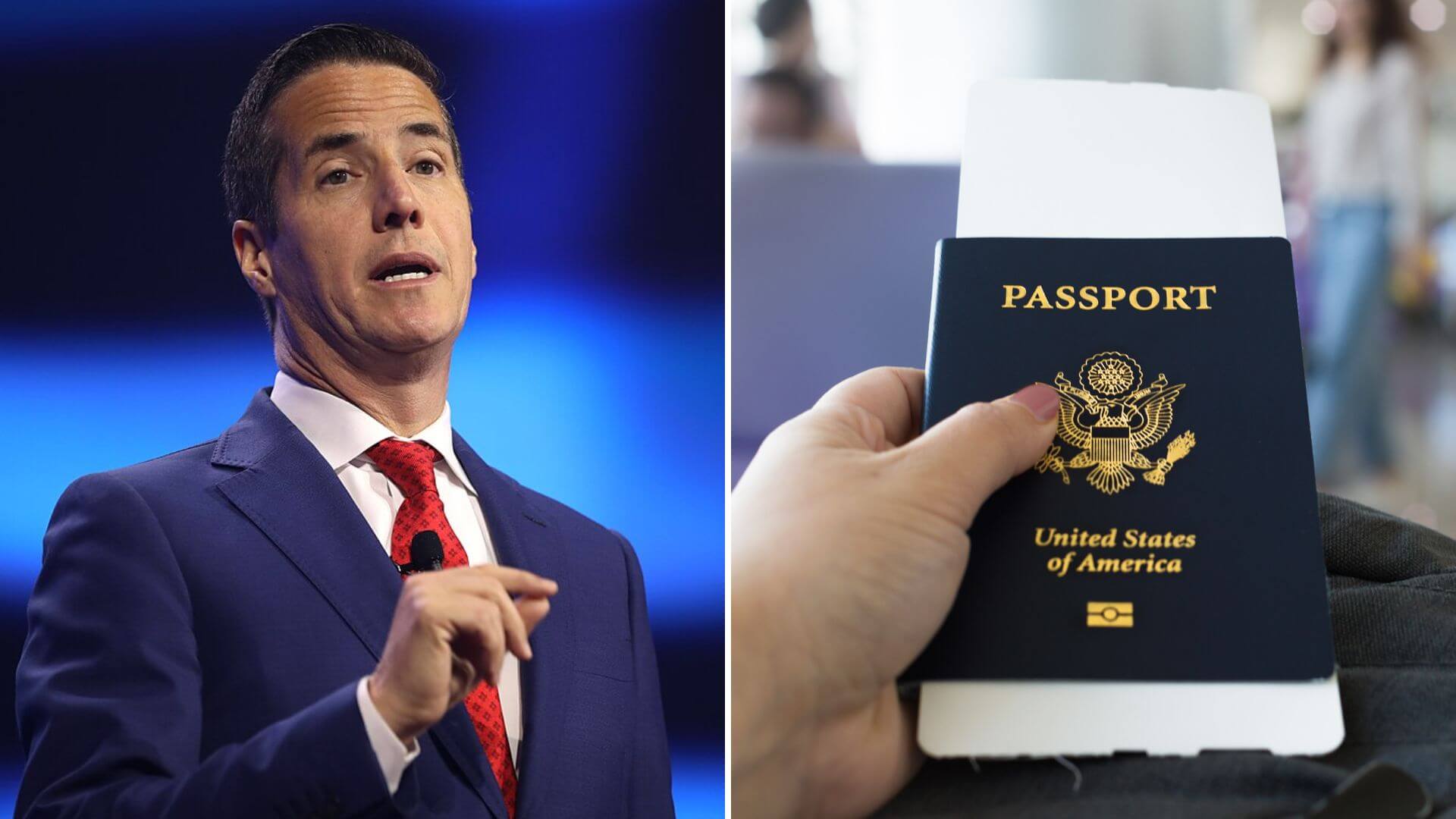
Millions of Americans who hold passports from multiple countries could face a difficult decision under recently proposed legislation. Senator Bernie Moreno of Ohio introduced the Exclusive Citizenship Act of 2025, which would end dual citizenship nationwide. The bill was filed in December and has since sparked heated debate across the country about loyalty, identity, and what it means to be American.
Under current U.S. policy, Americans can hold citizenship in multiple countries without penalty. The State Department confirms that American law does not require citizens to choose between U.S. citizenship and foreign nationality. This freedom has existed for decades, allowing people to maintain connections to their heritage while embracing their American identity.
The proposed legislation would drastically change this arrangement. If enacted, the bill would require all U.S. citizens to pledge sole and exclusive allegiance to America. Those with dual citizenship would face a one-year deadline to choose which passport to keep. Failure to comply would result in automatic loss of U.S. citizenship under existing immigration law provisions.
Understanding the Bill’s Requirements

Senator Moreno, who was born in Colombia and became a U.S. citizen at 18, argues the legislation addresses potential conflicts of interest. He renounced his Colombian citizenship when he naturalized and believes others should do the same. In his announcement, Moreno stated that being an American citizen is an honor and privilege, adding that it should be an all-or-nothing commitment.
The bill targets both existing dual citizens and future cases. Americans who currently travel using multiple passports would need to formally renounce all foreign citizenships to maintain their U.S. status. Similarly, any American who acquires foreign citizenship after the law’s passage would automatically forfeit their U.S. nationality. The State Department would be tasked with implementing regulations within 180 days of enactment.
Estimates suggest the impact could be widespread. While the government doesn’t maintain official statistics on dual citizens, recent polling indicates approximately six percent of Americans hold multiple citizenships. Other estimates suggest more than 40 million Americans may be eligible for dual citizenship status, particularly among Mexican-American communities and other immigrant populations.
Opposition and Constitutional Concerns

Critics have raised serious constitutional questions about the proposal. Legal experts point to the 14th Amendment, which guarantees citizenship to all persons born or naturalized in the United States. Supreme Court precedent has consistently held that citizenship cannot be involuntarily taken away by government action, making the bill’s enforceability highly questionable.
Democrats Abroad Chair Martha McDevitt-Pugh condemned the legislation as an attack on Americans whose lives span borders. She argued that dual citizenship reflects an interconnected world where Americans live, work, and advocate for U.S. interests globally. The organization maintains that questioning loyalty based solely on passport possession is fundamentally wrong and targets millions who contribute daily to American strength.
Public opinion appears divided along partisan lines. A YouGov poll found that 59 percent of Republicans support requiring naturalized citizens to renounce their original citizenship, while 64 percent of Democrats oppose such requirements. However, when Americans considered their own potential dual citizenship, 65 percent said they would not give up U.S. citizenship even if they acquired another nationality.
What Happens Next

The bill currently sits in the Senate Judiciary Committee, where it faces a lengthy legislative process. To become law, it would need committee approval, passage in both the Senate and House of Representatives, and presidential signature. Legal scholars widely expect significant constitutional challenges if the bill advances, with some calling it unconstitutional and unlikely to survive court review.
For now, nothing has changed for Americans with dual citizenship. The proposal carries no legal force in its current form, and dual citizenship remains fully legal. Experts emphasize that current dual citizens should not panic or take any immediate action. The bill faces substantial political, constitutional, and administrative barriers that make its passage highly unlikely according to legal analysts.
Most democratic nations worldwide allow dual citizenship, viewing it as compatible with national loyalty in an interconnected world. Only a handful of countries currently prohibit the practice outright, including Iran, Cuba, and North Korea. If enacted, the United States would join this small group, marking a dramatic reversal of longstanding policy and potentially affecting family connections, business opportunities, and global mobility for millions of Americans.