


Products are selected by our editors, we may earn commission from links on this page.

Most drug-safety lawsuits center on a risk that’s at least well understood, even if debated. This one is different in an important way. Hundreds of consumers are now suing the makers of popular GLP-1 drugs over a condition doctors themselves say has no cure once it happens, a detail that makes the underlying legal and medical dispute considerably higher-stakes than a typical side-effect claim.
According to The Wall Street Journal, the patients behind these lawsuits allege that Novo Nordisk and Eli Lilly’s GLP-1 receptor agonists caused NAION, or nonarteritic anterior ischemic optic neuropathy, a rare form of sudden vision loss. The drugs named include familiar brands. Ozempic and Wegovy come from Novo Nordisk, while Mounjaro and Zepbound come from Eli Lilly, medications taken by an estimated 15 million Americans for diabetes and weight loss combined.
NAION is genuinely difficult to treat once it occurs. That difficulty is central to why these lawsuits carry such weight. “The problem with NAION is there’s no treatment,” said Dr. Douglas Lazzaro, an ophthalmologist at NYU Langone Health, adding that it can cause profound vision loss. Understanding exactly what this condition actually is explains why it matters so much.
NAION Is Sometimes Called an ‘Eye Stroke.’ There’s No Cure.
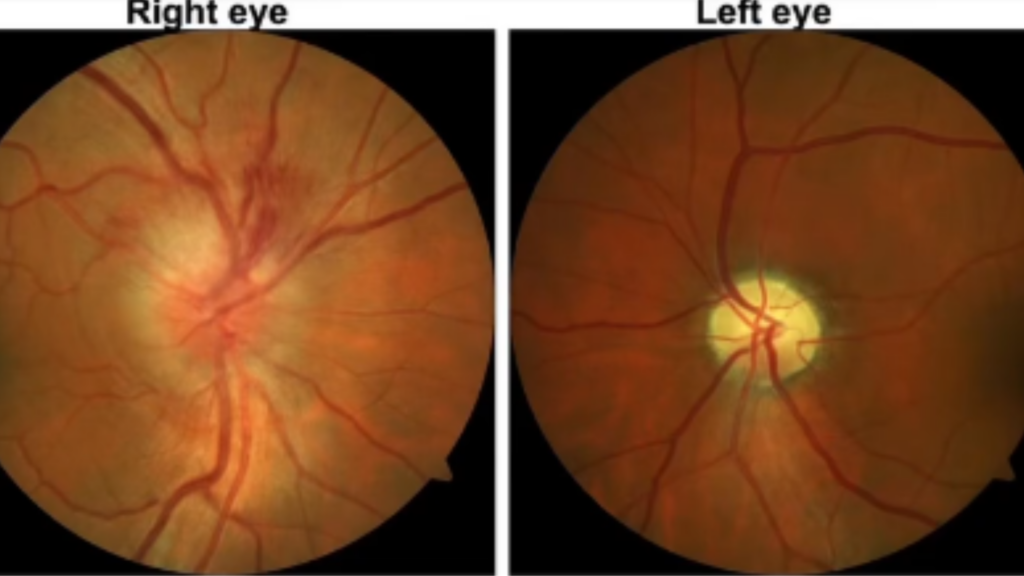
NAION happens when blood flow to the optic nerve suddenly drops. The result is sudden vision loss. The American Academy of Ophthalmology and the National Eye Institute describe it as an “eye stroke,” and it ranks as the most common cause of acute optic nerve injury in adults over age 50. The condition itself has existed and been studied for decades, long before GLP-1 drugs entered the picture.
Symptoms typically involve sudden, painless vision loss in one eye, often noticed first thing in the morning after waking up. Other signs can include blurred or dim vision, loss of peripheral vision, or reduced color perception. The damage is frequently permanent. Some patients regain partial vision over time, but no proven treatment exists that can reverse the underlying optic nerve injury once it has occurred.
Novo Nordisk and Eli Lilly dispute that their drugs cause this condition at all, pointing to their own internal research as evidence. That corporate pushback alone does not settle the question, though. Independent, peer-reviewed research on this exact link already exists, and it paints a considerably more nuanced picture than either the lawsuits or the company statements suggest on their own.
A Study of 37 Million Adults Found a ‘Modest’ Increase in Risk

Two key studies form the basis of most of the current discussion. A 2025 analysis in JAMA Ophthalmology examined data from 37 million adults and found people using semaglutide had a modest increase in NAION risk compared with those taking a different diabetes drug class called SGLT2 inhibitors. A 2024 Harvard Medical School study, published in the same journal, found roughly a fourfold higher relative risk among diabetes patients prescribed semaglutide, though the absolute risk remained very low.
Both studies’ own authors cautioned that observational research like this cannot prove the medication actually caused NAION, calling for more evidence. Regulators have responded differently depending on the country. The FDA is still reviewing the evidence and has not issued any formal warning, while regulators in Europe and Australia have already added NAION as a rare possible side effect to product labeling. A joint statement from two major ophthalmology groups in August 2026 concluded the overall magnitude of risk remains low.
That reassurance does not make the legal fight disappear. Regulatory caution, low absolute risk, and an active lawsuit can all be true at exactly the same time. Understanding the actual scale of the litigation, and how the drugmakers themselves are responding to it, rounds out the rest of this story in full.
More Than 200 Cases Are Now Consolidated in Federal Court

More than 200 cases are now consolidated in a federal multidistrict litigation based in the Eastern District of Pennsylvania, established in December 2025 specifically to handle these claims. Novo Nordisk has called the lawsuits meritless, pointing to its own company-funded research showing no increased NAION risk. Eli Lilly has taken a more measured stance, saying it continues monitoring safety data while maintaining that current studies do not prove its drugs cause the condition.
Lazzaro’s own approach reflects that same balancing act many doctors describe navigating right now. He generally continues recommending the drugs to patients, given their broader, well-established health benefits for diabetes and weight loss. His one notable exception involves what ophthalmologists call a disc at risk, a specific, compact optic nerve structure visible on an eye exam that he says would make him steer a particular patient away from semaglutide specifically.
Scale is what makes this risk worth taking seriously. With an estimated 15 million Americans currently on these medications, even a small, disputed increase in NAION risk translates into real numbers of affected people, not just an abstract statistic. That is exactly why experts are pushing two things at once: take the litigation and the research seriously, but don’t stop a prescribed medication without talking to a doctor first.
This article is for informational purposes and is not medical advice; anyone with concerns about a GLP-1 medication or sudden vision changes should talk to their doctor, and anyone experiencing sudden vision loss should seek emergency care right away.