

Products are selected by our editors, we may earn commission from links on this page.

If it feels like more people around you are sick right now, the data backs that up. A new CDC surveillance map shows influenza activity climbing rapidly across much of the United States, with many regions reporting high or very high transmission levels. Health officials say this season is shaping up to be one of the more intense flu waves in recent years.
According to the CDC’s Weekly Influenza Surveillance Report for Week 52, ending December 27, 2025, nearly one-third of respiratory specimens tested nationwide came back positive for influenza, a sign of widespread community transmission. Hospital admissions tied to flu have also risen sharply, adding pressure to emergency rooms and inpatient care.
The updated map doesn’t just show where flu is present. It also highlights where it is accelerating fastest. That geographic spread is raising new concerns about how quickly outbreaks can overwhelm local healthcare systems during peak winter months.
What the New Flu Map Reveals
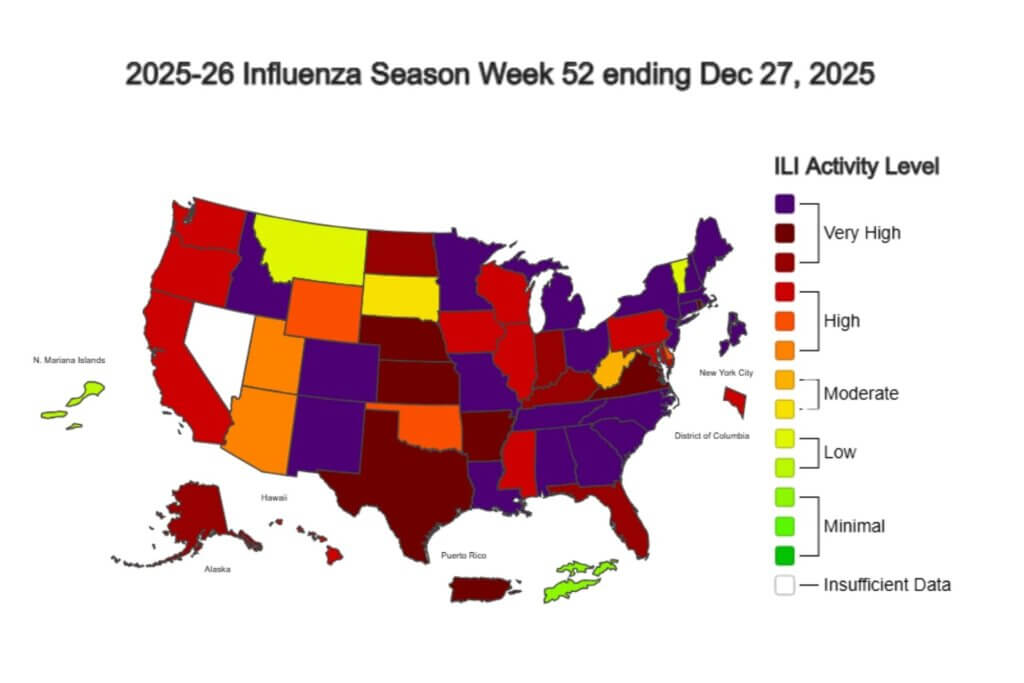
The CDC map shows that 48 jurisdictions are now classified as having high or very high influenza activity, compared with only two at moderate levels. Regions in the Midwest, Northeast, and parts of the South are seeing especially dense clusters of flu-related hospitalizations and doctor visits.
Influenza A(H3N2) is the dominant strain this season, accounting for more than 90% of subtyped cases reported by public health laboratories. This strain is known to cause more severe illness, particularly among older adults and young children, which helps explain the rise in hospital admissions.
The map also reflects increased outpatient visits for flu-like illness, with 8.2% of all medical visits nationally tied to respiratory symptoms involving fever, cough, or sore throat — well above the seasonal baseline. That surge suggests flu is spreading faster than many typical winter viruses.
Why This Flu is Spreading So Quickly

Several factors are fueling the speed of this season’s spread. Holiday travel, crowded indoor gatherings, and colder temperatures have all created ideal conditions for respiratory viruses to circulate widely. The CDC notes that activity is increasing across every major surveillance indicator simultaneously, an unusual but concerning pattern.
Hospitalization data shows how serious the impact has become. As of late December, more than 33,000 patients were admitted to hospitals nationwide with laboratory-confirmed influenza in a single week, and cumulative hospitalization rates are now among the highest seen at this point in the season since 2010.
Older adults are bearing the heaviest burden. The CDC reports hospitalization rates of 85 per 100,000 people among adults 65 and older, far higher than any other age group, underscoring how dangerous this flu wave can be for vulnerable populations.
What the Surge Means Going Forward

Public health officials expect flu activity to remain elevated for several more weeks, even if case growth begins to slow in some regions. The CDC estimates that this season has already resulted in at least 11 million illnesses, 120,000 hospitalizations, and roughly 5,000 deaths nationwide.
Vaccination remains the most effective tool for reducing risks of severe illness, particularly as antiviral resistance remains low across circulating strains. The CDC reports that approximately 130 million flu vaccine doses have been distributed this season, and antiviral treatments continue to work against the dominant viruses.
For now, the map serves as a real-time warning. It shows how quickly influenza can escalate when conditions align and why flu seasons are still a serious public health challenge, even in years without a new pandemic threat.