

Products are selected by our editors, we may earn commission from links on this page.
The unsettling sensation of watching your hard earned monthly transportation budget vanish due to an invisible retail trap is a vulnerability that thousands of everyday commuters could feel and realize as localized mechanical tampering transforms a routine fuel stop into an expensive financial headache. This immediate danger materializes for ordinary drivers who pull up to standard service station islands, completely unaware that foreign objects have been intentionally jammed into the equipment hardware. Fraudsters are now deploying an incredibly basic physical manipulation strategy to exploit the automatic billing cycles of modern electronic fuel dispensers.
The underlying criminal conflict has intensified rapidly after municipal law enforcement agencies began identifying identical hardware alterations across multiple geographic regions. According to formal safety advisories published by the Pennsylvania State Police alongside multi jurisdictional consumer protection alerts compiled by regional broadcast networks, specialized task forces are actively monitoring fuel bays for coordinated tampering. Station managers defend their ongoing surveillance efforts as necessary steps to protect automated payment networks, while investigators warn that the simplicity of the mechanical trap allows individual thieves to execute the exploit within seconds.
The immediate systemic reach of this coast to coast conundrum involves thousands of active fueling stalls across heavily traveled commercial corridors, a corporate real estate footprint larger than the combined physical acreages of every major municipal airport terminal in the United States. To verify the true scale of the ongoing threat, regional authorities have processed financial fraud reports where individual victim balances were instantly drained by several hundred dollars. For an ordinary middle class family, this unexpected extraction represents an amount greater than their average monthly residential water utility bill.
When Automated Payment Loops Fail to Terminate Commercial Fuel Transactions
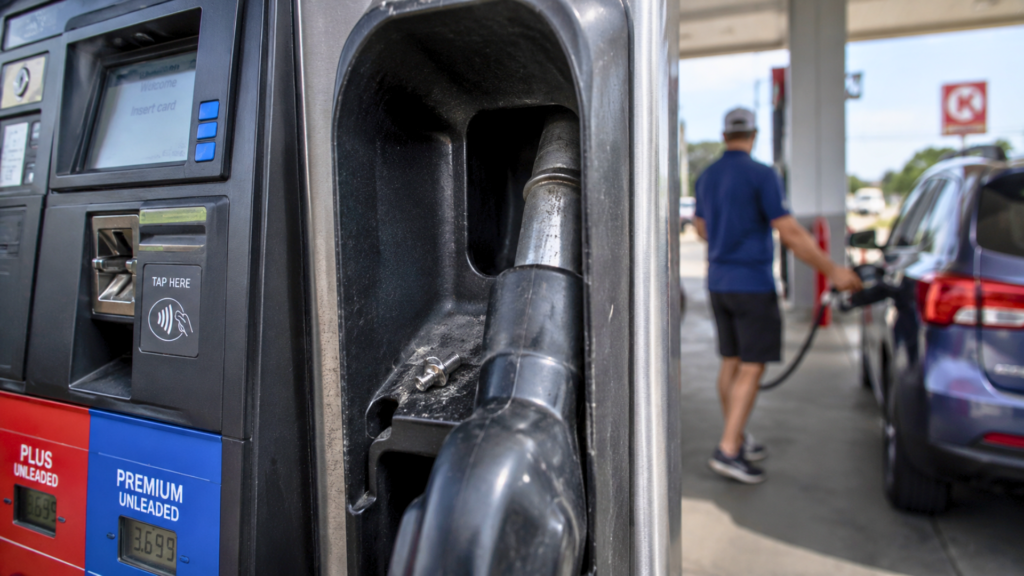
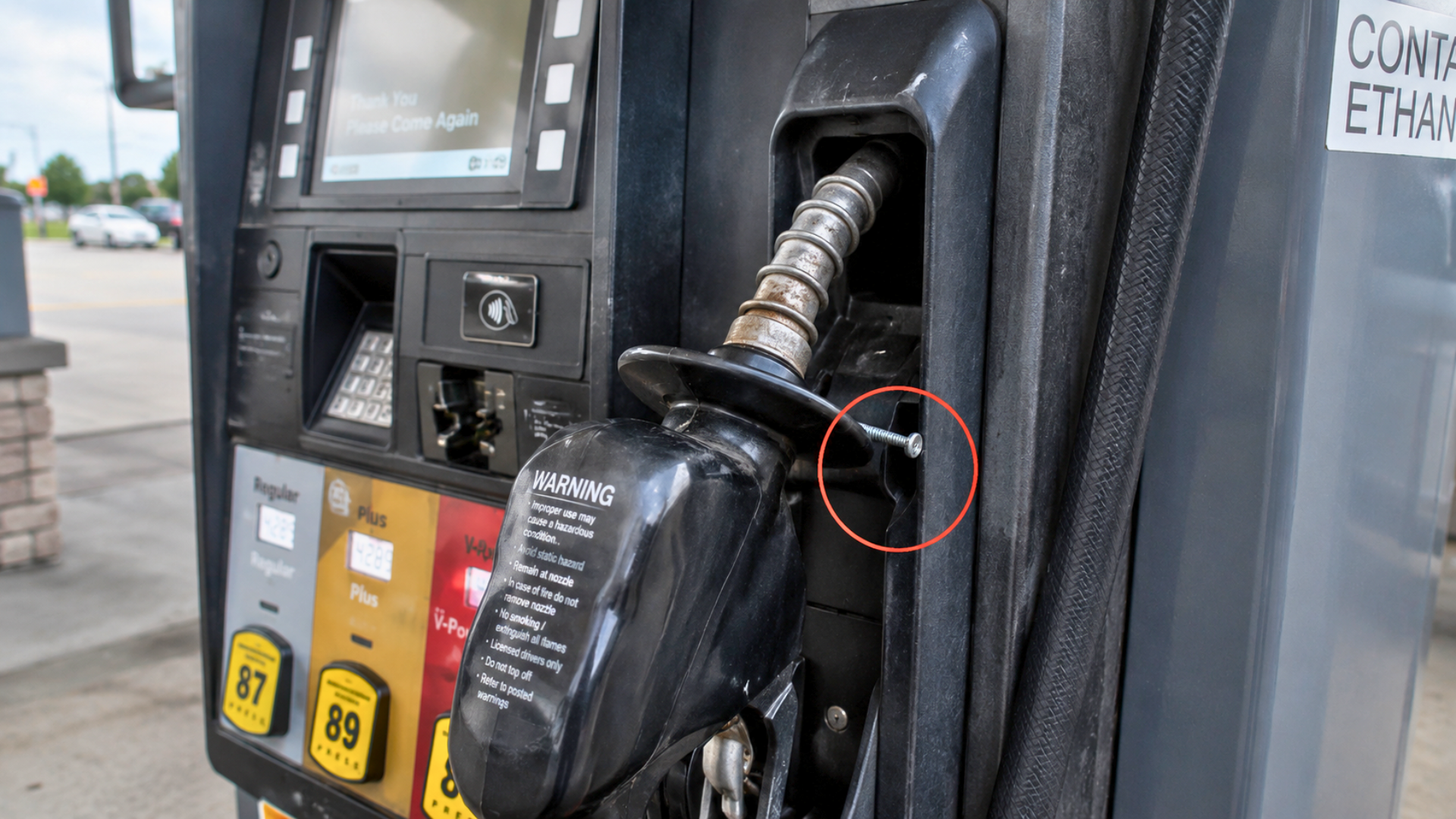
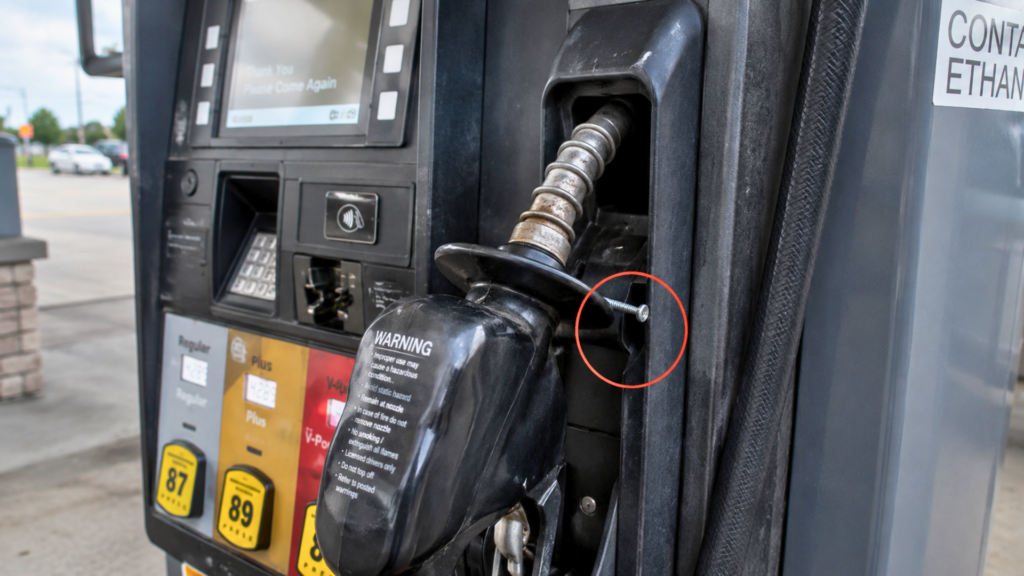
Modern retail checkout architectures regularly prioritize seamless transaction speed over the explicit physical confirmation of consumer credit security. Under the standard operating parameters governing automated fuel dispensers, the electronic payment terminal remains continuously active until an internal mechanical sensor detects that the heavy nozzle handle has been fully returned to its molded plastic housing. Comparative data compiled by independent petroleum marketing associations demonstrates that inserting a standard metal fastener into the cradle assembly effectively blocks this critical shutoff switch, keeping the user’s credit profile entirely open.
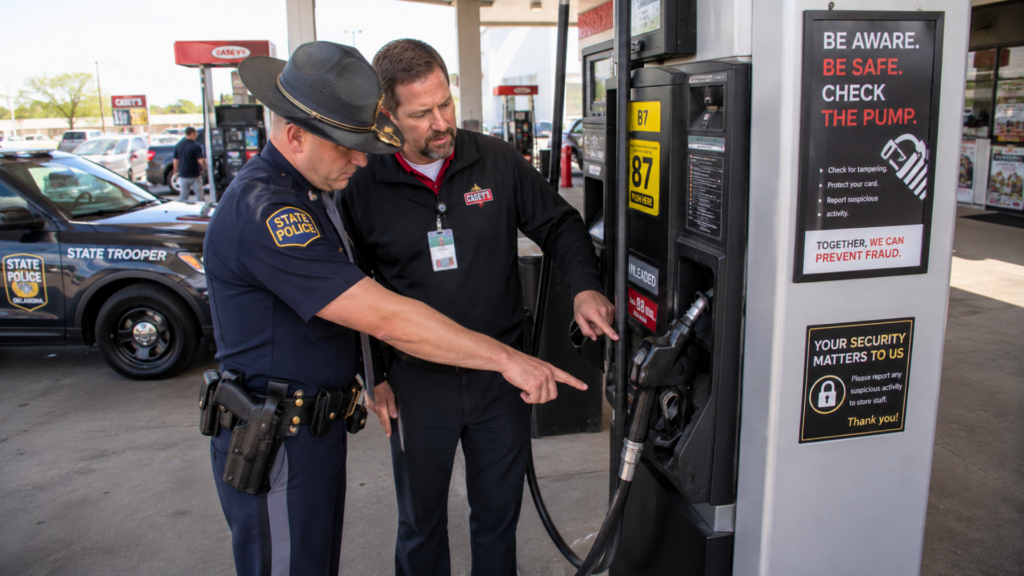
Law enforcement representatives have publicly detailed the precise mechanics of the fraud loop, issuing formal declarations that warn consumers to verify their pump screens before departing. Spokespersons from the Maryland State Police confirmed that once an unsuspecting motorist drives away from an unterminated session, waiting thieves immediately pull their own vehicles into the active bay to siphon fuel. This structural vulnerability means that corporate point of sale software continues to log the secondary consumption as a single continuous purchase, forcing the original cardholder to subsidize external transport.
The physical fallout of this unchecked consumer exploit requires local service stations to permanently overhaul their daily facility inspection routines. In heavily impacted commercial zones, attendant staff must manually clear physical debris from the pump housings multiple times during a single operational shift. This defensive monitoring mechanism ensures that a customer’s retail security is no longer guaranteed by the reputation of the global fuel brand, but rather by the manual vigilance of low wage station employees.
How Primitive Hardware Sabotage Leaves Suburban Consumer Accounts Vulnerable to Instant Drainage
The secondary complications of this expanding mechanical manipulation extend deep into the domestic budgeting strategies of average working class families, transforming a simple trip to the neighborhood convenience store into a complex landscape of identity protection. Regional consumer watchdogs note that because the physical trap relies entirely on primitive hardware bypasses rather than advanced digital skimming technology, standard antivirus software and encrypted chip readers remain entirely useless against the threat. This systemic failure ensures that ordinary motorists face immediate financial exposure unless they perform tedious manual equipment inspections during every single transit stop.
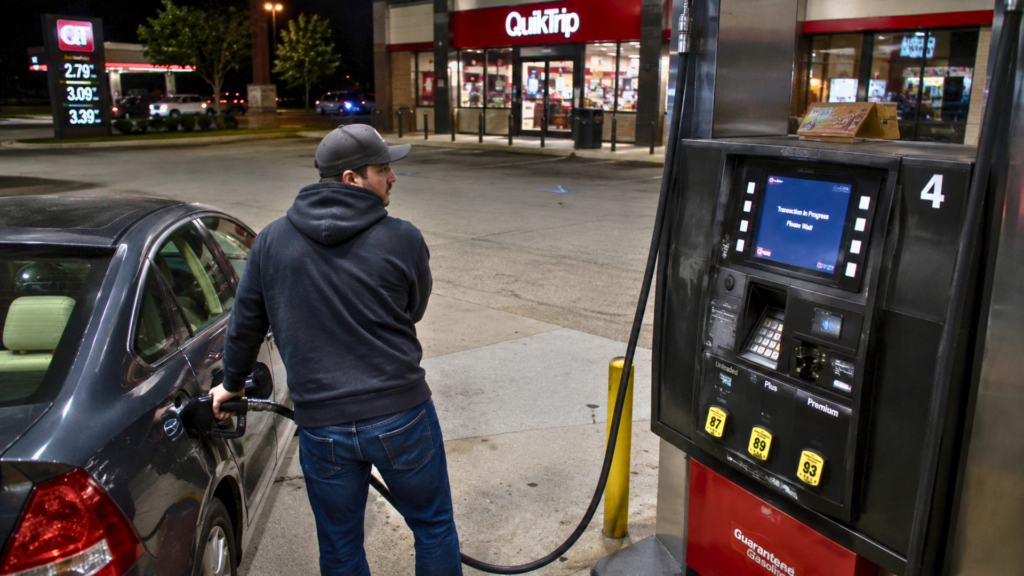
Coordinated community warnings have steadily intensified across major metropolitan areas as independent driving associations mobilize to educate the motoring public on effective roadside self defense. For instance, recent law enforcement bulletins distributed throughout the state of Texas advise drivers to never leave an active nozzle unattended, since an accomplice can easily compromise the cradle mechanism while the vehicle owner is distracted. This active civilian monitoring shows that the persistent threat of transactional theft has fundamentally altered the baseline safety protocols of routine American commercial transit.
“Police departments across the country are warning drivers about a new gas pump scam called the ‘screw method.’ This deceptively simple scam can fleece you of hundreds of bucks using a screw. Fraudsters stick a screw into the nozzle cradle of the gas pump, positioning it so that the lever never fully returns to the off position after you’re finished fueling up. That way, there’s no signal to end the transaction.”
Why Opaque Transaction Protocols Leave Everyday Transportation Budgets Permanently Compromised
The long term structural fallout of unchecked point of sale hardware vulnerabilities threatens to permanently weaken baseline consumer protections across the domestic retail fuel sector. Federal trade monitors are increasingly concerned that the sluggish technical response from corporate equipment manufacturers will leave millions of suburban commuters permanently exposed to sudden checking account overdrafts. If massive energy conglomerates continue to rely on primitive mechanical switches to terminate digital payment loops, the cumulative financial damage will continuously erode the disposable income of rural populations.
This current infrastructure crisis mirrors previous historical cycles where massive commercial networks externalized the cost of systemic fraud prevention directly onto the physical routines of individual citizens. From the early proliferation of magnetic stripe skimming devices to the modern expansion of automated highway tolling errors, local neighborhoods have consistently absorbed the immediate financial shocks of private operational failures. Federal commerce regulators remain slow to impose mandatory hardware redesigns, leaving local station owners to unilaterally manage the messy socioeconomic fallout.
The silent friction between inflexible automated billing systems and defensive consumer habits continues to reshape the American domestic landscape without any overarching public resolution. Commuters across the country will continue to stand before digital pump screens, carefully waiting for the dollar total to reset to absolute zero before they dare put their vehicles into drive. No centralized regulatory body has established uniform liability caps for this specific class of mechanical transaction fraud, forcing millions of ordinary families to carry the permanent burden of an unverified corporate ledger.