

Products are selected by our editors, we may earn commission from links on this page.
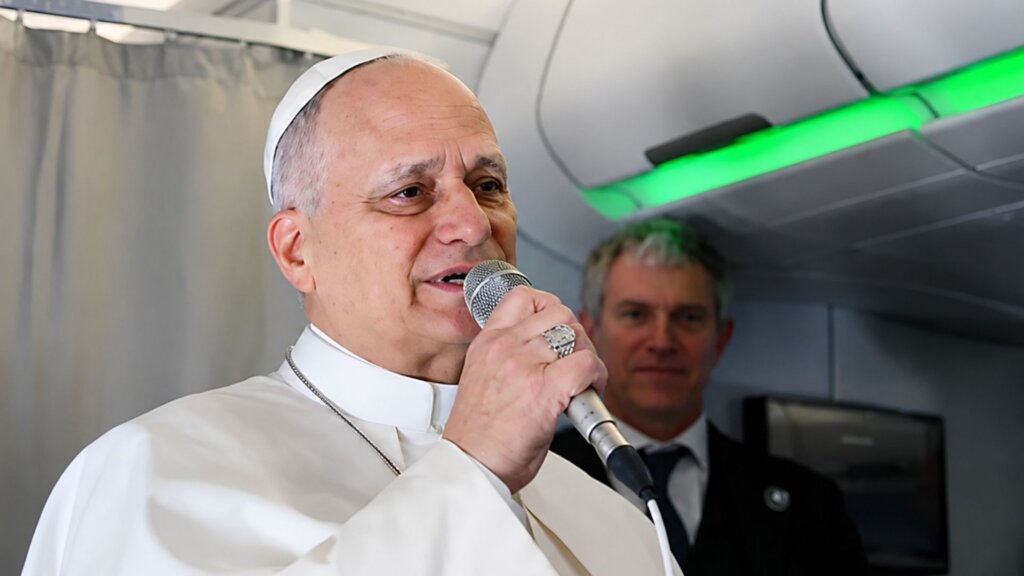
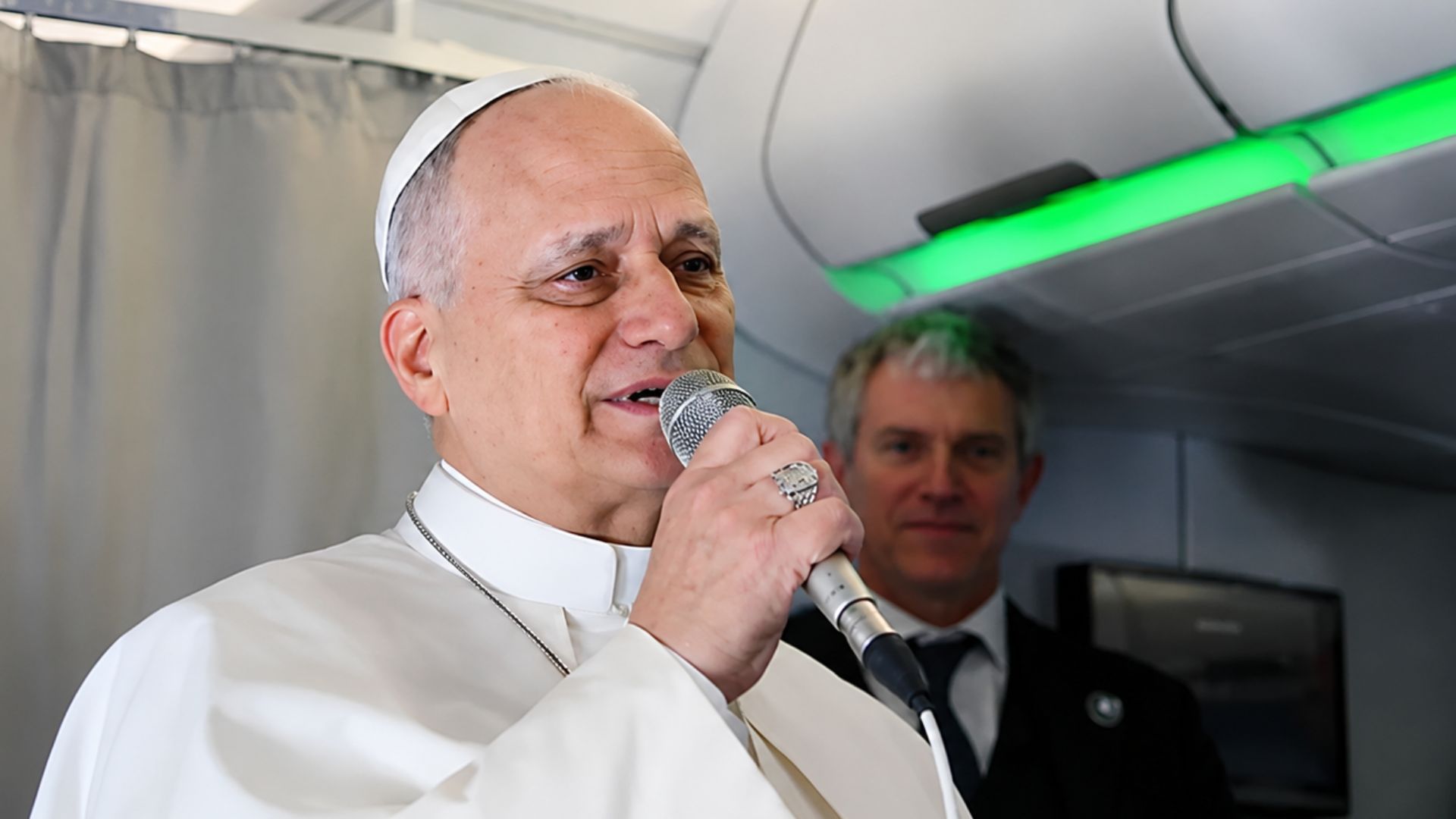
No pope had ever publicly acknowledged the Vatican’s role in giving European sovereigns explicit authority to subjugate and enslave “infidels” — until now. On May 25, 2026, Pope Leo XIV made a historic apology for the role the Holy See played in legitimizing slavery and for having failed to condemn it for centuries, calling the Vatican’s record a “wound in Christian memory.” It is the kind of reckoning that Black Catholics, scholars, and activists have demanded for generations.
Leo delivered the apology in his first encyclical, “Magnifica Humanitas” (Magnificent Humanity), released on Monday. Encyclicals are among the highest forms of papal teaching, addressed to the Church’s 1.4 billion members. The document’s primary focus is artificial intelligence and its threat to human dignity, but Leo wove the history of slavery into that argument, drawing a direct line from the transatlantic trade to the exploitative labor powering today’s technology industry.
The apology was personal in ways that go beyond theology. According to genealogical research published by Henry Louis Gates Jr., 17 of Leo’s American ancestors were Black, listed in census records as mulatto, Black, Creole, or a free person of color. His family tree includes both slaveholders and enslaved people. The man now leading the Catholic Church carries in his own bloodline the very history he is asking the institution to confront.
This article was created with the assistance of AI and reviewed by our editorial team for accuracy and clarity.
What the Church Actually Did and Refused to Say for Centuries
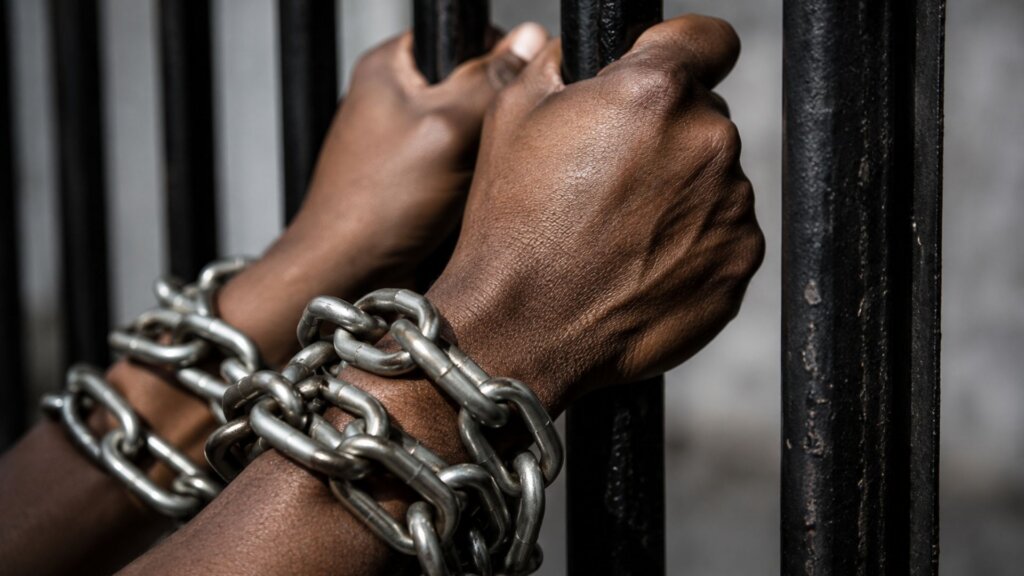
In acknowledging the 15th-century papal bulls, Leo wrote: “Already in the early modern period, the Apostolic See of Rome, responding to the requests of sovereigns, intervened several times in order to regulate and legitimize forms of subjugation, and, in certain cases, including the enslavement of ‘infidels.'” This was a formal admission that popes did not merely tolerate slavery — they provided the legal and theological cover that made it possible for European powers to pursue it.
In his encyclical, Leo recalled that his namesake, Pope Leo XIII, was the first pope to explicitly condemn slavery in 1888, long after many countries had already abolished it. Before that, in antiquity and the Middle Ages, church institutions and even popes had slaves. The silence was not accidental. For centuries, the institution that preached human dignity built cathedrals, missions, and empires in a world it helped enslave, then waited for secular governments to act first.
Leo did not claim that history’s moral failures could be judged cleanly by today’s standards. “Yet neither can we deny or diminish the delay with which both society and the church came to denounce the scourge of slavery,” he said. The pope acknowledged that the Church had long affirmed the dignity of every human being, but conceded that it took eighteen centuries for the full incompatibility of that doctrine with slavery to be explicitly recognized. That gap between belief and action is precisely what he was asking forgiveness for.
A Pope Shaped by the History He Is Apologizing For
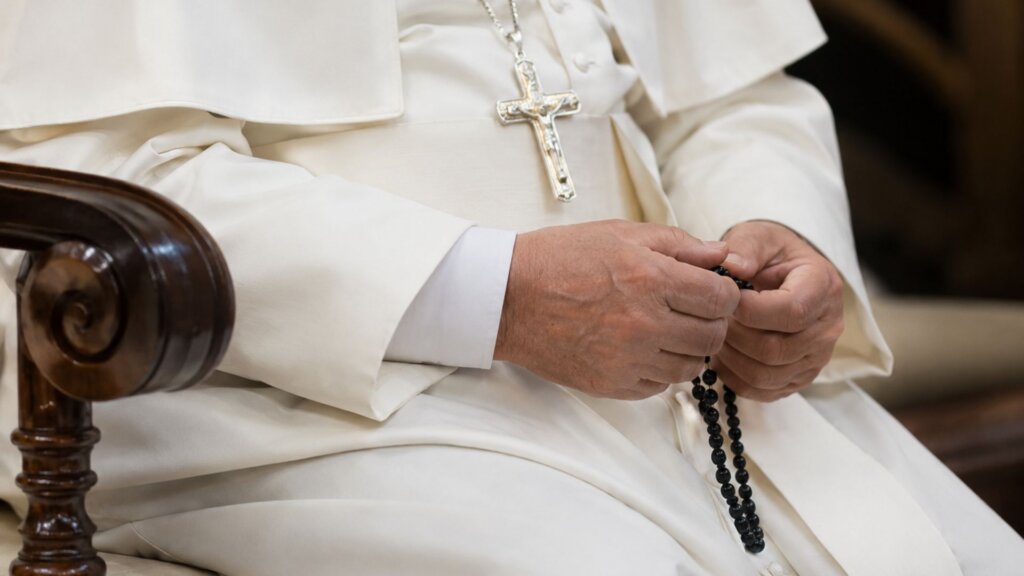
Before issuing his encyclical, Leo had already signaled where he stood. In April 2026, he traveled to the Sanctuary of Mama Muxima in Angola, a Catholic shrine located at the site of an important hub of the African slave trade during Portugal’s colonial rule. The Church of Our Lady of Muxima was originally built by Portuguese colonizers at the end of the 16th century as part of a fortress complex, and it became a hub in the slave trade. Leo prayed there, surrounded by the weight of what that ground represented.
Harvard professor Henry Louis Gates Jr., host of PBS’s “Finding Your Roots,” traced the pope’s family tree back 15 generations, revealing enslaved ancestors, slaveholders, freedom fighters, and a multiracial lineage spanning France, Italy, Spain, Cuba, Haiti, and the United States. Of the more than 100 ancestors identified, 12 owned slaves. Four of those were white, and eight were Black — a detail that strips away any simple moral framing and places Leo squarely inside the messy, painful reality of American history.
“For Black Catholics, Pope Leo’s visit to the Muxima shrine is an important moment of healing,” said Anthea Butler, senior fellow at the Koch Center, Oxford University. She noted that many Black Catholics are Catholic because of slavery and the Code Noir, which required enslaved people purchased by Catholic owners to be baptized in the church. The encyclical’s apology, arriving weeks after that visit, reinforced that this pope was building toward something deliberate — a reckoning anchored in both history and personal lineage.
On Forgiveness, and the Price of Repeating the Past

Leo’s words in “Magnifica Humanitas” carried unmistakable weight: “It is impossible not to feel deep sorrow when contemplating the immense suffering and humiliation endured by so many in stark contrast to their immeasurable dignity as persons infinitely loved by the Lord. For this, in the name of the Church, I sincerely ask for pardon.” For scholars and Black Catholic communities who have spent decades pushing for this acknowledgment, those sentences represent something long overdue.
The pope also made clear that the apology was forward-looking in its urgency. Leo stated that the Church must strongly condemn all forms of trafficking tied to the digital technological revolution, warning specifically that children and adolescents in some regions work in dangerous conditions, extracting rare earth elements whose materials power chips, their bodies worn down so that technology can run without interruption. The parallel to the transatlantic trade was deliberate: Leo was warning against history’s capacity to rebrand itself.
What makes this moment genuinely historic is not just the words, but who is saying them and what they cost him. A pope with Black ancestry, who prayed at a slave trade fortress in Angola, then published a formal apology in the Church’s highest teaching document, is asking an institution to look at itself without flinching. Leo wrote that if the Church fails to act now, it will face the need to ask for pardon again in the future for having failed to respect the treasure of human dignity that faith requires. Forgiveness, in his telling, is only the beginning.