


Products are selected by our editors, we may earn commission from links on this page.

“I vaped nicotine a lot,” Selena Gomez told followers in an Instagram Story posted October 18. She linked the habit directly to the way her voice sounds now and added a blunt verdict: “It’s just not worth it. It’s so stupid.” She also said she did not expect to get her old sound back. For a performer whose voice carries both a music career and screen work, that is an unusual thing to put on the record. Gomez, 34, has spent months hearing listeners compare her current speaking voice to her Disney Channel years. Rather than deflect, she named a cause and attached a warning to it.
This article was created with the assistance of AI and reviewed by our editorial team for accuracy and clarity.
She Had Given A Different Explanation Ten Months Earlier

This was not the first time Gomez addressed the question. During an Instagram Live in December 2025, she told viewers her throat sometimes swelled internally. Earlier explanations had pointed toward medication side effects instead. Gomez has spoken publicly about living with lupus and with bipolar disorder, which complicates any outside attempt to read her health from a recording. Several plausible explanations were already on the table before October 18, and she had offered some of them herself. What changed is that she added a habit to the list and put it first. The October video does not retract the earlier accounts. It sits alongside them.
Vocal Cords Sit Directly In The Path Of Inhaled Vapor

The throat is not a sealed tube that only moves air. The vocal cords sit along the route between the mouth and the lungs, so anything inhaled passes across the same tissue that produces speech and singing. Dr. Candace Hrelec, a laryngologist at Cleveland Clinic, has explained that inhaled chemicals can contribute to irritation, sore throat, mucus production and coughing. That is the general mechanism, and it applies to anyone who inhales an irritant, not only to performers. Gomez attributes her own vocal changes to vaping. Her account does not establish the precise medical cause in her case, or whether what she is hearing is permanent.
An E-cigarette Produces Aerosol, Not Water Vapor

The word ‘vapor’, does a lot of quiet work in this conversation. What an e-cigarette actually produces is an aerosol, a suspension of fine particles in gas. Depending on the device and the liquid, a user may be inhaling nicotine, fine particulate matter, flavoring compounds and other substances. Cleveland Clinic lists possible respiratory and other health harms from these products. The CDC states plainly that e-cigarettes are not safe. Neither body describes the output as harmless steam. Nicotine draws separate concern for younger users, because it acts on brain systems still under construction: the circuits handling attention, learning and impulse control.
Stopping Was The Harder Half Of The Story
“Nicotine is so hard to quit,” Gomez said in the same message. She confirmed she had stopped, then declined to present that as finished business. “I am really excited because I stopped,” she told viewers, adding that she hoped she could maintain it. The hedge is the informative part. Dependence is not resolved by a single decision on a single morning, and cravings and withdrawal do not end when the last device is thrown out. She closed by addressing anyone in the same position directly, telling them they could get through it too, and acknowledging the obvious: “It sucks.”
She Declined To Apologize For How She Sounds
Gomez did not promise to recover her younger voice or ask listeners to come around to the current one. She acknowledged that some people may not enjoy hearing it and indicated they were free to stop listening. There was no extended defense attached. That posture lines up with a comment she made in September about aging, when she said she loves getting older. The October message separates two things that often get bundled together online: a health decision she regrets and a sound she is not going to litigate. What the message does not do is claim the change will reverse.
The Safer-Than-Smoking Argument Restarted Immediately
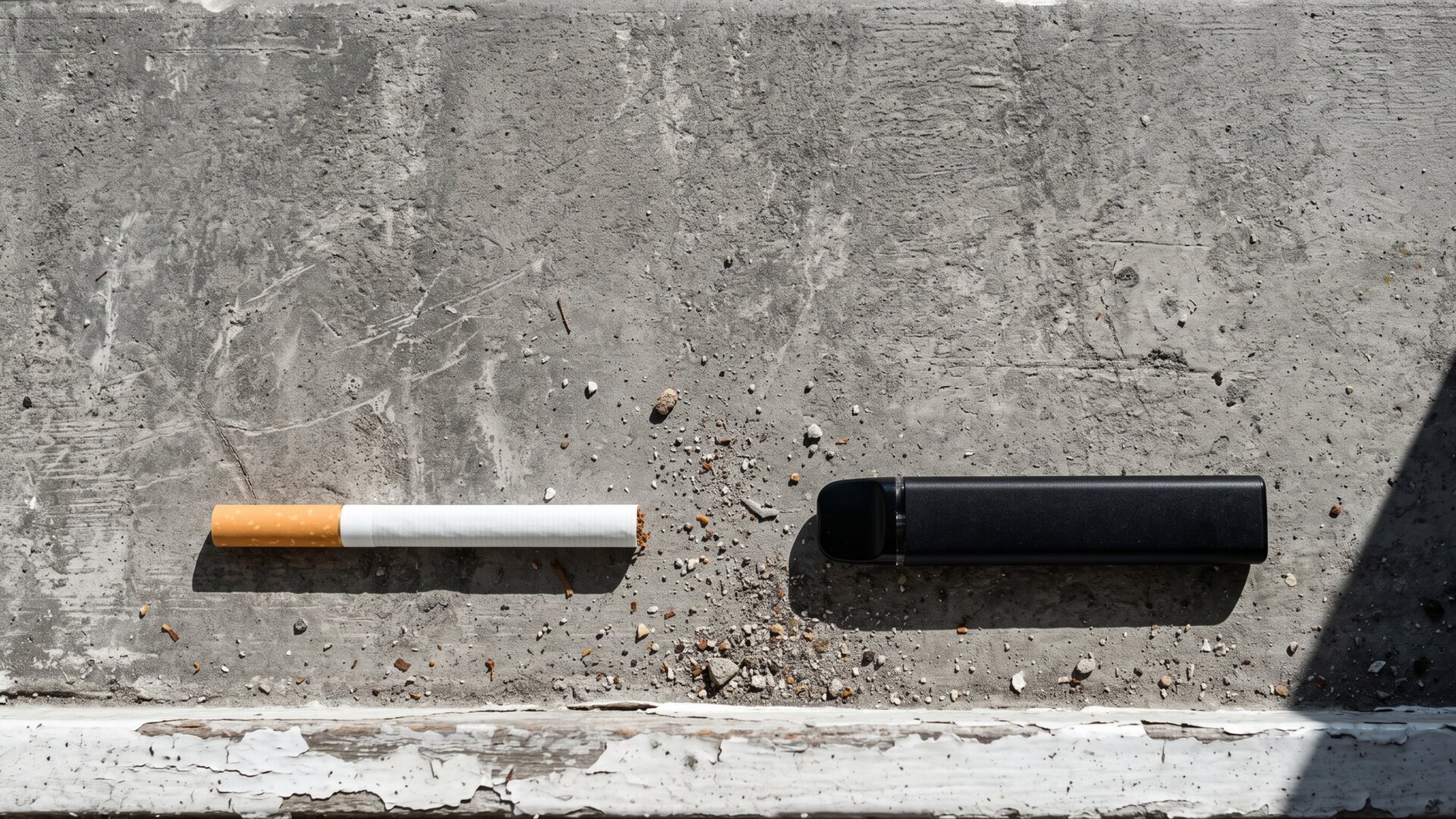
On the r/entertainment subreddit, user Colemania18 defended Gomez for taking on both the criticism of her voice and the risks she attaches to vaping. Others were cooler. ClearDrop6820 questioned the common claim that vaping is safer than smoking. AusgefalleneHosen pushed back the other way, objecting to treatment of every vaping risk as worse than cigarettes. Both positions flatten the same distinction. A cigarette smoker who switches completely generally takes in fewer toxic chemicals. That comparison says nothing about a person who was not smoking to begin with, and reduced exposure is not the same as no exposure.
A Stepparent Described Warnings That Went Nowhere

The thread shifted when Reddit user mommawolf2 described trying to stop a 16-year-old stepson from vaping, and getting nowhere despite repeated warnings. Another commenter, sgartistry, suggested a different angle: talk about what the habit costs. That user reported spending more than $100 a month on nicotine pouches, and described a stretch of prioritizing them over groceries. The exchange captured something a prevalence figure cannot. The hard part is rarely explaining that nicotine is addictive. It is persuading a person who does not yet believe the word applies to them, which is the position most users occupy early on.
Teen Vaping Fell Sharply, Which Solves Only Half The Problem

Youth vaping in the United States peaked at roughly 20 percent in 2019, then fell to 5.9 percent by 2024, according to research cited by USA Today. That is a steep drop over five years, and it reflects real movement. It also measures the wrong thing for the problem Gomez is describing. A declining rate of new and current users among teenagers says nothing about dependence among people who already use nicotine daily, including adults well past high school. Prevention and cessation are different tasks with different success rates, and progress on the first does not carry over to the second.
Her Voice Is Also Her Working Equipment

Most people who quit nicotine do it privately. Gomez is attempting it while continuing to record music, act, and speak on camera, which means every rough patch is audible to an audience already scrutinizing her sound. That is the part of her account with the fewest comparisons available. She has described the change as something she does not expect to undo, has stopped the habit she blames for it, and has said out loud that she hopes the stopping holds. Anyone making the same attempt without an audience has one structural advantage over her: nobody is grading the withdrawal in real time.