


Products are selected by our editors, we may earn commission from links on this page.

The unexpected realization that your local community landscape is shifting under the pressure of regional corporate migrations can alter how long term residents evaluate their personal employment security. This economic reality became undeniable for an executive director in San Francisco, Travis Kalanick, who chose to dismantle his deep roots in California to plant a new base within the expanding technological hubs of the American Southwest. This highly publicized corporate flight highlights a structural economic realignment between competing states, forcing prominent private industry leaders to reevaluate their geographic operational boundaries.
The underlying industrial conflict escalated rapidly after regional tax initiatives forced corporate executives to reconsider their long term fiscal liabilities. According to detailed moving statements published by the Legislative Analyst’s Office alongside investigative business reporting compiled by Fox Business, billionaire tech investors are actively abandoning coastal hubs to escape aggressive upcoming municipal tax regulations. Public representatives in Sacramento defend these local revenue bills as essential safety nets, while corporate analysts warn that the mounting regulatory pressures are triggering a persistent corporate exodus.
The immediate transactional scale of this corporate migration involves exactly fifty seven Fortune 500 company headquarters establishing their primary legal addresses across Texas. This total represents a corporate volume larger than the entire active legislative body of the United States Senate, directly generating 2.8 trillion dollars in annual operational revenue. That massive financial sum represents a value greater than the combined annual gross domestic products of multiple major European nations, officially dethroning California from its long held economic peak.
When Legislative Reversals Force Corporate Directors to Outsource Domestic Operations

Modern industrial development frameworks frequently prioritize regional regulatory predictability over the long established historical ties of coastal technology capitals. Under upcoming legal provisions slated to take effect by 2027, the California Billionaire Tax Act will impose a severe, one time 5 percent asset penalty directly onto the total personal net worth of roughly two hundred wealthy residents. This target group represents an executive population larger than the total membership of many local civic councils, driving billionaires like Elon Musk and Mark Cuban out of state.
State revenue administrators have publicly defended the strict enforcement thresholds, issuing formal declarations that wealthy taxpayers can legally spread their mandatory asset payments over a designated five year period with added interest. However, comparative data compiled by the United States Census Bureau demonstrates that these aggressive tax structures are actively driving both major corporate enterprises and ordinary, budget conscious civilian workers toward regional tax havens. This structural migration has allowed Texas to achieve its highest corporate headquarter volume documented since 2010.
The physical fallout of this sweeping executive migration forces regional real estate markets to rapidly adjust to an unprecedented influx of commercial operating capital. In popular technological growth hubs like Austin, commercial developers responded to the sudden tech worker influx by initiating a frantic, multi million dollar luxury apartment building boom. This overbuilt landscape means that an ordinary resident’s housing options are completely destabilized, as oversupplied luxury condominium values drop drastically while real estate firms scramble to fill empty properties.
How Excessive Capital Relocation Fractures Regional Municipal Housing and Utility Structures

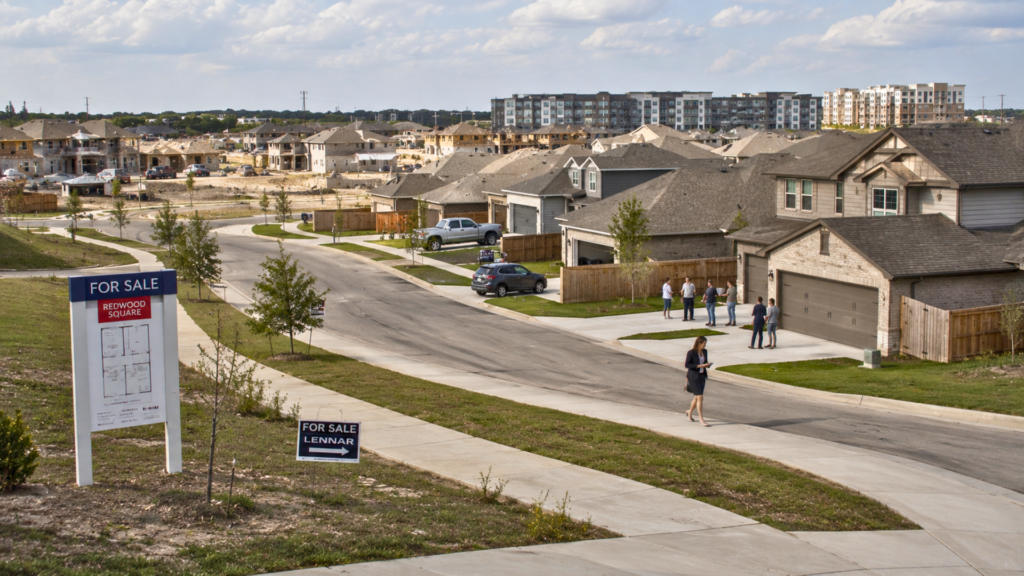
The secondary complications of these rapid corporate relocations extend deep into regional metropolitan residential markets, transforming traditional middle class neighborhoods into volatile economic zones. Housing inventory data published by Realtor.com demonstrates that Austin is now among four major American metropolitan areas that maintain 50 percent more active residential listings than pre pandemic baselines. This extreme supply surge ensures that local property values fluctuate wildly, leaving everyday suburban homeowners vulnerable to sudden, unexpected shifts in their personal equity holdings.
Coordinated community adjustments have intensified across the Sun Belt as property management associations attempt to stabilize declining rental returns following the initial tech worker boom. Property management expert Mike Steward confirmed that despite near term regional competition, local property managers must consistently adjust baseline lease agreements down from their historical record peaks to attract stable tenants.
This ongoing market correction means that a family attempting to navigate local housing markets must plan for long term lease instability. “Texas is the undisputed headquarters of headquarters. The world’s leading businesses invest with confidence in Texas because of our welcoming business climate, predictable regulatory environment, and skilled and growing workforce. People and businesses are choosing Texas because Texas works.”
Why Abstract Industrial Decentralization Leaves Family Financial Portfolios Permanently Vulnerable
The long term structural fallout of this intense state level corporate rivalry threatens to permanently alter the baseline of American municipal planning and weaken traditional consumer protections. Independent urban planning boards are actively tracking how the rapid influx of over 391,000 new residents within a single calendar year overwhelms local infrastructure networks. If massive industrial conglomerates continue to relocate their large operational footprints to avoid state taxes, the cumulative civic strain will continuously reshape the domestic labor market.
This current migration crisis mirrors previous historical cycles where massive commercial enterprises externalized their relocation costs directly onto the physical infrastructure of developing regional communities. From the midcentury manufacturing movements across the industrial Rust Belt to modern corporate expansions into the South, local neighborhoods consistently absorb the long term environmental and structural damage. Federal economic regulatory bodies remain entirely detached from these developments, leaving individual states to unilaterally fight for essential corporate tax revenues.
The silent friction between aggressive state tax mandates and defensive corporate relocation strategies continues to reshape the American economic landscape without any overarching federal consensus. Families living across both states face an uncertain future where a billionaire’s corporate balance sheet dictates the long term stability of their neighborhood public school funding and localized property values. No centralized agency has established uniform limits on these competitive state tax practices, forcing ordinary citizens to carry the permanent burden of an endless socioeconomic experiment.