

Products are selected by our editors, we may earn commission from links on this page.
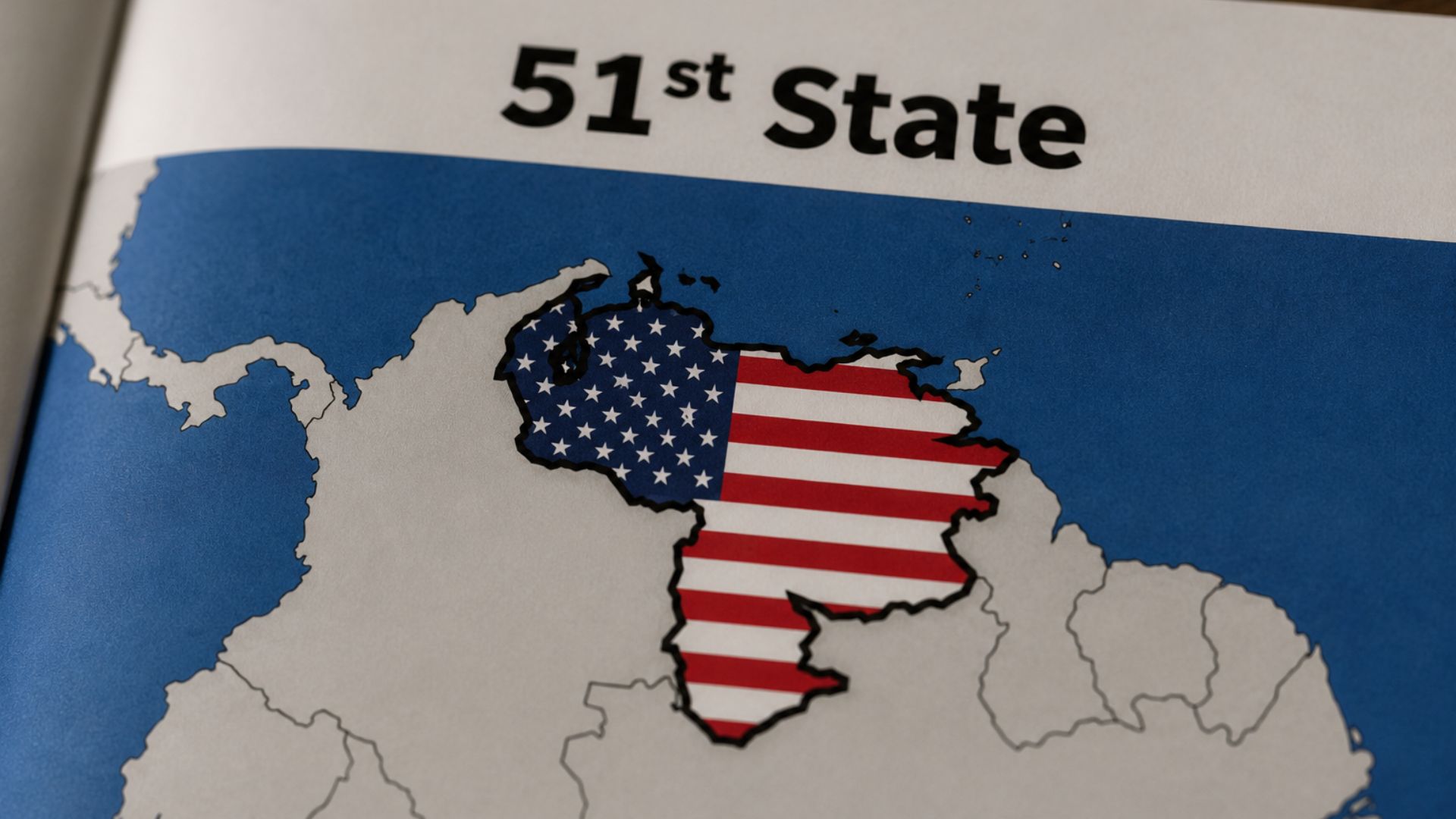
What do you do after your military removes a foreign leader from power? If you are President Donald Trump, you float the idea of turning that country into America’s newest state. In a phone call with Fox News co-anchor John Roberts on Monday, May 12, Trump said he was “seriously considering a move to make Venezuela the 51st state,” citing the country’s estimated $40 trillion in oil reserves. It is a statement that raises a question with enormous consequences: can he actually do it?
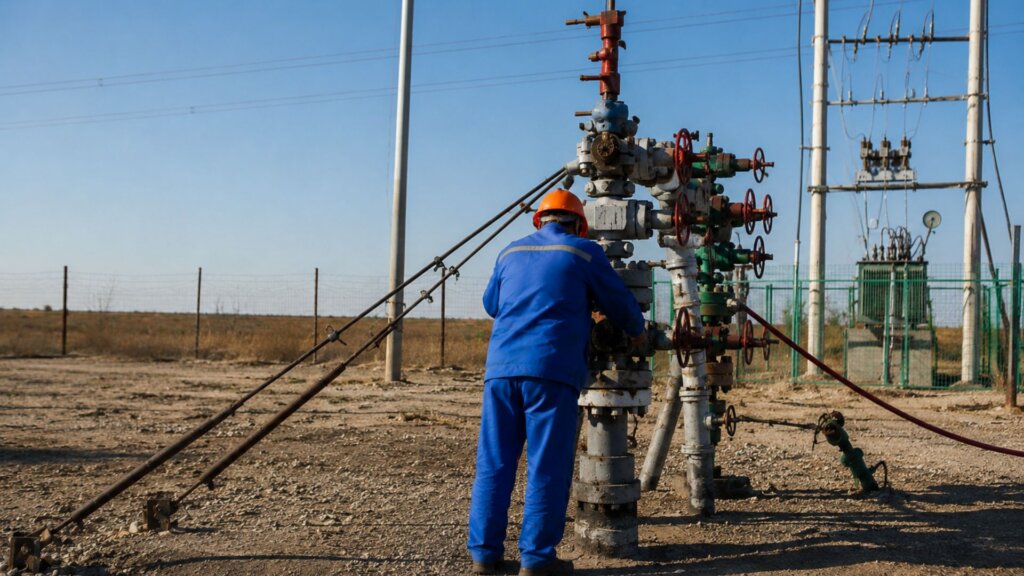
Venezuela is not simply a talking point. Following a U.S. military operation that removed President Nicolás Maduro from power, Trump’s administration has been actively courting oil companies to invest in the South American country. With the Trump administration now managing Venezuela’s oil sector, exports in April reached more than 1 million barrels per day, the highest level since 2018. The statehood remark did not arrive in a vacuum. It arrived at the exact moment the United States was already running Venezuela’s most valuable industry.
After U.S. military officials captured Maduro in January, Trump said the United States would “run” the country during its transitional period. “We’re going to run the country until such time as we can do a safe, proper and judicious transition,” Trump said. “We want peace, liberty and justice for the great people of Venezuela.” That promise of stability, however, is now colliding with a far more provocative ambition, one that is already drawing sharp resistance from inside Venezuela itself.
This article was created with the assistance of AI and reviewed by our editorial team for accuracy and clarity.
Venezuela’s Acting President Has a Two-Word Answer: Absolutely Not
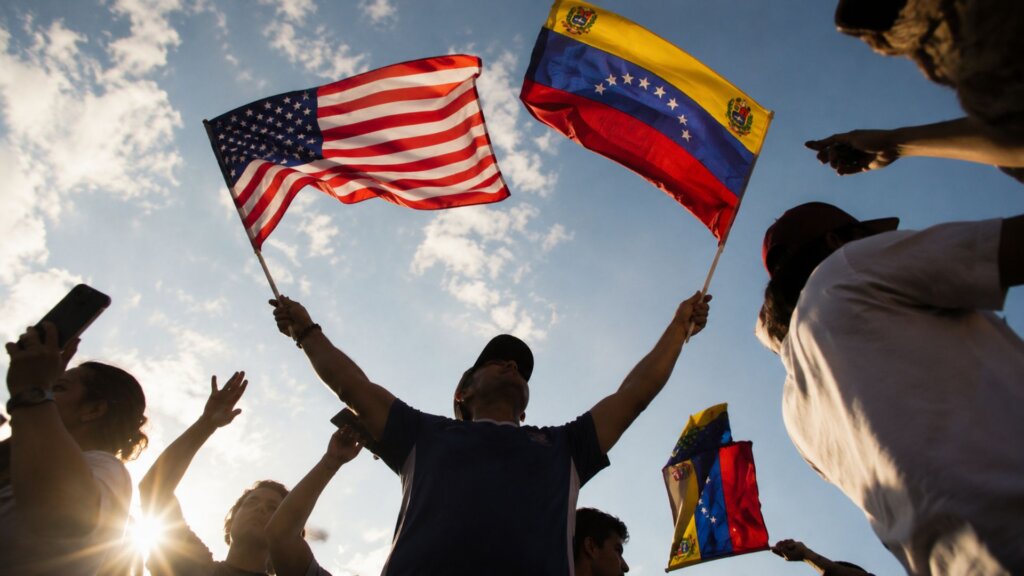
Venezuela’s acting President Delcy Rodríguez told journalists Monday that her country had no plans to become the 51st U.S. state. Rodríguez was speaking at the International Court of Justice in The Hague on the final day of hearings in a territorial dispute between Venezuela and neighboring Guyana. The timing was pointed: the woman managing a country whose independence Trump just called into question was, at that very moment, standing before the world’s highest court defending Venezuela’s borders.
Rodríguez did not mince words. “That would never have been considered, because if there is one thing we Venezuelan men and women have, it is that we love our independence process, we love our heroes and heroines of independence,” Rodríguez told reporters when asked about Trump’s remarks. Venezuela is “not a colony, but a free country,” she added. Her defiance was categorical, and it put Washington on notice that any path toward annexation would face immediate opposition from Caracas.
The White House, for its part, framed the broader relationship in warmer terms. According to a statement provided to USA TODAY, White House assistant press secretary Olivia Whales said, “Relations between Venezuela and the United States have been extraordinary. Oil is starting to flow, and large amounts of money, unseen for many years, will soon be helping the great people of Venezuela.” That rosy picture, though, glosses over a fundamental tension: Washington is simultaneously courting Venezuela’s resources and threatening its sovereignty.
Venezuela Is Just the Latest Country Trump Wants to Own
Venezuela is just the latest country Trump has eyed for annexation, with a list that includes Greenland, Canada, Cuba, and Panama. Each case follows a similar script: Trump identifies a strategic or economic prize, then publicly muses about incorporating it into the United States. The language shifts between friendly invitation and geopolitical pressure, but the underlying logic rarely changes. Resources and location drive the calculus, even when the rhetoric is wrapped in a celebration, as it was when Venezuela won a World Baseball Classic game in March.
The contradiction between Trump’s statehood talk and his administration’s aggressive immigration posture is both symbolic and strategic. A nationality treated as suspect at the border becomes a partner when attached to lucrative oil fields and critical mineral deposits. Trump’s own administration has deported hundreds of accused members of Tren de Aragua, a Venezuelan gang, under the 1798 Alien Enemies Act. Framing Venezuelans simultaneously as a threat and a future constituency is not an oversight. It is a reflection of a policy built around assets, not people.
Trump has said Canada should also be the 51st state, a position multiple Canadian leaders have publicly opposed. Current Prime Minister Mark Carney told Trump directly that Canada “is not for sale, won’t be for sale, ever.” For Greenland, Trump cited national security and missile defense corridors. The pattern across all these targets reveals a consistent worldview: sovereignty is negotiable if the price, or the pressure, is high enough. Venezuela’s $40 trillion in oil reserves puts it at the top of that list.
The Law Is Clear. Whether Trump Cares Is Another Matter
Article IV of the U.S. Constitution allows Congress to admit new states through a simple majority vote in both the House and Senate, plus the president’s signature. However, Venezuela’s government and people would first have to agree to give up their national sovereignty and seek admission to the United States. Neither condition is remotely close to being met. Rodríguez has already said no. Congress has not been consulted. And no formal proposal has been submitted. What exists right now is a presidential suggestion, not a policy.
Historically, new states have entered the Union from U.S. territories rather than from independent foreign countries. Before statehood, territories typically have a local government, a permanent population, and residents who support becoming a state. Venezuela has none of those preconditions in place. It has a contested acting government, a population that has spent decades asserting its independence, and a constitution of its own. The legal route from here to statehood is not just difficult; according to CNN, it would require Venezuela’s full consent, something Caracas has already publicly refused.
Trump has previously floated the statehood idea in the form of baseball celebrations and social media posts, which makes annexation talk sound like a cultural wink rather than a constitutional rupture. But each time the idea resurfaces, it carries more institutional weight behind it, because U.S. companies are already operating in Venezuela’s oil fields. The question is no longer just whether Trump is serious. It is whether the structures being quietly built on the ground are creating facts that even Congress and the Constitution will one day struggle to undo.