

Products are selected by our editors, we may earn commission from links on this page.
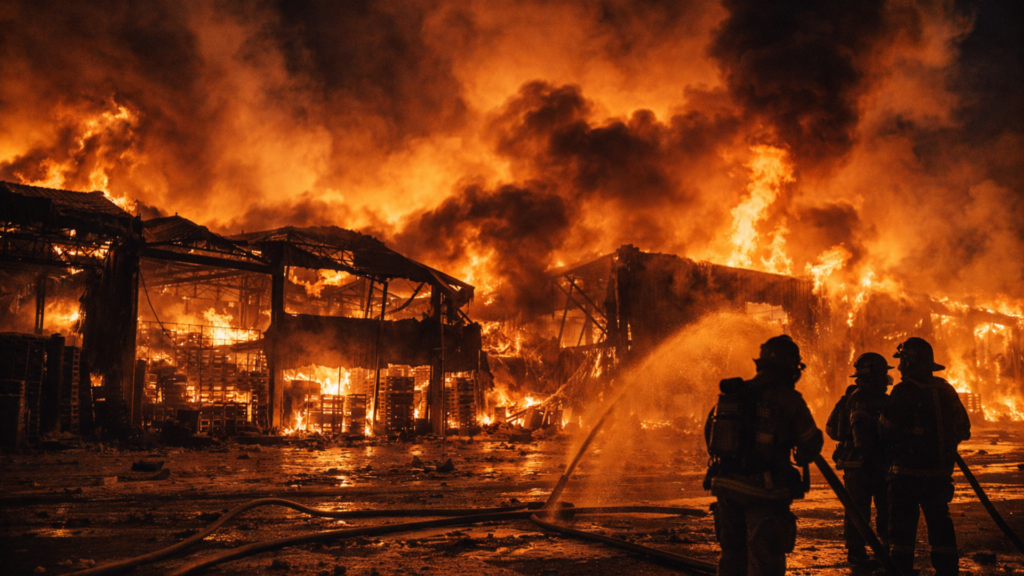
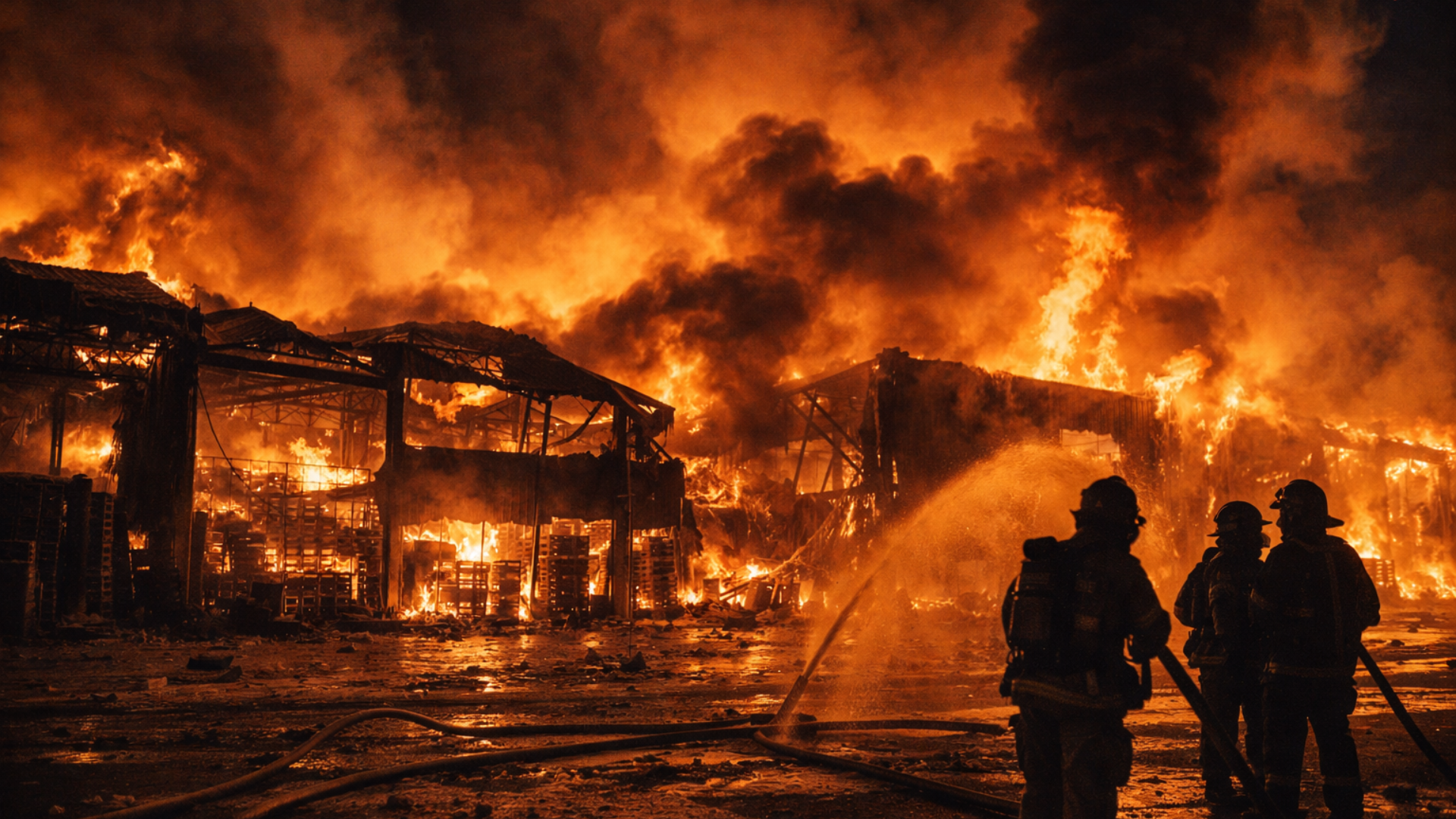
A video circulating on social media captured the moment a 1.2-million-square-foot warehouse in Ontario, California began to burn from the inside. Over the crackling of flames consuming towering pallets of paper goods, a voice can be heard saying: “All you had to do was pay us enough to live. All you had to do was pay us enough to live. There goes your inventory.” The building was a Kimberly-Clark distribution center. It served approximately 50 million people. By the time 175 firefighters brought the six-alarm blaze under control, it was gone.
The warehouse stored and distributed products for some of the most recognizable household brands in America: Huggies diapers, Kleenex tissues, Scott paper towels, Kotex, and Cottonelle. The facility was operated by National Freight Inc. Industries, a third-party logistics firm, on behalf of Kimberly-Clark. When the fire broke out, sprinklers inside the building were active but according to Cal Fire officials, the flames were already located throughout the structure, a detail investigators noted almost immediately as evidence that the fire was likely not accidental.
No warehouse employees were injured in the blaze. One worker was initially unaccounted for and quickly became a subject of interest. Police located him fast. “This fire was very quickly identified as suspicious in nature,” Deputy Chief Mike Wedell said, according to ABC 7 News. “There was a subject of interest identified very early on in the incident. That subject has been arrested.” What emerged in the hours that followed was a story about wages, anger, and the moment one man apparently decided he had run out of patience.
Who Was Arrested and What the Evidence Against Him Looked Like

Chamel Abdulkarim, a 29-year-old employee of NFI Industries, was arrested and charged with multiple arson-related felonies. He is being held without bail. Police confirmed that Abdulkarim was present at the warehouse at the time of the fire, though investigators had not yet determined at the time of the arrest whether he was officially on shift when the blaze started. What they had determined, based on multiple calls received during the incident, was enough to identify him as the suspect and move quickly to take him into custody.
Corporal Emily Williams told a news conference that police received several tips during the fire that led them to conclude the blaze was suspicious and pointed them toward Abdulkarim. The social media video, in which a voice narrates the burning inventory and invokes wages as the motive, became a significant part of the public conversation around the case. Whether that recording is directly tied to Abdulkarim is part of the ongoing investigation. What is not in dispute is that a 1.2-million-square-foot facility, stocked with goods bound for tens of millions of households, was destroyed in a matter of hours.
The scale of the response tells its own story. A six-alarm fire is among the most serious classifications in American firefighting, reserved for incidents requiring extraordinary resources. Deploying 175 firefighters to a single structure reflects both the physical size of the building and the speed at which the fire moved through it. The fact that active sprinklers failed to contain the blaze suggests the fire spread faster than the suppression system could respond, which in turn supports investigators’ early conclusion that the ignition was not accidental.
Supply Disruptions, 50 Million Customers, and How Kimberly-Clark Responded
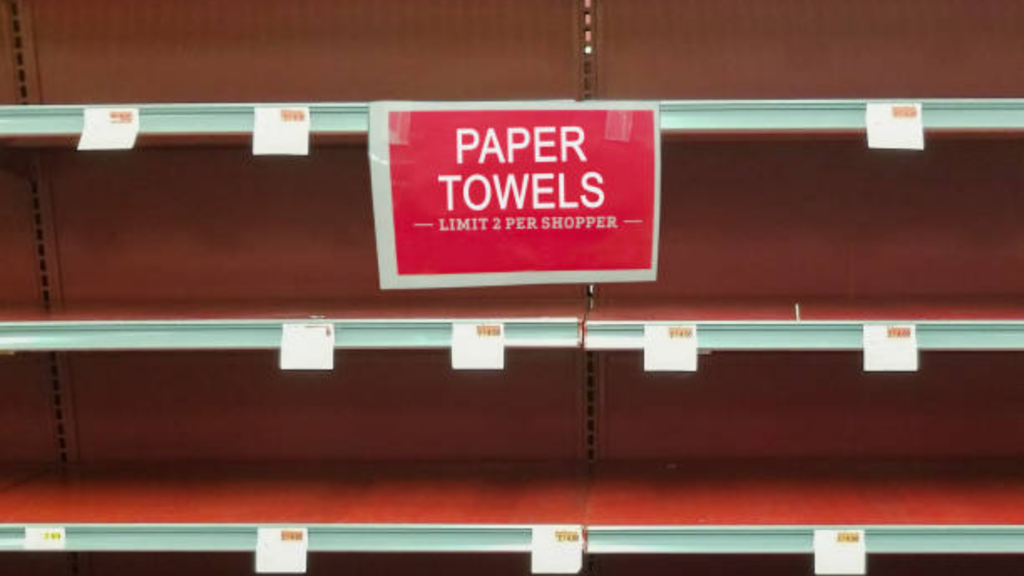
The destruction of a single warehouse serving 50 million people on the West Coast immediately raised questions about whether Americans would soon face empty shelves where Huggies and Kleenex normally sit. According to Bloomberg Intelligence senior industry analyst Diana Gome, the fire risks supply disruptions affecting more than 3% of Kimberly-Clark’s total U.S. business sales, and could also push transportation costs higher as the company scrambles to reroute shipments through alternative facilities. For a company of Kimberly-Clark’s size, 3% is not a trivial figure.
Kimberly-Clark moved quickly to contain the public relations and supply chain damage simultaneously. The company released a statement the day after the fire confirming it had “activated a response team to manage the situation and minimize customer and consumer impact.” It emphasized that none of its manufacturing assets were affected and that its supply chain network is “designed for continuity during disruptions.” Alternative locations for incoming shipments had already been identified within 24 hours of the blaze.
For the workers who had been employed at the Ontario facility, the reassurances from the corporate level landed differently. NFI Industries said it was working to place affected employees at other company operations in the area. One worker, speaking to ABC 7, was not convinced the transition would be seamless. “It is going to affect us all the way around, no matter how we look at it,” the employee said. That single sentence captures the gap between a company’s crisis response messaging and the reality facing the individuals whose daily work disappeared with the building.
Wages, Working Conditions, and the Slow Burn Behind the Blaze
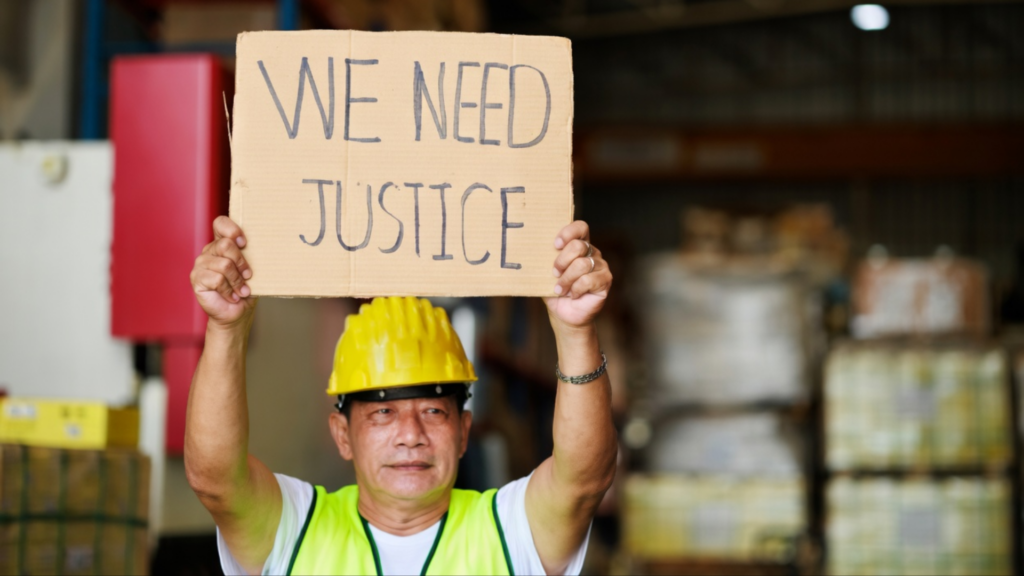
The words captured in the social media video — “all you had to do was pay us enough to live” — have become the frame through which this story is being understood by much of the public. Whether or not that voice belongs to Abdulkarim, and whether or not wage frustration was the operative motive in a legal sense, the statement landed with an audience that recognized the sentiment immediately. Warehouse workers, logistics employees, and gig workers across the country have spent years articulating versions of the same complaint through union drives, strikes, and public campaigns. This version arrived as a fire.
The economics of warehouse work in the United States have been under scrutiny for years. The sector expanded dramatically during and after the pandemic as e-commerce demand surged, bringing in large numbers of workers under conditions that labor advocates have consistently described as high-pressure, physically demanding, and poorly compensated relative to the profits generated by the companies at the top of the supply chain. Whether those conditions describe Abdulkarim’s specific experience at NFI Industries is not yet part of the public record. What is part of the record is that he is facing multiple arson felonies and is being held without bail.
A 1.2-million-square-foot warehouse does not burn down without consequences that ripple outward through supply chains, through the households that depend on the products it distributed, through the workers who have lost their jobs, and through the broader conversation about what people are owed for the work they do. Abdulkarim will face those consequences in court. The companies involved will face them in logistics spreadsheets and earnings calls. The workers displaced by the fire will face them at the end of the month. The voice on that video said the answer was simple. Nothing about what comes next is.