


Products are selected by our editors, we may earn commission from links on this page.

A single employee on Medicaid could soon cost a New Jersey company up to $725 a year, and the business never gets a say in it. Governor Mikie Sherrill signed the fee into law, targeting employers whose workers rely on taxpayer-funded health coverage instead of a company plan. The rule hits companies with 50 or more workers enrolled in Medicaid, according to the signed measure.
Employers get billed per person, counting both employees and their dependents on the program. Fees start at $325 annually for businesses with 50 to 249 Medicaid recipients on staff and climb to $725 for those with 500 or more. New Jersey’s new budget already counts on the fee generating $145 million this year, money the state is banking on before a single invoice goes out.
Supporters call it fairness. Employers save money every time a low-wage worker turns to Medicaid instead of a company health plan, and Democratic lawmakers argue taxpayers shouldn’t quietly absorb that cost forever. Business groups see it differently, warning the charge punishes companies for decisions employees make on their own. New Jersey is not the only state watching how this plays out. Several others are already drafting their own versions, and the reasoning behind the rush traces back to Washington.
This article was created with the assistance of AI and reviewed by our editorial team for accuracy and clarity.
California Lawmakers Just Set the Stage for Their Own Employer Fee
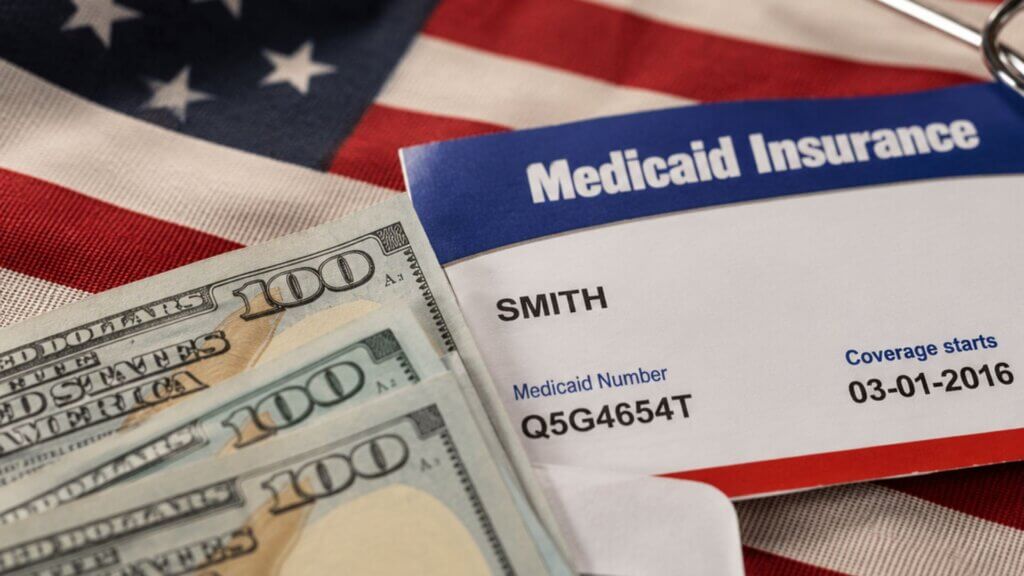
California passed a bill this week that stops short of charging companies right now. Instead, it orders the state administration to hand lawmakers concrete options for a fee next year, effectively teeing up the decision for whoever replaces Gov. Gavin Newsom, who leaves office in January. Democratic candidate Xavier Becerra has already built an employer charge into his campaign platform, meaning California’s fee, if it happens, will likely arrive as a first act of the next administration.
State Sen. John Laird, who sponsored the California measure, points to a federal law signed by President Donald Trump a year ago as the real trigger. He argues it will push California to spend more on Medicaid to cover gaps the law creates. Laird frames it as a fairness problem too: “If you’re a small business person in California, you are quite likely paying for health insurance for your employees. And through your taxes, you’re paying for health insurance for some of the biggest employers in California. And that’s not fair.”
The stakes behind that argument are steep. The nonpartisan Congressional Budget Office projects the federal law will leave more than 10 million people uninsured by 2034, partly through new work and paperwork requirements for Medicaid recipients. Colorado and Oregon have already passed similar employer-fee bills through one legislative chamber this year. Washington introduced its own version, and Connecticut Gov. Ned Lamont wants to fold a charge into his state’s budget, set to begin in two years.
Business Groups and Liberal Policy Experts Find Rare Common Ground

Business organizations reacted to New Jersey’s fee exactly as expected: with anger. Christopher Emigholz, chief government affairs officer at the New Jersey Business and Industry Association, said companies are being blamed for choices they cannot control. “The fact remains that many job-creators are still going to be penalized for something they have no control over,” he said. “If an employee declines an employer-provided health plan because they’d rather be on Medicaid, it is unfair to penalize the employer for that employee’s decision.”
What is unusual is who else is objecting. Gideon Lukens, who studies health policy at the left-leaning Center on Budget and Policy Priorities, calls the idea well-intentioned but risky. He warns companies could respond by hiring fewer people from low-income households or single-parent families, and could factor Medicaid status into layoffs, hiring, or even where they choose to locate a business. “Usually, when I see a tax on something it’s going to discourage whatever being taxed,” he said.
Lukens raises another concern: workers themselves might avoid enrolling in Medicaid if they think it makes them less appealing to employers, undercutting the coverage the program is meant to provide. New Jersey’s law tries to head off some of these outcomes directly. It exempts temporary, seasonal, and part-time employees from the fee entirely, and it bars companies from making hiring or firing decisions based on a worker’s Medicaid status. Whether that language holds up is another matter.
This Exact Idea Already Failed Twice, and Lawyers Are Watching Closely

Charging employers for workers on Medicaid is not new. Massachusetts tried it first, passing a law in 2017 that charged up to $750 per nondisabled worker enrolled in Medicaid or a state-subsidized exchange plan. The program launched in 2018. It quietly expired the following year and was never renewed, fading out with little fanfare despite the attention it drew when lawmakers first approved it.
Maryland tried something similar back in 2006, and the law effectively targeted one company: Walmart. An industry group sued, and a federal judge sided with them, ruling the law forced Walmart to track and structure employee benefits differently in Maryland than in every other state, violating a federal law governing self-insured health plans. The fee collapsed in court before it ever collected a dollar.
New Jersey’s law was written with that Maryland ruling in mind, carefully avoiding any reference to self-insured health plans to sidestep the same legal challenge. Whether that drafting choice survives a lawsuit remains untested. What is certain is that the underlying pressure driving these fees, states straining to fund Medicaid as federal costs shift downward – is not going away. New Jersey may be first, but the legal and political fight it just started belongs to every state watching from the sidelines.