

Products are selected by our editors, we may earn commission from links on this page.
A ceasefire in the Middle East might feel like the moment global shipping snaps back to normal. It won’t. Even if the Strait of Hormuz reopens fully, experts warn that the disruption to oil, food, and fertilizer supplies will continue for months. Not because the waterway itself remains blocked, but because of a problem hiding in plain sight: the ships needed to carry new cargo back into the Gulf simply are not there. The recovery depends on a chain of logistics that a ceasefire alone cannot trigger.
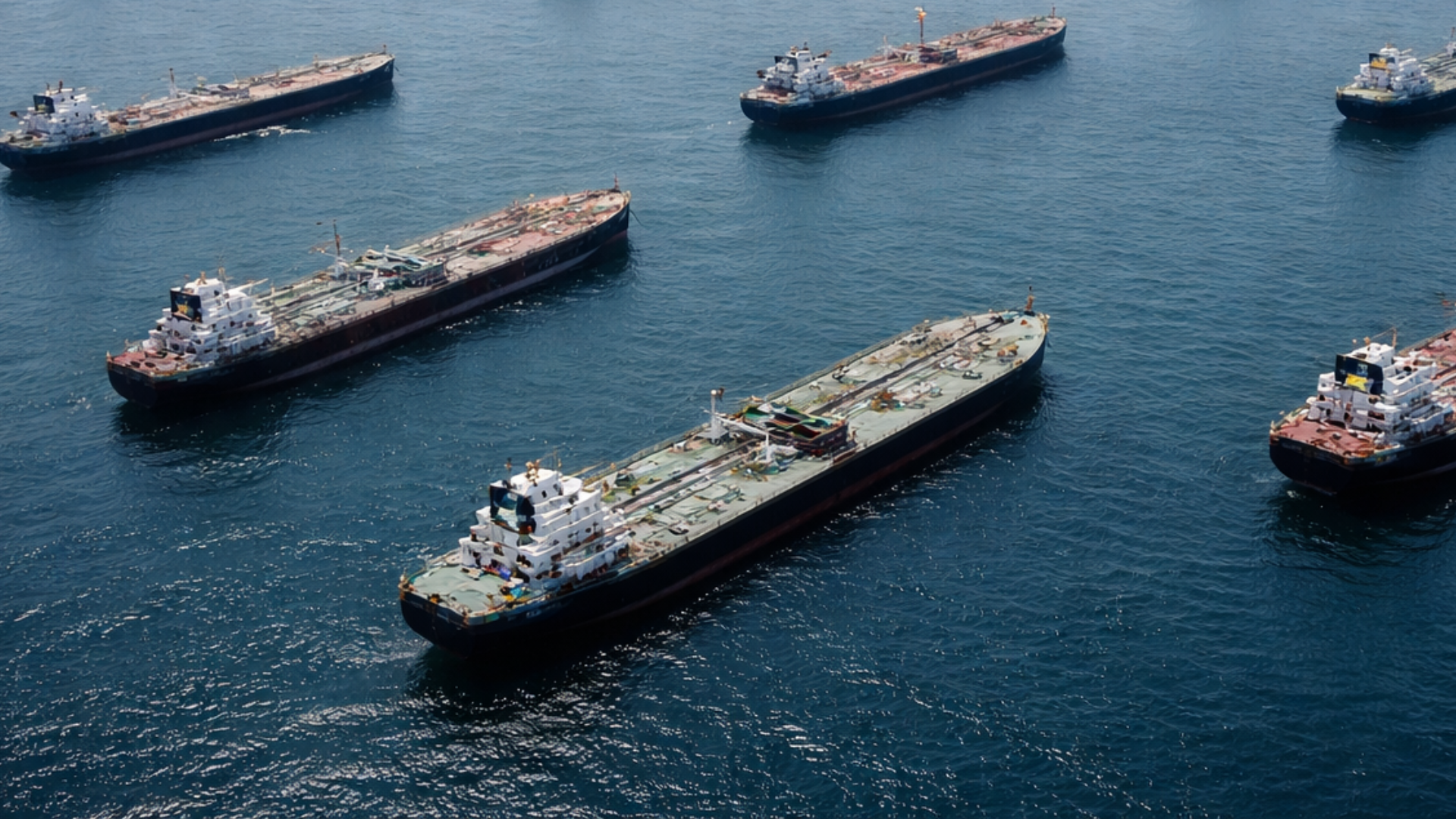
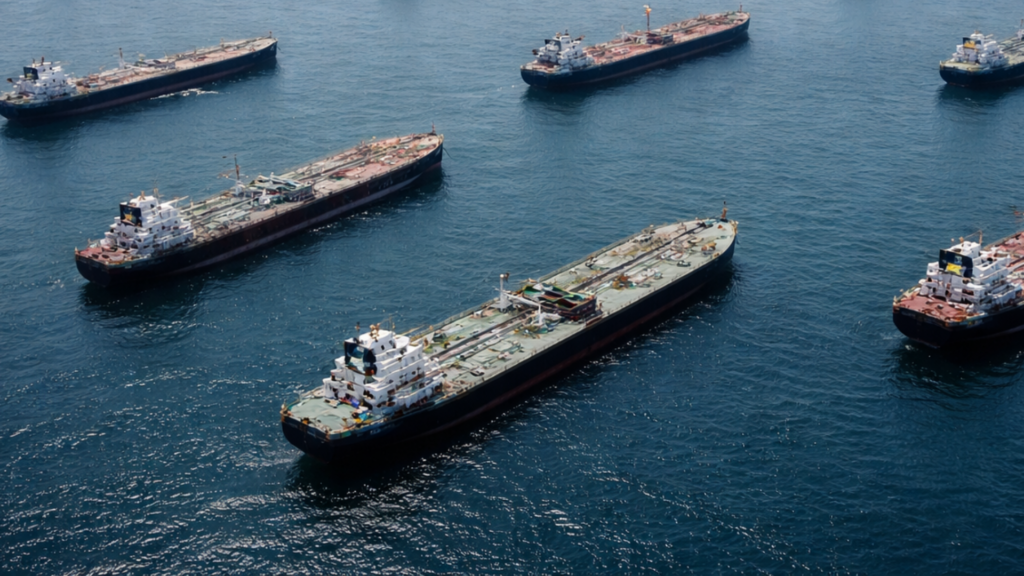
The core issue is directionality. Hundreds of fully loaded tankers and container ships are currently trapped inside the Persian Gulf, waiting for a safe window to exit through the strait. At the same time, virtually no empty vessels are waiting to enter and replace them. Without that inbound flow, the moment those loaded ships sail out marks the end of available cargo capacity in the region, not the beginning of a return to normal. The goods that follow; oil, fertilizer, industrial resins, will have nothing to move them.
The daily traffic through the Strait of Hormuz tells the story in numbers. Under normal conditions, more than 100 oil tankers pass through the strait each day. That figure has collapsed to ten or fewer, according to Matt Smith of trade analytics firm Kpler. “Almost nobody is confident enough to pass through the strait,” Smith said. That near-total stoppage has been building for six weeks, and the backlog it has created on both sides of the waterway will define how long the recovery actually takes, regardless of what happens politically.
The Empty Ship Problem Nobody Is Talking About
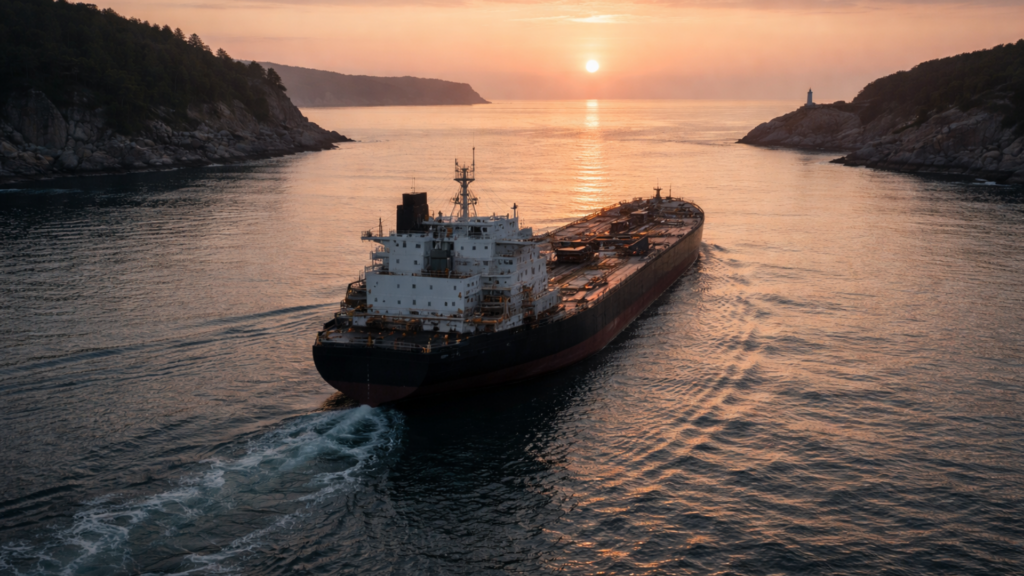
The mathematics of the shipping backlog are unforgiving. Smith estimates there are roughly 400 loaded oil tankers currently waiting inside the Gulf for an opportunity to exit. Waiting to enter from the other side are approximately 100 empty tankers. Even in an optimistic scenario where the strait reopens and confidence holds, the outbound flow would overwhelm the inbound one by a ratio of four to one. The imbalance means that for every ship that exits carrying cargo, there is not a replacement vessel ready to go back in and load the next shipment.
Container shipping faces the same structural problem. Peter Tirschwell, vice president for maritime and trade at S&P Global Market Intelligence, told CNN that roughly 100 container ships are waiting to exit the Gulf, while virtually none are positioned to enter. Those container vessels carry not just manufactured goods but the food supplies and essential imports that Gulf states depend upon, as well as major exports including fertilizer and industrial resins. Both directions of that trade are now effectively frozen, and the freeze compounds with each additional day of uncertainty.
The fertilizer situation carries consequences that extend well beyond the region. Tirschwell estimates that approximately 30% of the world’s fertilizer supply normally moves out of the Gulf through the strait. That inventory is currently sitting idle, with no ships available to transport it. Fertilizer does not move by air freight or overland at the scale required. “The capacity does not exist to easily reroute those cargoes,” Tirschwell said. For agricultural producers in Asia, Africa, and elsewhere who depend on that supply for upcoming planting seasons, the delay is not abstract.
Why a Fragile Ceasefire Is Not Enough to Move a Single Ship
The decision to send a vessel into the Persian Gulf is not made by governments, it is made by shipping companies, tanker owners, and the insurers who underwrite the risk. Those parties are applying a straightforward calculation: if a ceasefire collapses while their ship is inside the Gulf, the vessel could be trapped for weeks or longer, exposed to conflict with no safe exit. Until that risk drops to an acceptable level, the financial logic of holding back outweighs the commercial pressure to move.
Lale Akoner, a global market analyst at eToro, described the threshold that would need to be crossed before operators begin moving ships back into the region. “A two-week ceasefire and a ceasefire that’s fragile. I don’t think that would give the confidence that is needed,” she said. What shipping lines require is not just a pause in hostilities but a durable, credible reduction in risk sustained over enough time to justify re-entry. A short or uncertain truce simply transfers the danger from the conflict itself to the possibility of being caught inside the strait when it resumes.
Insurance is the mechanism that enforces this caution. War-risk premiums for vessels transiting the strait have surged, and insurers have significant leverage over whether ships move at all. Even if a shipowner wanted to re-enter the Gulf, an insurer unwilling to cover the voyage at a viable rate can effectively veto the decision. That dynamic means the recovery timeline is not controlled by diplomats or oil producers, it is controlled by underwriters in London and elsewhere who are watching the same fragile ceasefire signals and reaching their own conclusions about when the numbers make sense.
July at the Earliest: What a Return to Normal Actually Requires
Smith’s timeline is specific and sobering. Even if the strait were to reopen today with full confidence from shipping operators, he estimates it would still take until July for oil flows to approach anything resembling normal volume. That projection accounts for the time needed to move the trapped outbound fleet, reposition empty tankers for re-entry, and gradually rebuild the daily transit numbers from single digits back toward the 100-plus vessels that typically pass through under ordinary conditions. Each step depends on the one before it.
Oil production itself adds another layer to the delay. Gulf producers shut down or curtailed output over the past six weeks because there was nowhere to store or ship what they were producing. Restarting that production is not instantaneous. As Smith explained, producers in the region are accustomed to loading crude directly onto tankers for immediate export. Resuming that rhythm requires not just a decision to restart, but the physical presence of vessels in the right locations at the right time. “They’re going to need time to increase production, but also have the tankers in place to be able to load that crude,” he said.
The deeper implication of all this is that the damage from the Strait of Hormuz disruption will outlast the disruption itself by a significant margin. Supply shortages, elevated oil prices, and fertilizer scarcity are not conditions that end on the day a ceasefire holds. They end when ships move, production restarts, and global supply chains absorb and redistribute the backlog, a process measured in months, not days. For consumers already paying more for fuel, food, and goods, the lesson is that reopening a waterway is only the first step in a recovery that has barely begun.