

Products are selected by our editors, we may earn commission from links on this page.
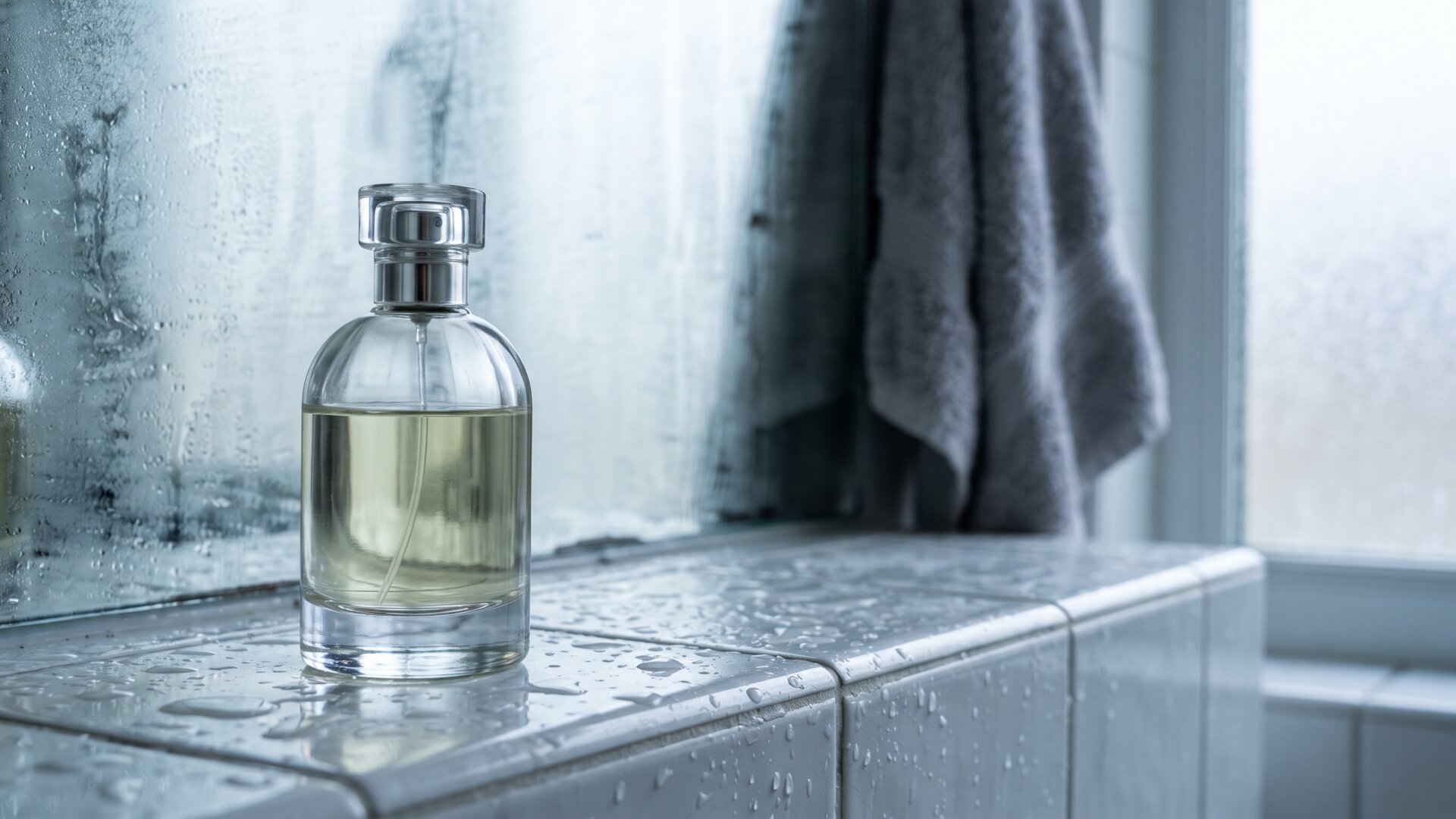
That bottle by the sink sits in the one room in the house designed to get hot, wet, and then cold again. A shower drives temperature and humidity up for twenty minutes, then both drop back, and the liquid inside reacts to every one of those moves. Heat speeds up oxidation, and a bottle kept in a dark cupboard at room temperature ages far more slowly than one left on a bathroom shelf near a shower. An opened bottle is usually reckoned good for three to five years. Stored badly, the opening notes can thin out in a season. The heat part of that damage follows a rule with a number attached.
This article was created with the assistance of AI and reviewed by our editorial team for accuracy and clarity.
Every 18 degrees doubles the damage
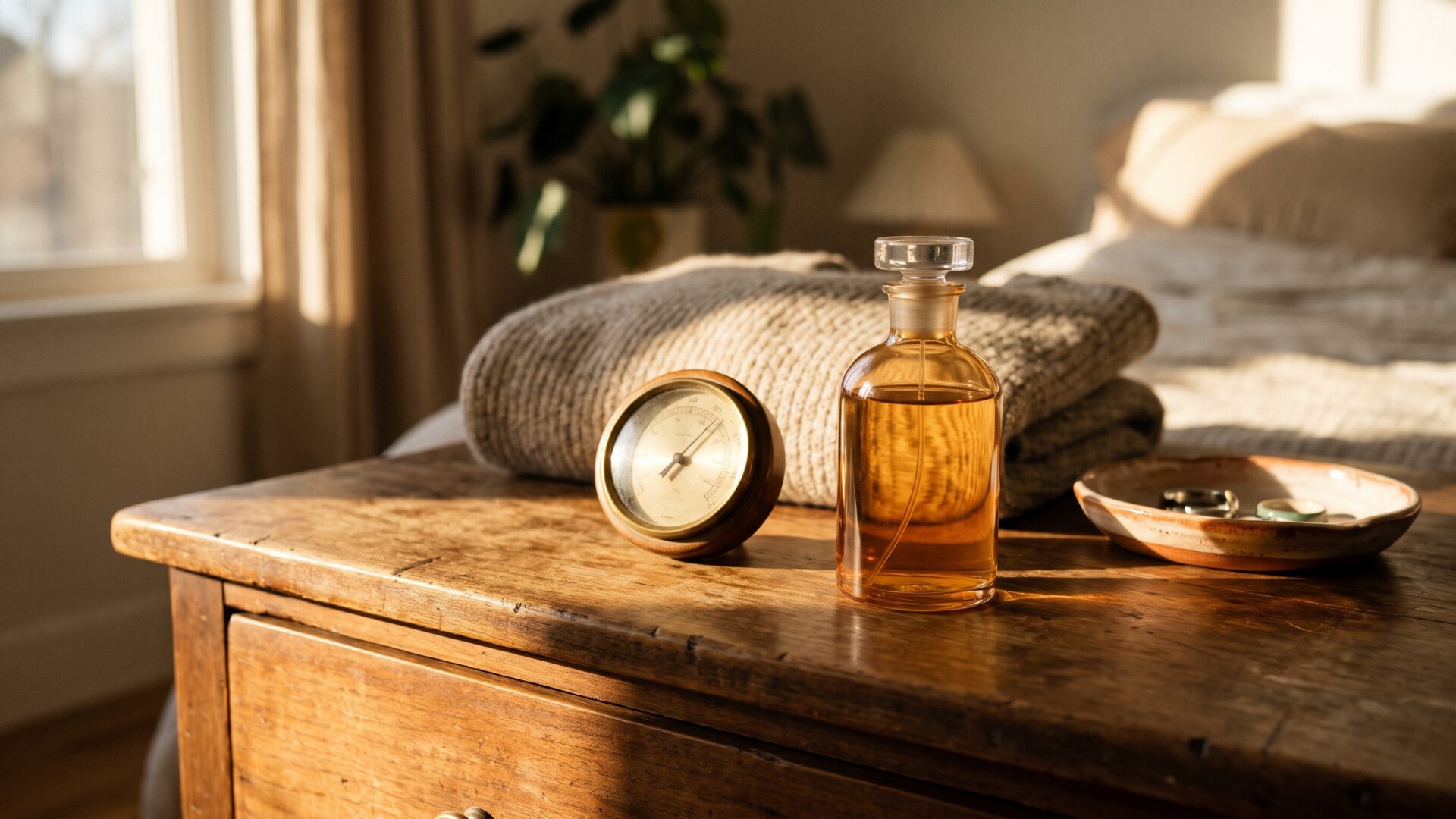
Fragrance house Goldfield & Banks puts a figure on it: for every 18 degree Fahrenheit increase, perfume degrades twice as fast, and it recommends storing bottles between 55 and 70 degrees. That is not marketing language. It is ordinary reaction kinetics, since a 10 degree Celsius increase can double the rate of chemical reactions in a perfume. Fragrance retailer Première Peau runs the same math and reports that a bottle stored at 30 degrees Celsius degrades roughly twice as fast as one at 20. Keep a bottle in a room that sits at 80 degrees rather than 62 and you have halved its useful life without opening it. Holding a steady temperature matters as much as holding a low one.
Swings do more harm than steady warmth
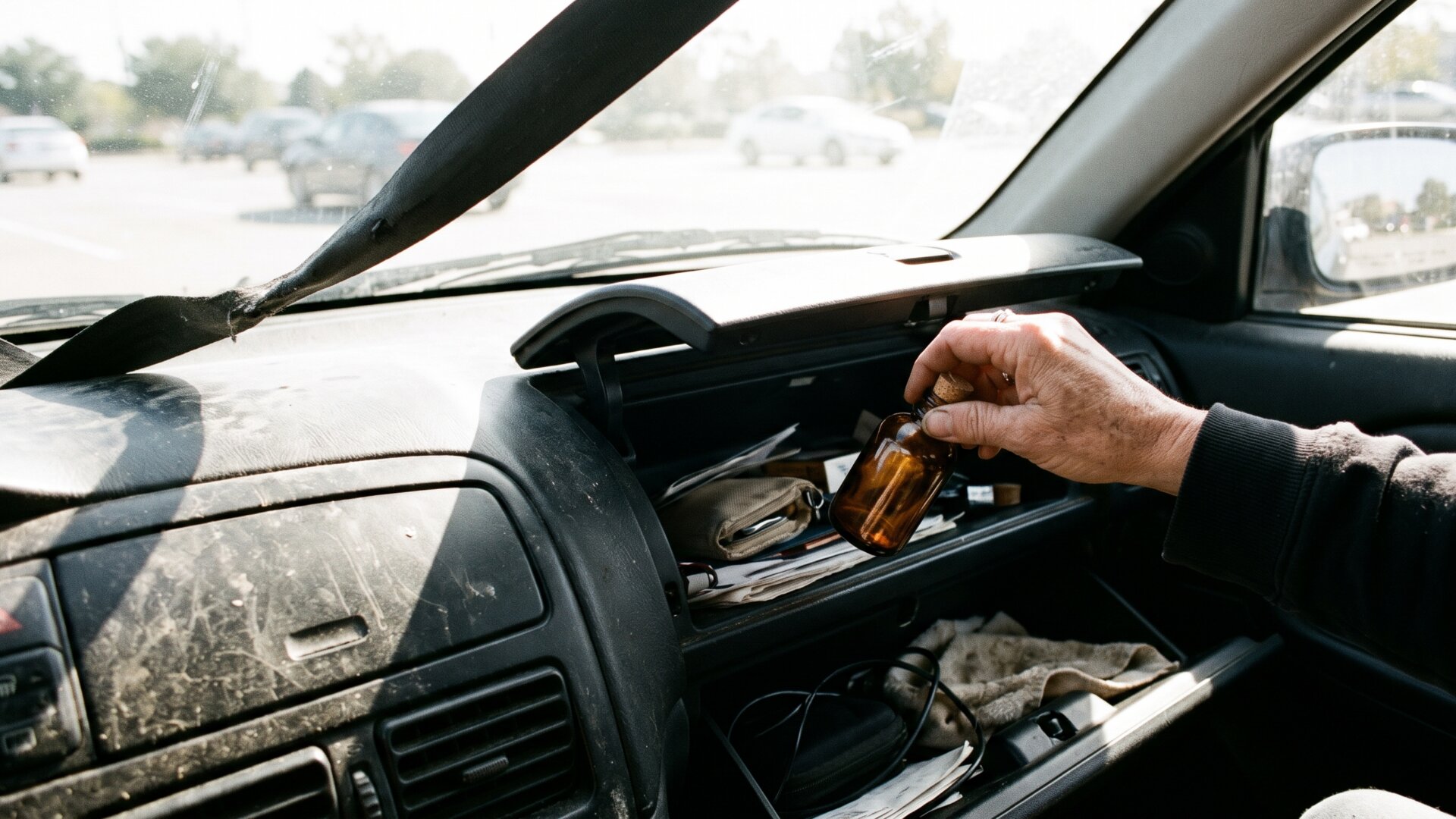
A closet that holds 68 degrees all year treats perfume better than one that runs from 59 to 77 daily. Temperature swings are worse than steady warmth, and a closet that stays at 20 degrees Celsius beats one that moves between 15 and 25 every day. Repeated heating and cooling cycles accelerate chemical degradation, so each cycle restarts the clock rather than pausing it. That rules out most of the places bottles actually end up: a car glovebox in July, a shelf above a radiator, a windowsill that catches three hours of afternoon sun. It is also the argument for an interior room over one with a west-facing window. Cold has a reputation to deal with too.
The refrigerator is not the safe bet
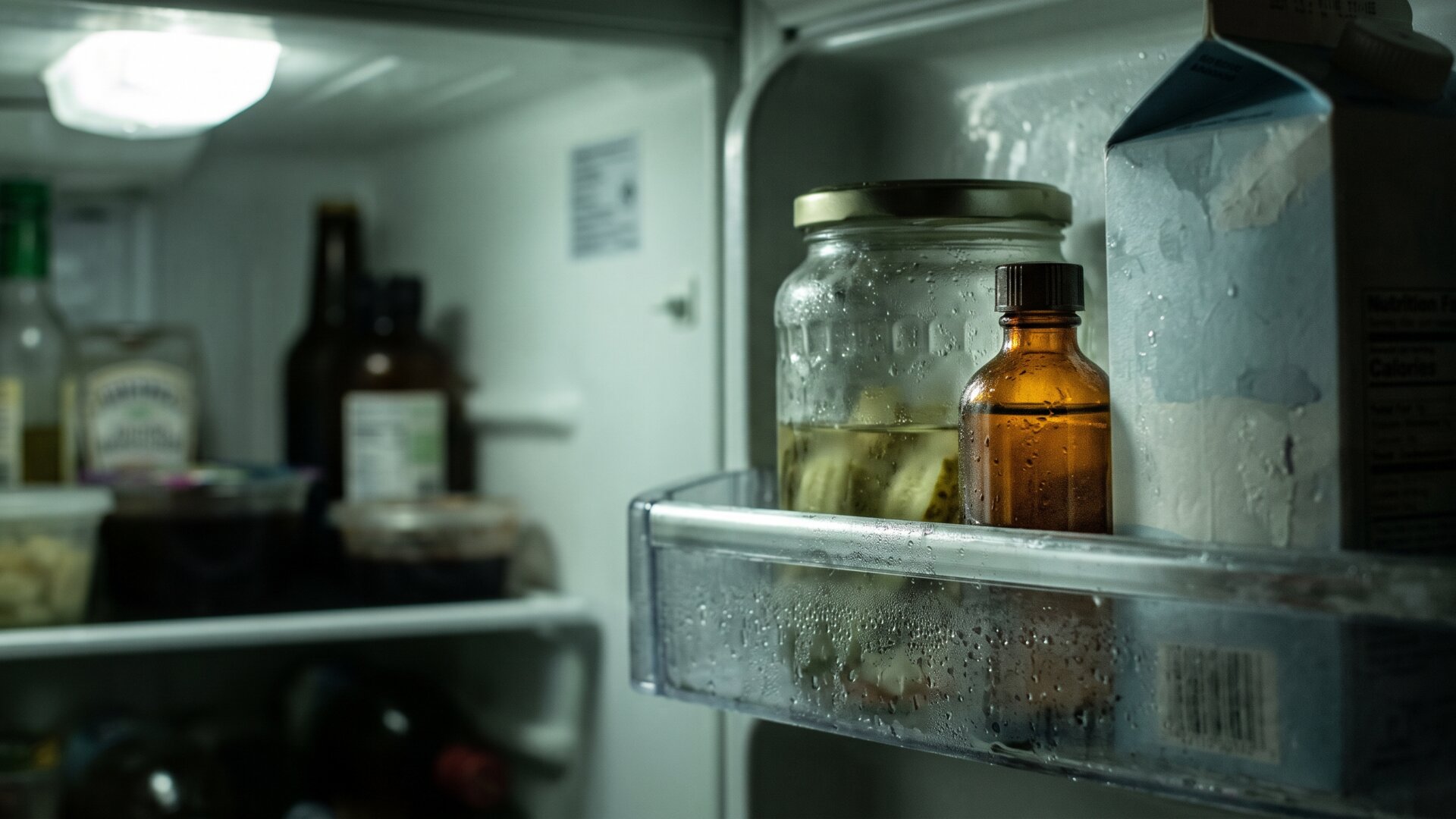
Cosmetics company Lancôme’s position, cited in the fragrance care advice this story comes from, is that extreme cold breaks down and alters the character of a scent. Collectors push back, and the difference turns out to be the hardware rather than the temperature. A kitchen fridge swings every time the door opens and runs humid, while a dedicated wine or cosmetics unit held at 12 to 15 degrees Celsius stays stable enough for valuable bottles. One is a cycling, damp box that also holds leftovers. The other is a steady room that happens to be cold. During a heatwave in a house without air conditioning, the kitchen fridge is still the lesser evil for a few days. Heat is only one of two things coming through the glass.
UV light goes straight through clear glass
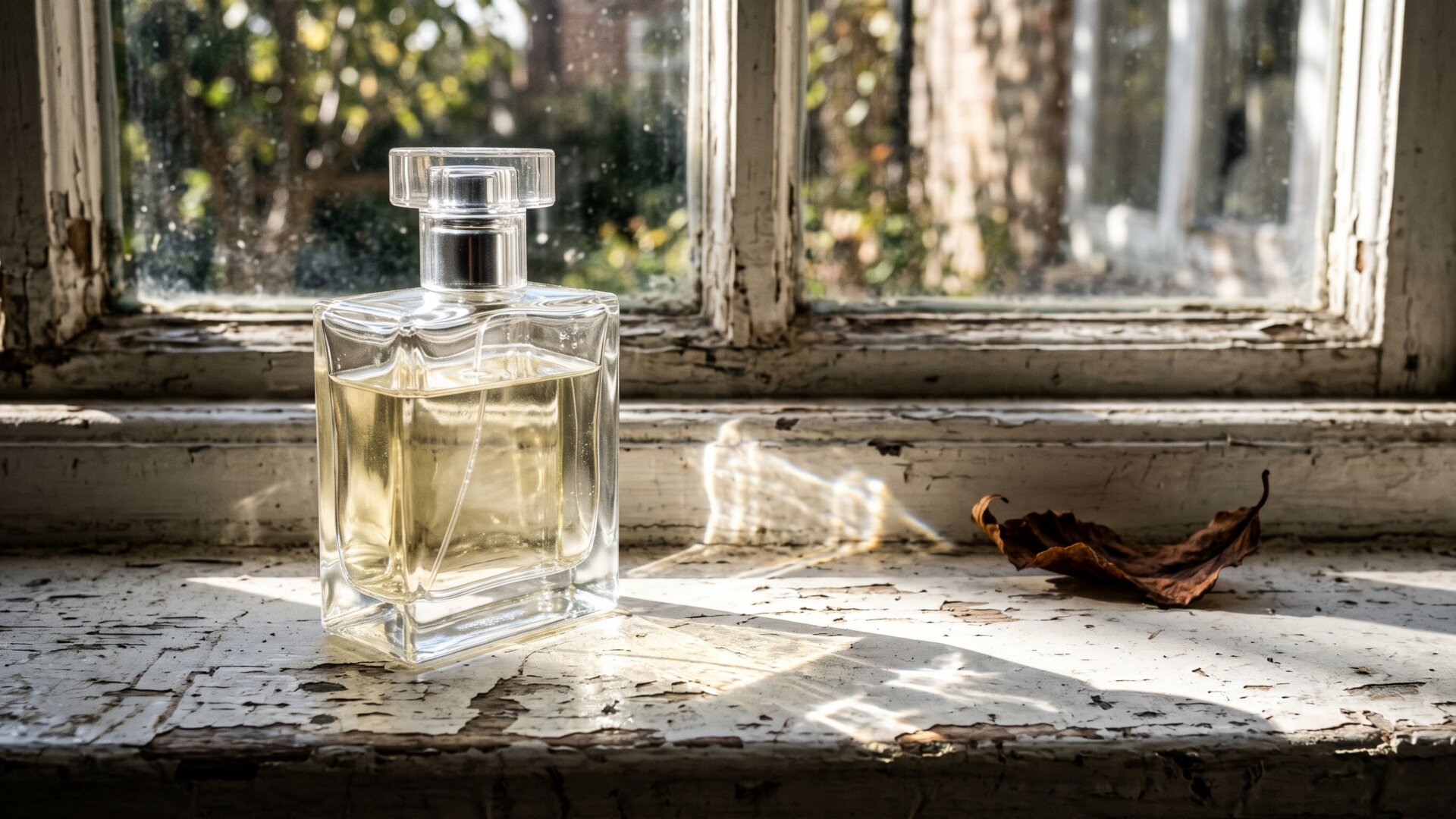
Light does its own damage, and it does it without raising the temperature at all. Natural and artificial light both degrade perfume through photo-oxidation, where UV rays break down fragrance molecules, disrupting molecular bonds and creating free radicals that alter the perfume’s structure. Clear glass filters almost none of that. UV light degrades citrus and floral molecules faster than heavier base notes, so the first thing a sunlit bottle loses is the bright opening you bought it for, while the woody base survives and starts to dominate. The color shifts in the same direction, drifting yellow and then amber. Direct sunlight can degrade a fragrance in weeks. Windows are not the only light worth worrying about.
Indoor bulbs reach the bottle too
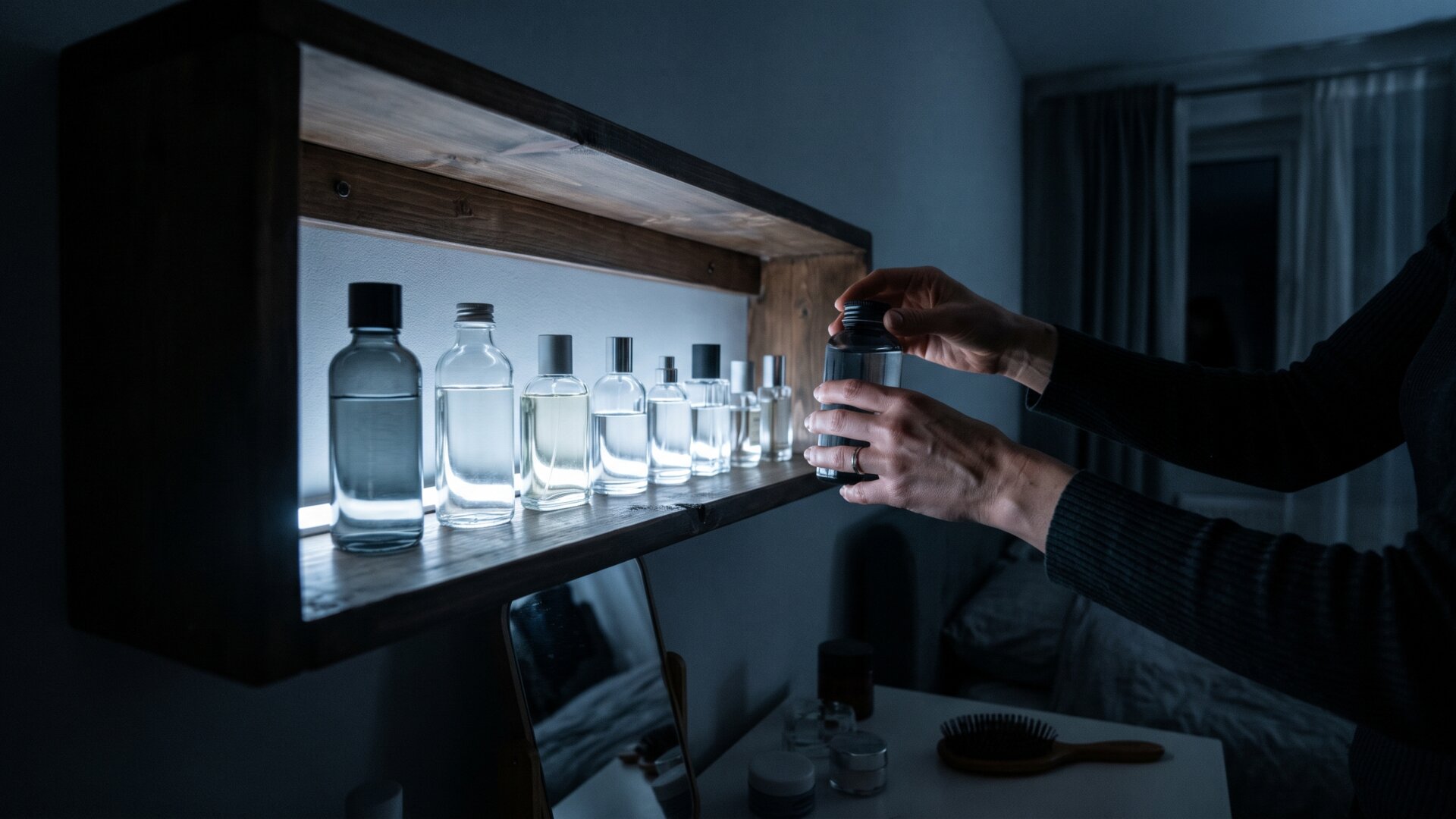
A bottle on an open shelf under a bright fixture is lit for hours a day as well. A patent filing on preventing oxidation in perfumery raw materials states that LED lights in particular have been demonstrated to oxidize perfume ingredients, formulated perfumes, and essential oils far more than other light sources. Room lighting is slower than a windowsill, not harmless. Even indirect ambient light supplies near ultraviolet photons in the 315 to 400 nanometer range that attack light-sensitive materials such as bergamot and vanilla extracts. The practical reading is that a display shelf under an LED strip is a long, quiet light bath. The fix for that one costs nothing and is probably in your recycling bin.
The box it came in is free protection
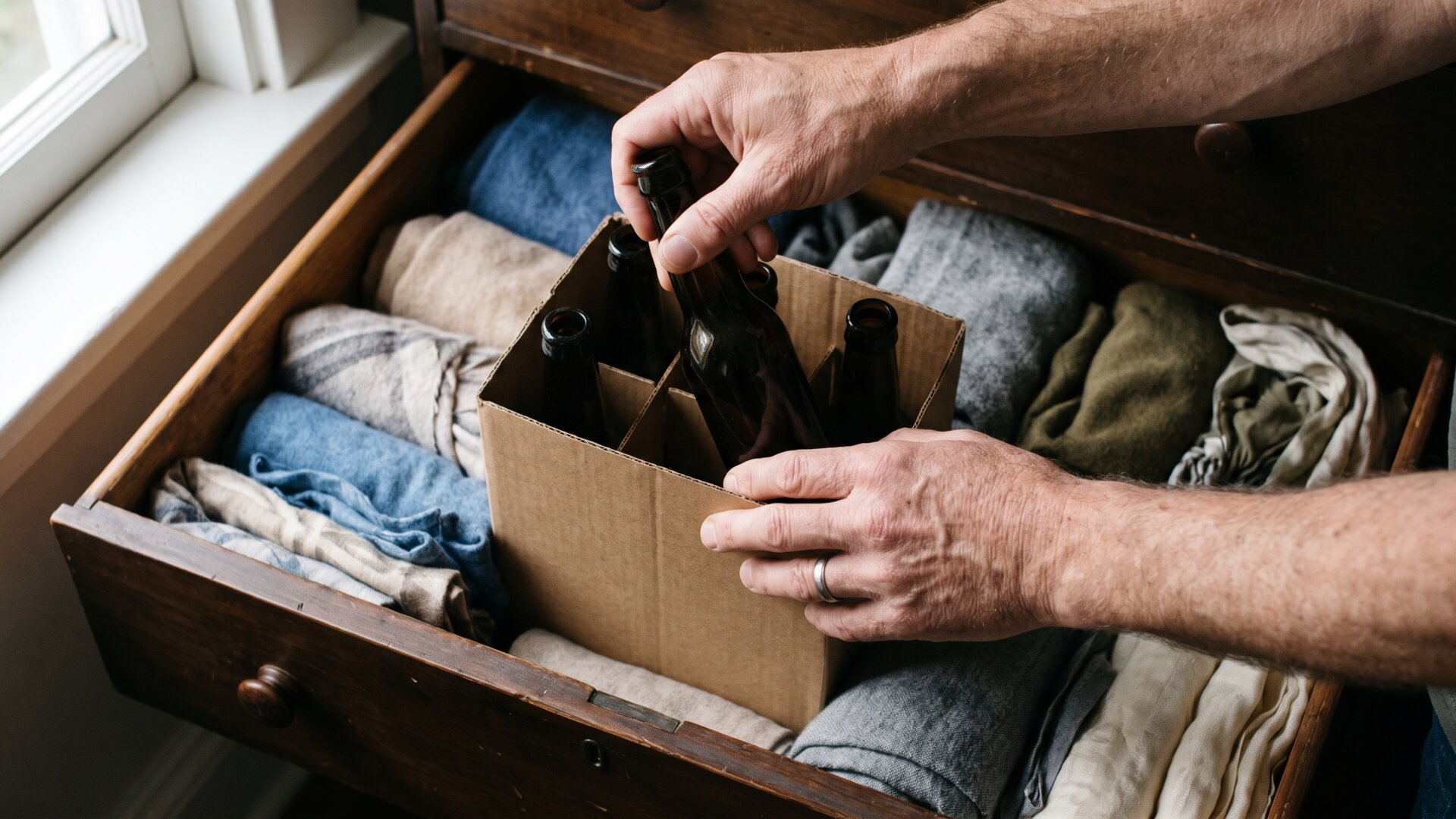
Keep the carton. The original box provides UV and temperature protection, which is the cheapest upgrade available to anyone who already owns the bottle. If you want a fragrance out where you can see it, amber and cobalt glass filter out UV radiation, so a dark decanter on the vanity holds up better than the clear original. For everything you are not reaching for daily, a dark interior closet away from exterior walls and windows is the standard recommendation, because those walls move least with the weather. None of it helps with the damage that starts the moment you press the sprayer.
Air gets in every time you spray
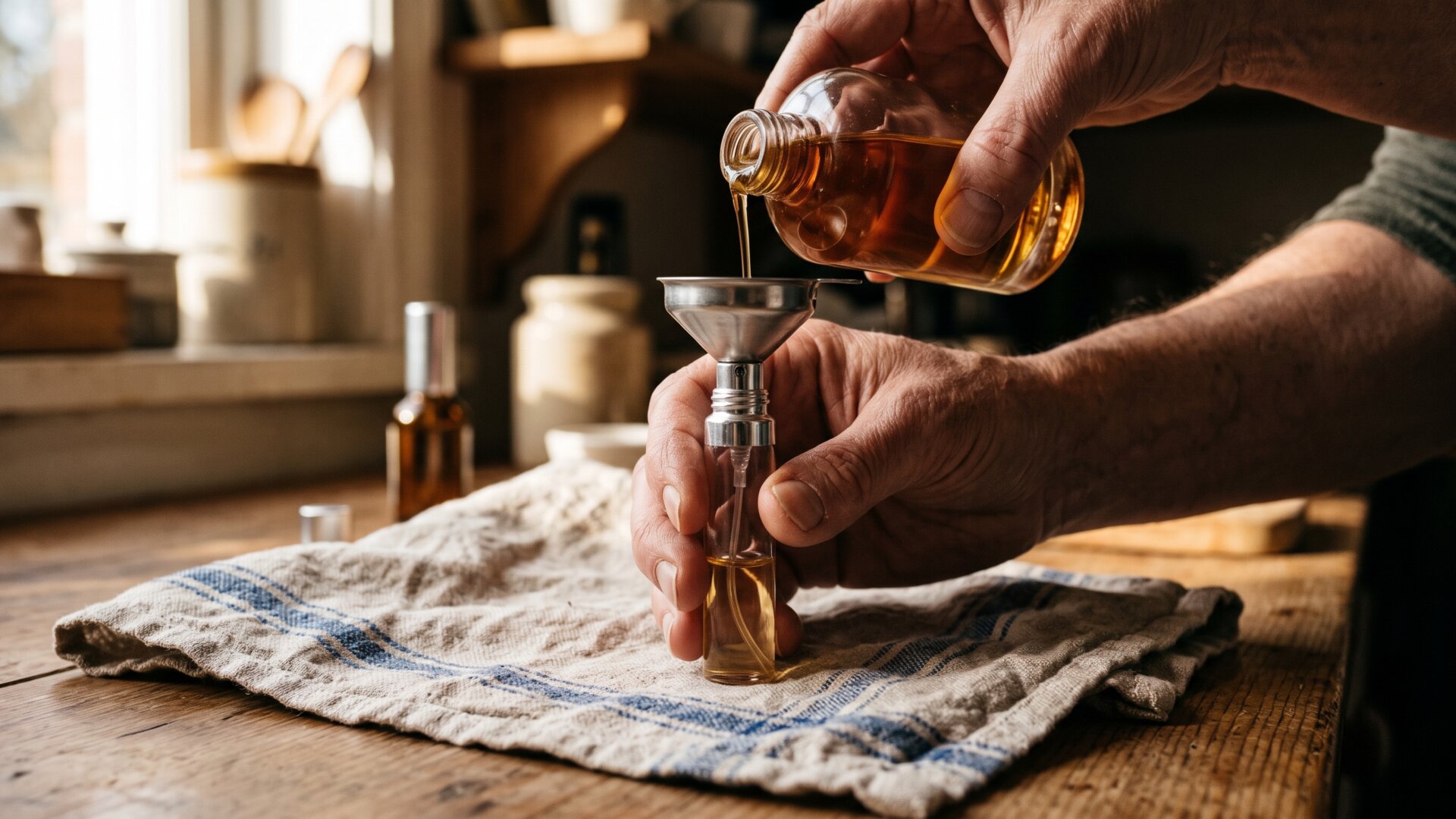
Oxidation is the primary killer, and every spray pulls replacement air into the bottle to fill the gap. Oxygen enters through the headspace as the bottle empties, which means the last third of a bottle ages faster than the first third did, in the same room, under the same light. That is the case for decanting. Moving a half-used fragrance into a smaller bottle or a travel atomizer shrinks the volume of air sitting on the liquid, and a tight cap keeps the rest of it out. Splash bottles with no sprayer are the hardest case, since the whole surface meets the room each time you tip it. A bottle that has turned will show you before it tells you.
How to tell a bottle has turned
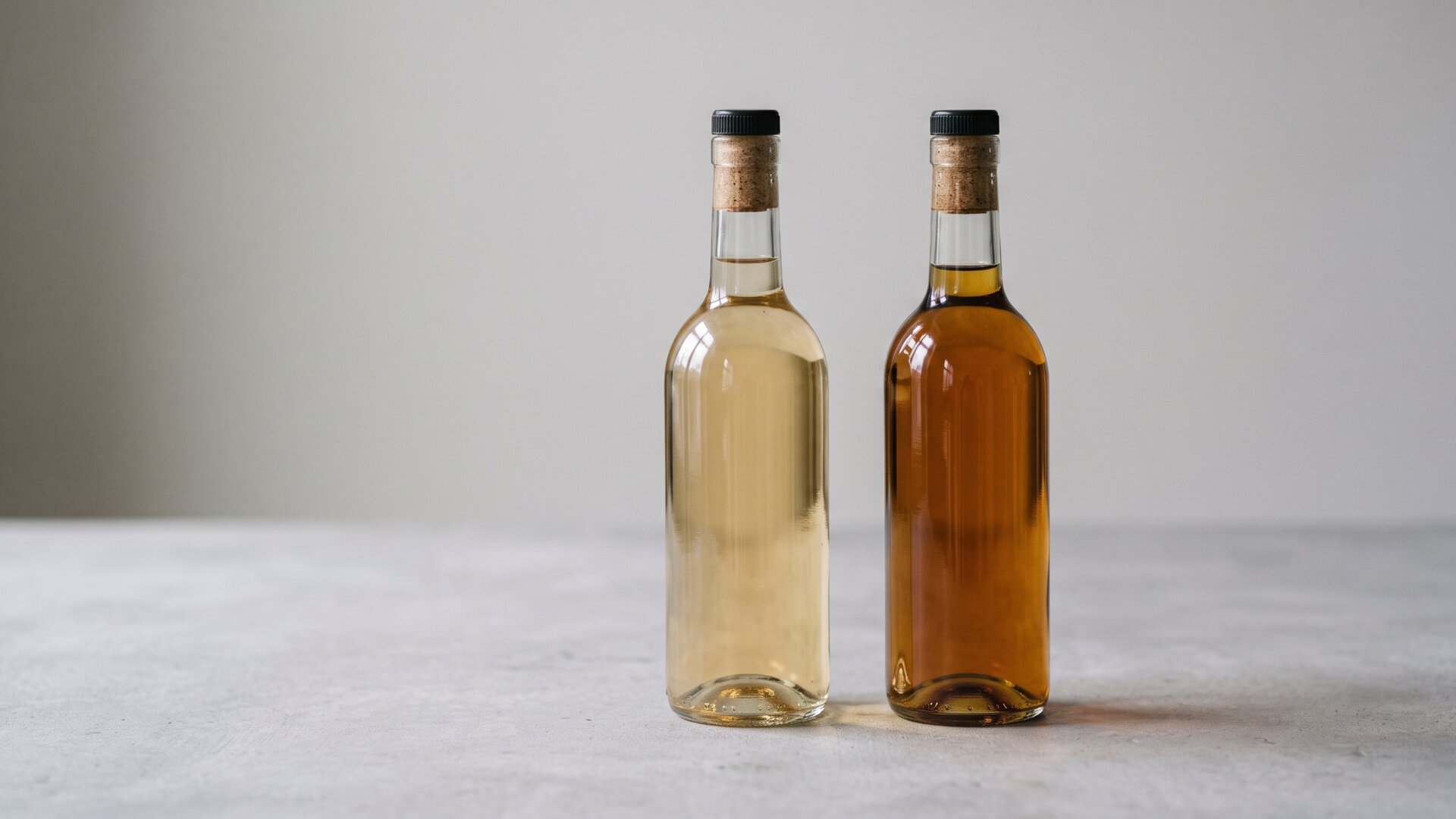
Color is the late signal. A shift toward brown, greenish, or murky opacity signals advanced oxidation, by which point the scent has usually been changing for a while. On skin, a turned bottle tends to open sharp and alcoholic where the citrus used to be. Not every change is decline. Some compositions follow an inverted U curve, maturing to a peak before oxidation overtakes the integration. The reason to pay attention is skin rather than shelf life, since oxidation can form peroxides and hydroperoxides that may be irritant or allergenic. One room in most homes handles all of this better than the bathroom ever did.
The setup that keeps a scent intact
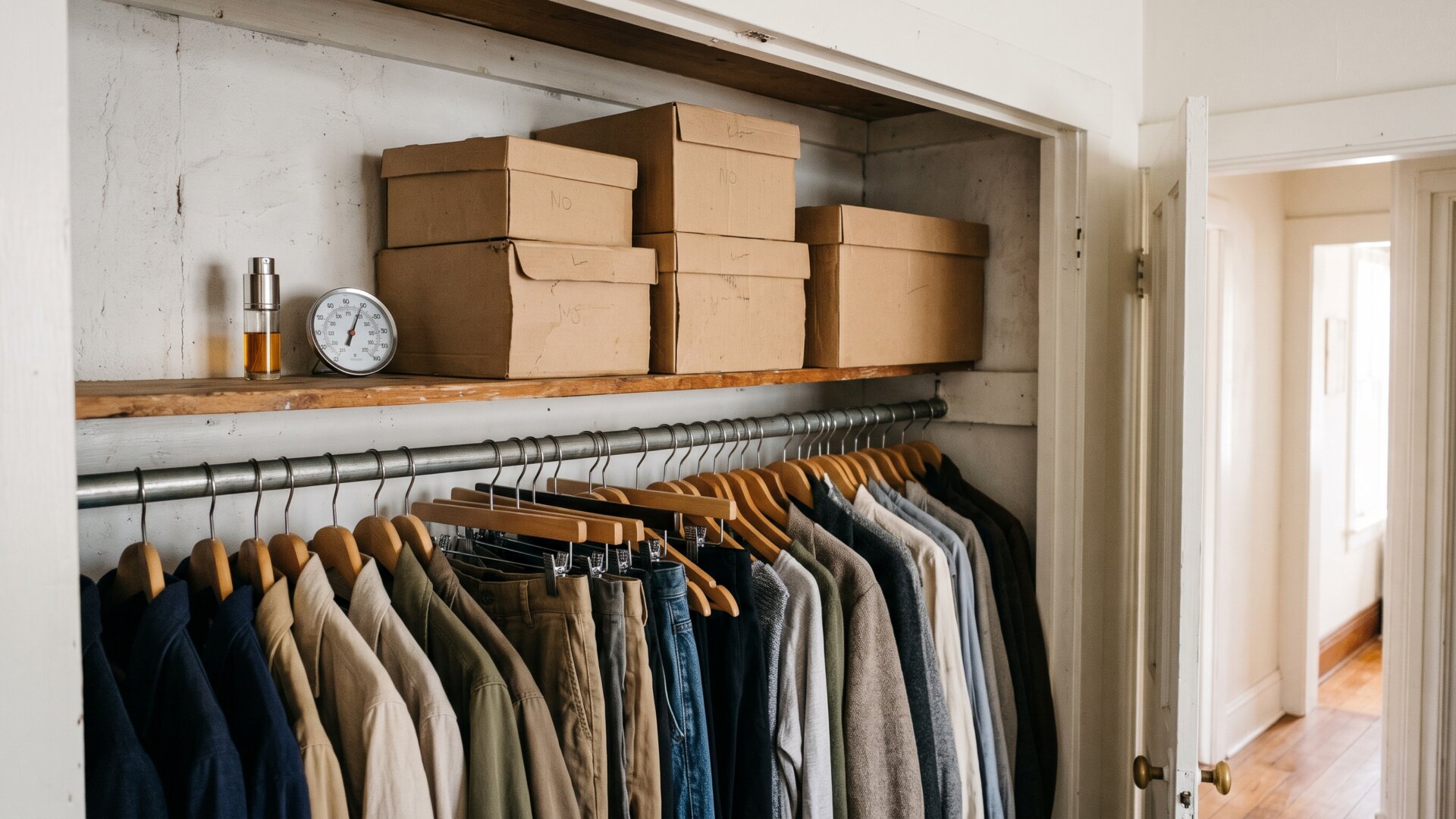
A bedroom drawer or an interior closet shelf gives a bottle the three things a bathroom cannot: darkness, dry air, and a temperature that barely moves. Humidity spikes above 60 percent relative humidity are worth avoiding, which disqualifies most rooms with a shower in them. Boxes back on, caps tight, half-used bottles decanted into something smaller. For travel, fill a small atomizer and leave the full bottle at home, because a suitcase in a car trunk is the hottest place it will ever sit. If the coolest spot you have is an unheated basement, keep a thermometer beside the bottles and check it in January. Five minutes of moving things protects years you have already paid for.